
Mastering Implementation Science: The Power of Mixed Methods Research
9 September 2026
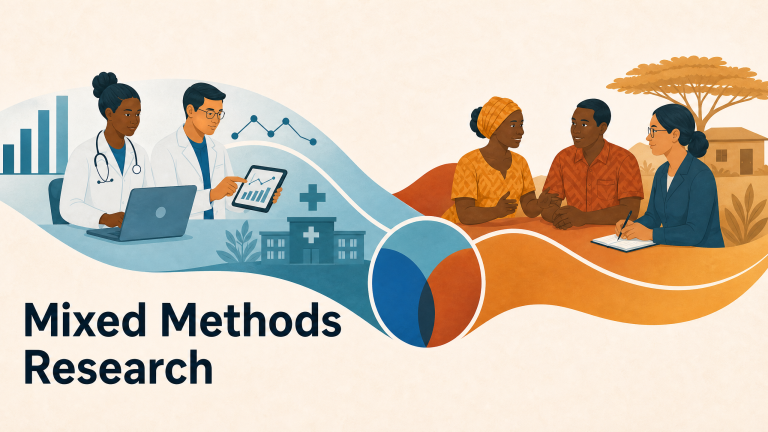
Mastering implementation science requires integrating quantitative metrics with qualitative narratives to bridge the gap between clinical research and real-world health impact. By utilising frameworks such as convergent parallel, explanatory sequential, and exploratory sequential designs, researchers gain a comprehensive toolset that eliminates dangerous analytical blind spots in public health.
The Defining Strategy: Integration
Mixed methods is more than just running two separate health studies. Its value relies entirely on integration—intentionally connecting medical metrics and community narratives. While quantitative data tells you what is happening to patient outcomes on a large scale, qualitative data explains why and how healthcare workers and clinics are adopting the intervention.
Three Ways to Structure the Research
Depending on your project's goals, this course will teach you how to deploy three primary implementation frameworks:
- Convergent Parallel: Track clinical health data and conduct staff interviews simultaneously to evaluate if the real-time implementation process matches your expectations.
- Explanatory Sequential: Gather quantitative clinic metrics first to identify broad trends—such as a drop in programme adoption—then use qualitative focus groups to uncover the underlying reasons.
- Exploratory Sequential: Interview a community first to understand local cultural health needs, then use those insights to design and test a scalable, quantitative public health survey.
Key Advantages of This Approach
Deploying these mixed frameworks offers significant benefits for public health initiatives:
- Higher Validity: Cross-validates clinic outcomes through multiple community data sources.
- Holistic Insights: Prevents the critical human element from being lost in big health data.
- Persuasive Results: Combines hard health statistics with compelling patient stories to win funding.
Fundamental Challenges to Consider
While powerful, executing a mixed methods design requires navigating specific operational demands:
- Resource Heavy: Managing both clinical data and fieldwork requires careful, rigorous planning.
- Dual Expertise: Requires learning both statistical tracking and qualitative thematic analysis.
- Conflicting Data: Teaches you how to resolve discrepancies when numbers and stories do not align.
The Takeaway
Relying on a single data type creates dangerous analytical blind spots in public health. By pairing statistical precision with descriptive depth, this course provides the comprehensive, actionable toolset you need to bridge the gap between research and real-world health impact.
Ready to elevate your NCD research impact?
The pilot of our intermediate training module Introduction to Mixed Methods Research in Public Health is scheduled for 12-16 October 2026. We are now accepting expressions of interest. This training, led and delivered live online by the Stellenbosch University, introduces mixed methods research and its application to key public health questions. Learners will explore the theoretical foundations, methodological designs, and practical considerations of this approach.
Upon successful completion of this NQF Level 9 module, participants will have gained the knowledge required to design, conduct, and evaluate their own mixed methods public health research, earning a Certificate of Competence and 30 General Continuing Education (CEU) credits.
There are no course fees to participate in the pilot phase. This training is valued at ZAR 6,000 and is fully funded. Slots are limited. Participants from across the sub-Saharan African Region with following qualifications are encouraged to apply:
- NQF Level 7 with relevant work experience (supported by a portfolio), or
- NQF Level 8 (Honours/Postgraduate Diploma level).


The IS4NCDs project has received funding from the European Union's Erasmus+ programme under Grant Agreement no. 101179511
The IS4NCDs project has received funding from the European Union's Erasmus+ programme under Grant Agreement no. 101179511