
News
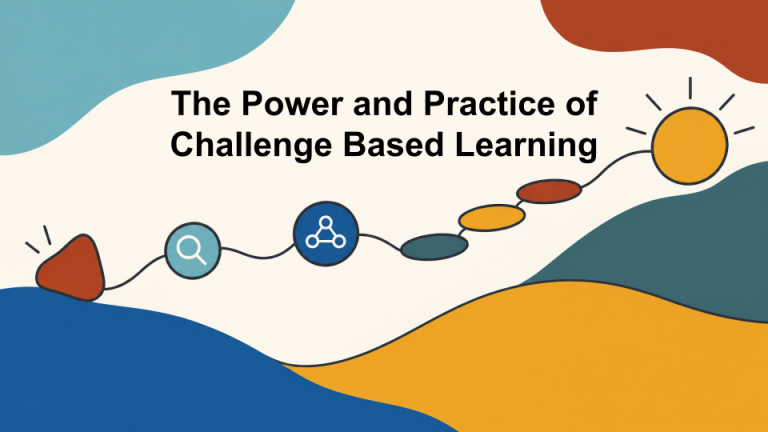
Rethinking the Classroom: The Power and Practice of Challenge Based Learning
Rethinking the Classroom: The Power and Practice of Challenge Based Learning
29 September 2026
Challenge Based Learning (CBL) is an immersive educational framework where participants actively engage with authentic, open-ended global or community issues to develop actionable, real-world solutions. Moving far beyond passive rote learning or simulated classroom exercises, CBL requires individuals to make real choices with tangible consequences. The framework repositions educators as collaborative partners or coaches, shifting the ownership of the educational journey directly into the hands of the cohort. By structuring education around multi-layered, lived challenges, CBL builds a natural connection between theoretical academic content and meaningful social action.
This approach is particularly powerful for fields like public health and implementation science, where turning research into real-world care is one of the greatest modern challenges. Through this framework, students develop the vital tools needed to move from evidence to action, addressing complex societal needs through three fundamental dimensions: autonomy, competence, and relatedness.
The Three Phases of the Challenge Based Learning Journey
The contemporary, globally adopted CBL framework operates through three cyclical, deeply interconnected phases: ENGAGE, INVESTIGATE, and ACT. Throughout all three phases, participants continuously reflect on their choices, document findings, and share outcomes with the wider community.
1. ENGAGE
The process begins at a macro level and narrows down to a specific, localised call to action that is collaboratively defined.
- The Big Idea: The journey starts with a broad, globally relevant theme affecting society—such as Sustainability, or Non-Communicable Disease Prevention.
- Essential Questioning: Through collaborative brainstorming, students contextualise this theme by asking broad, probing questions. For example, a big idea like Health Equity might yield the question: "How do we make preventive health strategies accessible in resource-limited environments?"
- The Challenge: This phase culminates in a clear, actionable statement that demands a solution. An abstract question is transformed into a direct directive, such as: "Design and execute a localised peer-education framework to improve metabolic health awareness within our community."
2. INVESTIGATE
Once the challenge is locked in, participants enter a phase of rigorous academic and empirical research to bridge the gap between theory and frontline practice.
- Guiding Questions and Activities: Teams list everything needed to solve the problem, generating secondary questions that cover scientific, economic, or social variables.
- Rigorous Research: Research is conducted, local stakeholders are surveyed, regional health data is analysed, and domain experts are consulted. This phase satisfies traditional curriculum requirements, as core subjects—be it epidemiology, statistics, or behavioural science—must be mastered to thoroughly analyse the data.
3. ACT
The final phase demands moving from thought to practice, allowing students to master the practical tools needed to turn an implementation plan into reality.
- Solution Development: Teams synthesise their research to design evidence-based solutions that address structural issues rather than just individual symptoms.
- Implementation: Unlike case-study learning, where a project ends with a presentation slide, CBL requires a live rollout with an authentic audience. This might involve deploying a new digital health toolkit, launching a targeted public awareness campaign, or optimising an existing local care delivery network.
- Evaluation: After rollout, the concrete impact of these actions is measured, allowing individuals to iterate based on success, unexpected feedback, or failure.
Distinguishing CBL from Problem-Based and Project-Based Learning
Because CBL shares the active-learning ecosystem with Problem-Based Learning (PBL) and Project-Based Learning, they are frequently confused. Understanding these differences helps institutions and cohorts maximise engagement during the process:
| Attribute | Challenge Based Learning (CBL) | Problem-Based Learning (PBL) | Project-Based Learning |
|---|---|---|---|
| Origin of Focus | A broad, open-ended "Big Idea" that participants collaborate to narrow down from the start. | A predefined, fictionalised scenario or case study provided to students by the teacher. | A structured prompt aimed at creating a specific end-product or artifact. |
| Ownership | Exceptionally high; the cohort defines the questions, the exact challenge, and the solution path. | High in the investigation phase, but limited to the boundaries of the pre-set problem. | High regarding product design, though the final output category is often dictated by the tutor. |
| The Endpoint | Implementation of a live, evidence-based solution in a real community setting. | A conceptual solution, a report, or an academic presentation to peers. | Production of a tangible artifact, model, or exhibition. |
| Role of Failure | Experiential; failure is treated as a necessary, real-world data loop for refinement. | Highly academic; evaluated through the accuracy of theoretical reasoning. | Procedural; evaluated through project management and output quality. |
The Benefits of a Challenge-Centric Pedagogy for Learners
Embracing Challenge Based Learning yields multi-dimensional benefits that prepare individuals for the realities of modern professional landscapes:
- Sustaining Human Capability against Automation: In an era dominated by advanced algorithmic tools and automated text generators, CBL protects the core cognitive work of the human mind. Because the framework demands physical interaction, localised context, active community dialogue, and moral judgement, it cannot be bypassed by artificial shortcuts. It forces individuals to think critically, navigate human nuance, and make genuine ethical choices.
- Interdisciplinary and Transdisciplinary Mastery: Real-world crises do not stay neatly within subject boundaries. A challenge surrounding non-communicable diseases quickly requires knowledge across biology, urban planning, politics, sociology, and economics. Students build cognitive flexibility by weaving distinct disciplines into a cohesive action plan.
- Fostering Essential Lifelong Skills: Through intense team dynamics, participants develop resilience, complex project management, emotional empathy, and transparent peer communication. Individuals learn that real knowledge is fluid, shifting away from a mindset focused on finding "one right answer" toward continuous self-regulated learning.
By framing education not as a sequence of topics to memorise but as a series of meaningful challenges to conquer, CBL transforms passive students into social innovators. It prepares them not just to pass exams, but to thoughtfully engage with, and improve, the world they live in.
Strategic Integration in IS4NCDs Training
Recognising its capacity to close the "know-do gap" in health systems, Challenge Based Learning has been strategically integrated into the upcoming IS4NCDs training modules. By embedding this pedagogy within the curriculum, the programme ensures that healthcare practitioners, researchers, and policymakers do not merely review theoretical frameworks, instead empowering context-driven cohorts to diagnose systemic bottlenecks, collaborate across multi-sectoral boundaries, and deploy live, evidence-based interventions directly into frontline African health infrastructure.


The IS4NCDs project has received funding from the European Union's Erasmus+ programme under Grant Agreement no. 101179511
The IS4NCDs project has received funding from the European Union's Erasmus+ programme under Grant Agreement no. 101179511

Important Update: IS4NCDs Core Module Transitions to Fully Online Delivery
Important Update: IS4NCDs Core Module Transitions to Fully Online Delivery

23 September 2026
The IS4NCDs consortium has decided to modify the delivery format of its upcoming pilot core module, Fundamentals of Implementation Science, scheduled to take place 5–9 October 2026.
To maximise accessibility and ensure that vital training in implementation science is available to health professionals across borders, the consortium has made the strategic decision to transition this training module from its original regional hybrid model to a fully online delivery format.
Initially, the programme was designed to combine broadcasted lectures with on-site, in-person teamwork across four specific African partner institutions: Copperbelt University, the University of Zambia (UNZA), Stellenbosch University, and the University of the Witwatersrand. However, removing geographic barriers altogether allows the project to support broader participation, enabling healthcare implementers, researchers, and policymakers to join the cohort irrespective of their location.
Bridging the "Know-Do" Gap
This foundational module is specifically designed to equip participants with the skills needed to bridge the "know-do gap" in health systems—the persistent mismatch between what is known to work in clinical research and what is actually delivered in frontline health services. Participants will learn how to diagnose implementation challenges and apply verified frameworks (such as CFIR 2.0 or RE-AIM) directly to real-world non-communicable disease (NCD) programmes drawn from their own professional contexts.
By shifting to a fully virtual environment, IS4NCDs aims to foster a diverse cohort of learners who can share unique regional insights, equity lenses, and implementation strategies from a wide variety of healthcare settings.
Key Module Information
- Dates: 5–9 October 2026
- Format: Fully online (lectures and interactive group sessions)
- Cost: Fully funded during this pilot phase (valued at ZAR 6,000 / ~EUR 300, with no course fees for selected participants)
- Academic Value: 7 Credits (ZQF Level 8)
Entry Criteria
The module is open to healthcare professionals from across the sub-Saharan African region who hold a Bachelor’s degree (NQF Level 7) in medicine, nursing, pharmacy, public health, environmental health, biomedical sciences, or a related discipline. Alternatively, individuals holding a Level 6 Diploma with at least three years of relevant professional experience in a health service, policy, or programme management role will be considered on a case-by-case basis under Recognition of Prior Learning (RPL).
Current or recent engagement in health service delivery, programme implementation, management, or policy is strongly recommended, as course assessments directly utilise participants' own professional settings.
Don't miss the opportunity to join this fully funded cohort. The absolute deadline to submit your Expression of Interest is 27 September 2026.
The IS4NCDs project has received funding from the European Union's Erasmus+ programme under Grant Agreement no. 101179511
The IS4NCDs project has received funding from the European Union's Erasmus+ programme under Grant Agreement no. 101179511

From Evidence to Action: Securing Lasting Delivery Networks for NCD Care
From Evidence to Action: Securing Lasting Delivery Networks for NCD Care

21 September 2026
Translating clinical guidelines for non-communicable diseases (NCDs) into real-world practice requires a systematic approach to implementation science. To successfully scale up care, health systems must move beyond general public health frameworks and master the practical tools needed to turn an implementation diagnosis into a fully specified, costed, and evaluable programme, aligning strategy design with robust monitoring.
The Challenge of NCD Scale-Up in Resource-Constrained Environments
Non-communicable diseases represent a rapidly rising burden on health systems already stretched by historic infectious disease priorities. Yet, the implementation of proven NCD interventions remains slow and fragmented. Traditional public health approaches often overlook how an intervention is delivered within complex district health systems, leading to a failure to sustain or scale up effective care. Implementation science addresses this bottleneck by focusing explicitly on the methods used to promote the systematic uptake of research findings into routine practice. However, designing a delivery framework that is both theoretically sound and operationally viable requires specialised competencies that move beyond clinical expertise.
From Diagnosis to Strategy: Matching Barriers with the ERIC Taxonomy
An effective programme begins with a rigorous implementation diagnosis within the local clinic or community context. Rather than guessing why a clinical guideline—such as routine hypertension screening or diabetes follow-up—is not being adhered to, implementers must systematically identify specific institutional, behavioural, and resource-driven barriers.
A structured approach requires systematically matching these diagnosed barriers to evidence-based implementation strategies. Utilising the Expert Recommendations for Implementing Change (ERIC) taxonomy, professionals learn to use a standardised language to select from dozens of discrete strategies—such as task-shifting, educational outreach, or appointing local clinical champions. This shifts health systems away from ad-hoc solutions and toward reproducible, targeted interventions suited to local realities.
IRLM: Integrating Theory of Change and Logframes
While many health professionals are familiar with traditional planning tools like Theories of Change and Logical Frameworks (logframes) often required by external funders, these models can fail to capture the complex, non-linear mechanisms of implementation science.
The core planning instrument for complex interventions is the Implementation Research Logic Model (IRLM). Understanding the distinct roles of these three frameworks allows implementers to master the IRLM to explicitly link selected strategies to their specific psychological or structural mechanisms, and finally to their downstream outcomes. The result is a fully specified, costed, and highly visual roadmap that provides absolute clarity on how and why an initiative is expected to succeed before capital is deployed.
Smart Data Systems Without the Frontline Burden
A well-designed strategy is meaningless without an evaluable framework that works in the real world. Monitoring and evaluation (M&E) must be specialised for NCD environments where electronic registries may be nascent or fragmented. This requires meticulous indicator selection across three distinct dimensions: implementation outcomes (e.g., acceptability, feasibility), service outcomes (e.g., efficiency, equity), and client outcomes (e.g., clinical health status).
Crucially, health leaders must address the data requirements these indicators impose. This involves critically appraising what routine health information systems can realistically answer and knowing how to judge data quality. A major priority must be placed on balancing the need for robust scientific evaluation with the operational reality of the healthcare workforce, ensuring that data collection does not place an unsustainable burden on already strained frontline clinical staff.
Developing Local Expertise
For health systems grappling with a dual burden of disease, acquiring these precise technical toolkits is essential to transform clinical evidence into lasting impact. To help health professionals move from conceptual problem-solving to holding a concrete, costed, and rigorously structured delivery plan ready for real-world deployment, our Core training module, Designing, Monitoring & Evaluating Implementation Programmes, has been developed around these exact methodology steps. This upcoming training module guides participants through the practical application of the ERIC taxonomy and the IRLM to align strategy design with robust monitoring.
The IS4NCDs project has received funding from the European Union's Erasmus+ programme under Grant Agreement no. 101179511
The IS4NCDs project has received funding from the European Union's Erasmus+ programme under Grant Agreement no. 101179511
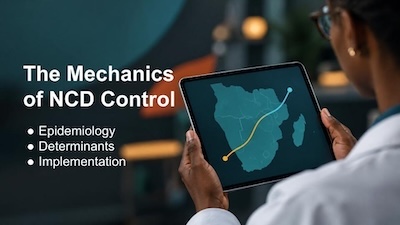
Quantifying Burden, Addressing Inequity: The Mechanics of NCD Control
Quantifying Burden, Addressing Inequity: The Mechanics of NCD Control

16 September 2026
Non-communicable diseases present the largest clinical and economic threat to Southern African healthcare systems, requiring a rapid shift from individual clinical interventions to structural public health solutions. While NCD epidemiology effectively quantifies regional disease burdens and lifestyle habits, these metrics are ultimately driven upstream by the social determinants of health. For frontline clinicians and policymakers across Southern Africa, mitigating this crisis requires implementation science to close the "know-do gap"—translating clinical guidelines into resilient, real-world healthcare delivery despite localised resource constraints.
1. NCD Epidemiology: Tracking the Regional Shift
Epidemiology provides the data-driven foundation for understanding how NCD distribution, frequency, and causal pathways are changing across the region. Unlike acute infectious outbreaks, NCDs are characterised by long latency periods, protracted clinical courses, and complex, multifactorial etiologies.
In Southern African populations, this burden is compounded by a stark epidemiological transition:
- The Dual Burden of Disease: Health professionals increasingly manage a complex convergence of chronic infectious diseases and metabolic conditions. Clinicians routinely treat patients presenting with concurrent HIV or tuberculosis alongside accelerating rates of type 2 diabetes and hypertension.
- The Genetic-Environmental Interplay: While genetic susceptibility heavily influences disease onset, rapid urbanisation and shifting dietary patterns across Southern African cities have dramatically elevated absolute cardiovascular and metabolic risks.
Regional epidemiological surveillance allows health systems to transition from reactive treatment models to predictive, targeted preventative care.
2. Determinants of Health: Looking Upstream
While clinical epidemiology identifies individual risk factors like body mass index (BMI), smoking, and poor diet, the determinants of health explain why these risks occur. Health outcomes are heavily shaped by the social, economic, physical, and political environments in which patients live and work.
- Socioeconomic Status: Deprivation directly correlates with limited access to nutrient-dense foods, safe recreational spaces, and timely medical intervention, worsening metabolic risks.
- Commercial Determinants: The aggressive expansion of ultra-processed foods, sugar-sweetened beverages, and tobacco into both urban centers and rural settlements drives the structural availability of harmful commodities.
- Systemic & Structural Drivers: Macro-level political configurations, environmental factors, and systemic economic inequities create entrenched health disparities that cannot be fixed by individual patient willpower alone.
When public health strategies treat NCDs purely as a consequence of personal lifestyle choices, they fail to address these root causes. Prescribing a rigid diet or complex medical regimen is futile if a patient lacks financial access to fresh food or lives hours away from the nearest operational clinic.
3. Implementation Science: Moving Evidence into Practice
The ultimate bottleneck in regional health is rarely a lack of clinical evidence; it is the know-do gap—the chasm between proven medical interventions and their real-world application. This is where implementation science becomes vital for Southern African health professionals.
Implementation science investigates the methods, frameworks, and contextual factors that influence how evidence-based interventions are successfully integrated into routine health systems.
The Evolution from Social Needs to Structural Change
Historically, healthcare systems addressed social determinants through basic individual screening and referral pipelines—such as referring a diabetic patient to local food relief programmes. While helpful for short-term relief, these actions merely scratch the surface of systemic inequity.
Modern implementation frameworks demand a shift toward multi-sector, context-aware strategies:
- Adapting to Resource Constraints: Translating high-level medical guidelines into practice requires subnational actors and frontline professionals to adapt interventions to local supply chains, staffing limitations, and cultural realities.
- Structural Partnerships: Health systems must act as anchor institutions, partnering with community coalitions, non-governmental organisations, and local leadership to integrate food security, clean water, and health education directly into clinical pathways.
- Optimising Care Delivery: Well-implemented clinical pathways—such as task-shifting NCD screenings to community health workers or integrating hypertension clinics into existing HIV infrastructure—drastically reduce systemic strain while maximising patient retention.
Future Directions for Regional Health Systems
Resolving the NCD crisis across Southern Africa requires looking beyond the walls of the clinic. Epidemiology maps out the scale and features of the threat. Understanding the determinants of health exposes the socio-political landscapes driving these risks. Finally, implementation science provides the practical tools needed to embed these insights into equitable, sustainable, real-world policy. Only by uniting these three disciplines can health professionals shift from temporarily managing chronic sickness to structurally generating long-term wellness.
Master the Mechanics of NCD Control
To equip health leaders with the tools needed to drive this systemic transition, expressions of interest are being accepted for the pilot of the IS4NCDs Core Module: NCD Epidemiology, Determinants of Health & Implementation. This specialised training is designed to translate academic theory into immediate workplace application, drawing directly on participants' own professional contexts for its practical assessments.
- Tentative Schedule: 26–30 October 2026
- Instructional Modality: Face-to-face simultaneously at Copperbelt University, the University of Zambia, Stellenbosch University, and the University of the Witwatersrand. One set of live lectures will stream into all four classrooms at once. Participants at each site will work through practical, challenge-based learning activities in person, facilitated locally by faculty at each institution.
- Cost: No course fees during the pilot phase (Value: ZAR 6,000 / ~EUR 300). PLEASE NOTE: Funding for travel, accommodation, and other costs associated with participation is NOT provided.
Eligibility & Admission Criteria:
- Direct Entry: A Bachelor’s degree (NQF Level 7) in medicine, nursing, pharmacy, public health, environmental health, biomedical sciences, or a related discipline from a recognised institution.
- Prior Learning Pathway: A Level 6 Diploma with at least three years’ relevant professional experience in a health service, programme management, or policy role (considered case-by-case under Recognition of Prior Learning).
- Professional Requirement: Current or recent engagement in health service delivery, programme implementation, management, policy, or research is strongly recommended to facilitate the context-driven curriculum.
The IS4NCDs project has received funding from the European Union's Erasmus+ programme under Grant Agreement no. 101179511
The IS4NCDs project has received funding from the European Union's Erasmus+ programme under Grant Agreement no. 101179511

Harnessing Quality Improvement to Implement Evidence-Based NCD Care: From Theory to Frontline Practice
Harnessing Quality Improvement to Implement Evidence-Based NCD Care: From Theory to Frontline Practice

14 September 2026
Deploying evidence-based interventions for non-communicable diseases remains one of the greatest challenges in modern global health. While clinical guidelines and technical toolkits—such as the World Health Organization’s HEARTS and PEN packages—are widely available, their real-world delivery is frequently compromised. Robust protocols regularly falter when exposed to local clinic realities, resource constraints, and complex patient pathways.
To overcome these operational barriers, the healthcare sector is increasingly turning to a powerful, interdisciplinary methodology: Quality Improvement Practice integrated within Implementation Science.
While Implementation Science provides the systemic frameworks to diagnose barriers to care, Quality Improvement delivers the practical engine required for local adaptation and execution. For healthcare professionals, mastering the intersection of these two fields has transformed from an optional asset into a critical institutional requirement.
The Strategic Alignment: IS Frameworks and QI Execution
Implementing sustainable NCD care pathways requires a sophisticated understanding of both macro-level systems and micro-level clinical environments. Rather than viewing them as competing disciplines, effective healthcare systems integrate them sequentially:
- Implementation Science: Focuses on the macro and meso levels of healthcare. It provides the frameworks to diagnose systemic roadblocks and helps leaders select the most appropriate overarching strategy.
- Quality Improvement: Operates at the micro level of daily care. It provides the agile engine needed for frontline adaptation, rapid iterative testing, and the design of sustainable, local workflows.
Without Implementation Science, quality improvement efforts risk becoming isolated, small-scale projects that fail to achieve institutional scale-up. Conversely, without pragmatic QI tools, implementation blueprints remain purely theoretical, failing to gain traction among frontline clinical staff. True integration ensures that evidence-based interventions are not just introduced, but permanently embedded into daily workflows.
Why NCD Pathways Demand a Specialized Skillset
Unlike acute medical conditions, managing chronic illnesses like type 2 diabetes, cardiovascular disease, and cancers introduces unique operational complexities that traditional top-down rollouts cannot solve:
- Multifaceted, Longitudinal Care: Effective NCD management relies on a complex web of clinical decision support, provider feedback, and patient self-management infrastructure over several decades.
- High Contextual Vulnerability: A care protocol designed for a well-resourced urban facility rarely functions seamlessly in an overstretched community clinic without deliberate, localized calibration.
- The Behavioural Component: Successful implementation requires shifting the ingrained habits of both busy clinical teams and patients navigating lifelong therapies.
Navigating these challenges requires specialized training. Healthcare leaders must know how to deploy diagnostic tools like process mapping, design reliable data feedback loops, and utilize iterative testing cycles safely within live clinical environments.
Resolving the Capability Shortfall
The demand for professionals who can seamlessly merge the structural rigor of implementation research with the agile, human-centric focus of frontline quality improvement is surging. Health ministries, international NGOs, and clinical networks are actively seeking leaders capable of designing resilient, scalable NCD care pathways.
Our upcoming intermediate training module, Quality Improvement Practice in Implementation Science for NCDs, is explicitly engineered to build these competencies. Moving beyond abstract theory, the curriculum provides a deep, practical dive into the exact methodologies required to translate global clinical guidelines into sustainable local operations.
In this specialized training, you will master the practical toolkits necessary to lead high-impact health interventions, optimize care delivery metrics, and drive lasting systemic change in NCD management.
The IS4NCDs project has received funding from the European Union's Erasmus+ programme under Grant Agreement no. 101179511
The IS4NCDs project has received funding from the European Union's Erasmus+ programme under Grant Agreement no. 101179511

Mastering Implementation Science: The Power of Mixed Methods Research
Mastering Implementation Science: The Power of Mixed Methods Research

9 September 2026
Mastering implementation science requires integrating quantitative metrics with qualitative narratives to bridge the gap between clinical research and real-world health impact. By utilising frameworks such as convergent parallel, explanatory sequential, and exploratory sequential designs, researchers gain a comprehensive toolset that eliminates dangerous analytical blind spots in public health.
The Defining Strategy: Integration
Mixed methods is more than just running two separate health studies. Its value relies entirely on integration—intentionally connecting medical metrics and community narratives. While quantitative data tells you what is happening to patient outcomes on a large scale, qualitative data explains why and how healthcare workers and clinics are adopting the intervention.
Three Ways to Structure the Research
Depending on your project's goals, this course will teach you how to deploy three primary implementation frameworks:
- Convergent Parallel: Track clinical health data and conduct staff interviews simultaneously to evaluate if the real-time implementation process matches your expectations.
- Explanatory Sequential: Gather quantitative clinic metrics first to identify broad trends—such as a drop in programme adoption—then use qualitative focus groups to uncover the underlying reasons.
- Exploratory Sequential: Interview a community first to understand local cultural health needs, then use those insights to design and test a scalable, quantitative public health survey.
Key Advantages of This Approach
Deploying these mixed frameworks offers significant benefits for public health initiatives:
- Higher Validity: Cross-validates clinic outcomes through multiple community data sources.
- Holistic Insights: Prevents the critical human element from being lost in big health data.
- Persuasive Results: Combines hard health statistics with compelling patient stories to win funding.
Fundamental Challenges to Consider
While powerful, executing a mixed methods design requires navigating specific operational demands:
- Resource Heavy: Managing both clinical data and fieldwork requires careful, rigorous planning.
- Dual Expertise: Requires learning both statistical tracking and qualitative thematic analysis.
- Conflicting Data: Teaches you how to resolve discrepancies when numbers and stories do not align.
The Takeaway
Relying on a single data type creates dangerous analytical blind spots in public health. By pairing statistical precision with descriptive depth, this course provides the comprehensive, actionable toolset you need to bridge the gap between research and real-world health impact.
Ready to elevate your NCD research impact?
The pilot of our intermediate training module Introduction to Mixed Methods Research in Public Health is scheduled for 12-16 October 2026. We are now accepting expressions of interest. This training, led and delivered live online by the Stellenbosch University, introduces mixed methods research and its application to key public health questions. Learners will explore the theoretical foundations, methodological designs, and practical considerations of this approach.
Upon successful completion of this NQF Level 9 module, participants will have gained the knowledge required to design, conduct, and evaluate their own mixed methods public health research, earning a Certificate of Competence and 30 General Continuing Education (CEU) credits.
There are no course fees to participate in the pilot phase. This training is valued at ZAR 6,000 and is fully funded. Slots are limited. Participants from across the sub-Saharan African Region with following qualifications are encouraged to apply:
- NQF Level 7 with relevant work experience (supported by a portfolio), or
- NQF Level 8 (Honours/Postgraduate Diploma level).
The IS4NCDs project has received funding from the European Union's Erasmus+ programme under Grant Agreement no. 101179511
The IS4NCDs project has received funding from the European Union's Erasmus+ programme under Grant Agreement no. 101179511

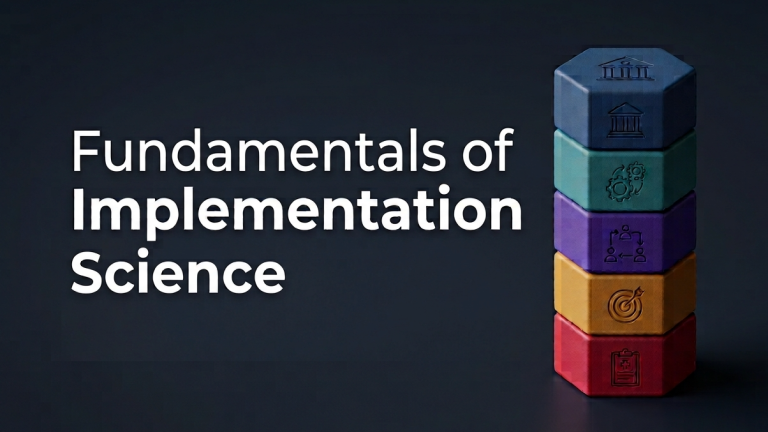
The Fundamentals of Implementation Science in NCD Management Across Southern Africa
The Fundamentals of Implementation Science in NCD Management Across Southern Africa
7 September 2026
Implementation science offers the vital framework needed to combat the rising burden of non-communicable diseases (NCDs) in Southern Africa by systematically closing the gap between clinical guidelines and real-world practice. For health professionals and recent graduates in the region, mastering this discipline is critical. While traditional medical research focuses on what clinical treatments work, implementation science investigates how to deliver those treatments sustainably and equitably within resource-constrained African health systems.
Historically overshadowed by infectious diseases, NCDs—such as cardiovascular conditions, diabetes, chronic respiratory illnesses, and cancers—are rising sharply across Southern Africa. Managing these long-term conditions requires sustained, coordinated care, functional referral pathways, and an uninterrupted medication supply chain. Translating international guidelines into local clinics remains notoriously difficult because health systems routinely face systemic constraints. An implementation science approach addresses this by shifting focus from individual-level clinical treatments to system-level solutions, ensuring that proven interventions are successfully embedded into routine care.
The Five Core Factors of Implementation Success
To effectively design, manage, or evaluate chronic care programmes, healthcare professionals must navigate five core operational pillars:
- Context: Local conditions decide a programme's success. An identical protocol can succeed in one facility but stall in another due to the surrounding environment. Implementation science rigorously maps inner factors (like clinic culture, staffing, and clinical workflows) and outer factors (such as national health funding and regional drug supply lines).
- Frameworks: Frameworks act as the structured tools used to assess that context and predict how it will affect an implementation. Rather than guessing why a rollout is struggling, teams use these descriptive systems to identify hidden barriers, choose the right steps, and map the relationships between different clinic constraints.
- Implementation Strategies: These are the active, deliberate choices made to train staff, adapt interventions, and change clinical behaviour to improve a specific outcome. In Southern Africa, pragmatic strategies include task-sharing (shifting NCD screening from doctors to community health workers) or integrating chronic care tracking into existing HIV/TB clinic infrastructure.
- Fidelity: This measures whether a programme stays true to its original design as it is delivered. In chronic NCD care, programmes frequently suffer from 'fidelity drift'—a gradual, unnoticed gap where staff quietly slip back into old habits (like skipping the required rest period before a blood pressure reading) under daily work pressure.
- De-Implementation: Modernising NCD care does not just require adding new guidelines; it demands the distinct operational skill of actively withdrawing outdated, obsolete, or low-value clinical practices from circulation. Turning off an old routine takes as much deliberate effort and strategy as starting a new one.
Implications for African Health Systems
For the next generation of healthcare leaders in Southern Africa, addressing the growing chronic disease burden requires looking beyond the pharmacy shelf. Implementation science acts as a diagnostic lens, showing exactly where a delivery chain breaks down and testing localised strategies to reinforce the weakest links. By embedding these five pillars into everyday healthcare delivery, Southern African health systems can move beyond theoretical guidelines to achieve real, equitable, and lasting health gains for NCD patients.
Build Your Expertise: Fundamentals of Implementation Science
Expressions of interest are now being accepted for the upcoming fully funded pilot training programme. If you are a health professional or recent graduate looking to diagnose implementation challenges in real NCD programmes drawn from your own working context, you can apply directly for the foundational core module:
- Core Module: Fundamentals of Implementation Science (ZQF Level 8, Face-to-Face)
- Lead Institution: Copperbelt University
- Focus: Establishing what implementation science is, how it differs from efficacy research or quality improvement, and where it sits on the continuum from discovery to delivery.
To learn more about the curriculum and submit your expression of interest, visit the Training Portal today.
The IS4NCDs project has received funding from the European Union's Erasmus+ programme under Grant Agreement no. 101179511
The IS4NCDs project has received funding from the European Union's Erasmus+ programme under Grant Agreement no. 101179511
We are Now Accepting Expressions of Interest!
We are Now Accepting Expressions of Interest!
1 September 2026
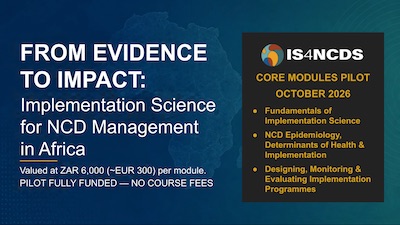
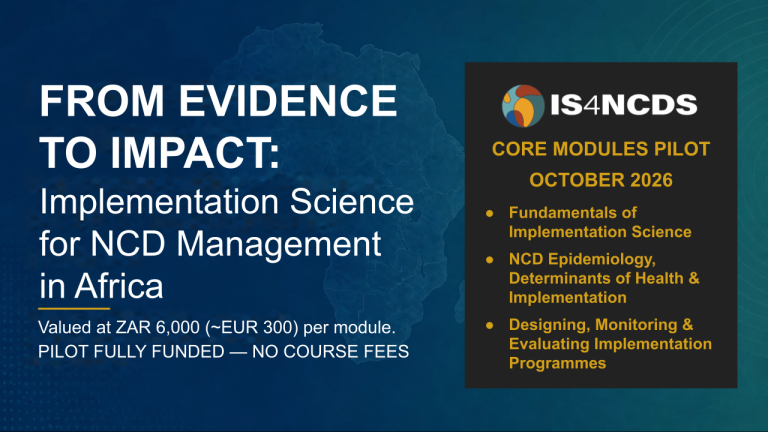
We are now accepting expressions of interest for the IS4NCDs training programme in implementation science applied to non-communicable disease care. The Core Modules pilot is scheduled to begin in the first week of October 2026.
The Training is Fully Funded, No Course Fees
Valued at ZAR 6,000 each, the modules are fully funded; there are no course fees for the pilot phase. Please note that the funding does not cover travel, accommodation, or other costs associated with participation. These costs are not included, so you’ll need to budget for them separately
Who This Is For
The training is intended primarily for professionals in public health, internal medicine, and primary care, though other relevant applicants are considered. Applicants across sub-Saharan Africa are welcome to submit an Expression of Interest.
How the Core Modules Pilot Works
As outlined in our earlier announcement, the pilot runs across three modules (dates are tentative and subject to change):
- Fundamentals of Implementation Science, 5-9 October 2026
- NCD Epidemiology, Determinants of Health & Implementation, 26-30 October 2026
- Designing, Monitoring & Evaluating Implementation Programmes, 2-6 November 2026
Training will be delivered via a hybrid model streamed simultaneously into classrooms at Copperbelt University, the University of Zambia, Stellenbosch University, and the University of the Witwatersrand, with in-person, team-based practical work facilitated locally at each site.

Slots are Limited, Submit Your Expression of Interest Early!
For more information and to register your interest, please visit this link: IS4NCDs eHub, or scan the QR code.
The IS4NCDs project has received funding from the European Union's Erasmus+ programme under Grant Agreement no. 101179511
The IS4NCDs project has received funding from the European Union's Erasmus+ programme under Grant Agreement no. 101179511

Implementation Outcomes: The Programme Performance Map
Implementation Outcomes: The Programme Performance Map
27 August 2026
A programme's performance is rarely a single verdict — it can succeed on some measures while falling short on others at the very same time, and knowing which is which matters enormously for anyone managing, funding, or shaping NCD programmes across Africa. In practice, this often means a programme can be well adopted and well liked by staff, yet still fail to reach enough patients or to keep running much beyond the pilot phase.
Take a district that rolls out a new diabetes self-management programme. Clinics signed on, and staff liked it — but only a third of eligible patients were ever actually enrolled, and by month eight, half the clinics had quietly stopped running it. So when someone asks, six months in, whether it worked, the honest answer is usually ‘sort of.’ It wasn't a failure: the programme was adopted, and it was acceptable to staff. What broke down was something more specific — not enough patients were reached, and the programme wasn't built to last past the pilot phase.
A Programme Can Succeed on Some Measures and Fail on Others
Success and failure are the wrong categories for diagnosing an NCD programme — implementation science replaces that single verdict with distinct, measurable pieces of programme performance, because the fix for "not enough patients were reached" is completely different from the fix for "staff did not like it" or "we ran out of money." This matters for health professionals and policymakers, not just researchers, since programmes get redesigned, defunded, or abandoned based on a single blanket statement — ‘it did not work’ — when the real story, and the real solution, is much more specific and far more fixable than that.
A widely used framework (Proctor's Implementation Outcomes) separates programme performance into these distinct dimensions:
- Did people accept it?
- Did they adopt it?
- Was it a good fit for the setting and population?
- Was it affordable?
- Could it actually be delivered given real-world staffing and resources?
- Was it delivered as designed?
- Did it reach enough of the target population?
- Critically, did it last?
Five Core Factors Shape Programme Success and Failure
Implementation outcomes act as the map that shows where each of five core factors fits — and which one to examine when something has gone wrong. Though we've covered these separately, they are really different pieces of the same picture:
- Context is about the local conditions that shape whether a programme can succeed at all.
- Frameworks are the structured tools used to assess that context and predict how it will affect an implementation.
- Implementation strategies are the deliberate choices used to improve a specific outcome.
- Fidelity is about whether a programme stayed true to its design as it was delivered.
- De-implementation applies this same logic to stopping ineffective or harmful practices, not just starting new ones.
Building Capacity for NCD Programme Optimisation
Precise diagnostic tools, not guesswork, are what unlock the full potential of health initiatives and allow positive results to be scaled up. IS4NCDs is committed to training health professionals, programme managers, and policymakers across Southern Africa to make just that kind of determination — a skill that provides the technical precision needed to pinpoint exactly where an NCD programme can be optimised for success, offering the clear insights required to build upon existing organisational strengths.
Expressions of Interest will soon be accepted for this training, which launches with the Core Modules pilot in early October 2026, moving into the Intermediate Modules pilot in the third week of that month, before the Advanced Modules pilot follows in November. Each module carries a value of roughly ZAR 6,000, but during the pilot phase, funding covers this cost in full, so participants pay nothing.
The IS4NCDs project has received funding from the European Union's Erasmus+ programme under Grant Agreement no. 101179511
The IS4NCDs project has received funding from the European Union's Erasmus+ programme under Grant Agreement no. 101179511
De-Implementation: The Other Half of Implementation Science
De-Implementation: The Other Half of Implementation Science
25 August 2026
Health systems cannot successfully modernise care unless they master de-implementation, the distinct operational skill of actively withdrawing outdated clinical practices from circulation.
Clinical practice does not automatically stop just because evidence changes. Turning off an obsolete protocol requires dedicated ownership and specific strategies, which are entirely separate from the skills needed to adopt a new intervention.
A clear example is the persistence of sliding-scale insulin charts for stable, non-critical patients with type 2 diabetes. While current guidelines favour preventive basal-bolus regimens, sliding-scale dosing remains the default in many facilities. This continuation occurs not because staff are unaware of the updated guidance, but because health systems routinely fail to assign anyone to the job of taking the old charts out of use.
For professionals managing the growing burden of non-communicable diseases (NCDs), understanding how to systematically dismantle these entrenched, ineffective practices is the critical, missing half of implementation science.
Stopping a Practice Takes as Much Deliberate Effort as Starting One
De-implementation is the deliberate process of stopping a practice that is no longer effective, safe, or worth its cost. It is not simply what happens when implementation is absent; a practice already embedded in daily routine keeps running by default unless something specifically displaces it.
A handful of forces tend to keep low-value practices in place long after the evidence has moved on:
- Clinical habit, built up over years of training and repetition
- Fear of missing something without the old routine as a safety net
- No designated owner for retiring outdated protocols
- No clear replacement to slot into the gap the old practice leaves behind
- Patient or family expectations built around the old routine continuing
The Same Outcomes Used to Judge New Programmes Apply to Retiring Old Ones
Implementation outcomes aren’t only useful for judging whether something new took hold. The same questions work in reverse for something being phased out:
- Was stopping this practice acceptable to staff?
- Was the replacement feasible to deliver with existing resources?
- Did the change actually reach every part of the facility, or did the old chart quietly survive in one ward?
Treating de-implementation with the same rigour as implementation is what keeps a ‘we have updated the guidance’ memo from becoming the entire plan.
IS4NCDs Training Helps Teams Retire Low-Value Practices as Deliberately as Adopting New Ones
Training with IS4NCDs equips health professionals to approach decommissioning outdated clinical habits as a structured, intentional strategy. Rather than assuming old routines will simply vanish when new guidelines arrive, this initiative transforms de-implementation into a standard, teachable skill in the Southern African region. It shifts the focus from what to adopt to the far more complex task of managing how to stop.
IS4NCDs has scheduled the Core Modules pilot to launch in early October 2026, followed by the Intermediate Modules pilot in the third week of October, and the Advanced Modules pilot in November. Acceptance of Expressions of Interest is coming soon. The training modules, valued at approximately ZAR 6,000 per module, are fully funded — there is no cost to participants during the pilot phase.
The IS4NCDs project has received funding from the European Union's Erasmus+ programme under Grant Agreement no. 101179511
The IS4NCDs project has received funding from the European Union's Erasmus+ programme under Grant Agreement no. 101179511

Frameworks: The Bridge Between Context and Strategy
Frameworks: The Bridge Between Context and Strategy
18 August 2026
A structured framework is essential for a successful protocol roll-out; without one, teams default to the loudest barrier in the room while quieter, decisive factors go unchecked. A programme team preparing to roll out a new hypertension treatment protocol can easily list dozens of things that might affect it—staff turnover, drug stock-outs, patient trust, referral delays, and funding cycles. However, a long list of maybes is not an actionable plan.
What turns that list into something usable is a framework: a structured set of categories that tells a team which factors are worth checking, in what order, and why. Without one, teams naturally fall back on whichever barrier is loudest in the room at the time—often staffing, because it is visible—while equally critical factors, like whether the protocol fits existing workflows, go ignored until the programme has already stalled.
Frameworks Turn a List of Maybes Into a Specific Checkable Plan
A framework doesn’t tell a team what its local barriers are — it tells them where to look. Instead of a vague sense that ‘context matters’, a team working through a framework is prompted to check specific, named domains: leadership buy-in, compatibility with existing workflows, communication channels, resource availability, and more, depending on which framework they are using.
That specificity is the entire value. ‘We should think about context’ produces a discussion. ‘Check whether this protocol is compatible with how staff already triage patients’ produces an answer.
Different Frameworks Answer Different Questions
Not every framework does the same job. Broadly, they fall into a few families:
- Diagnostic frameworks, such as CFIR (Consolidated Framework for Implementation Research), map the context a programme is being dropped into, before and during roll-out.
- Evaluative frameworks, such as RE-AIM (Reach, Effectiveness, Adoption, Implementation, and Maintenance), judge how a programme performed after the fact across all five of its core dimensions.
- Process frameworks, such as NPT (Normalization Process Theory), explain how a new practice does or doesn’t become embedded into everyday routine work over time.
- Integrated frameworks, such as i-PARIHS (integrated Promoting Action on Research Implementation in Health Services), combine the evidence, the context, and the facilitation effort needed to bridge that evidence with the local clinical context.
Picking the wrong type for the job is a common misstep — using an evaluative framework to plan a roll-out, for instance, tells a team how things went, not what to check beforehand.
Frameworks are the Bridge Between Reading Context and Choosing a Strategy
Context describes the local conditions a programme has to work within. Implementation strategies are the deliberate actions chosen to work with those conditions. A framework is what connects the two: it structures how a team reads the context in the first place, so the strategy that follows is a response to something specific rather than a guess.
The same logic that frameworks bring to diagnosis before roll-out also applies to diagnosing performance afterwards — which is exactly the territory implementation outcomes cover.
IS4NCDs Training Helps Teams Choose and Apply the Right Framework
IS4NCDs training is for people working within the health system across Southern Africa. The training programme builds the confidence to use these frameworks effectively, teaching participants to match the right tool to the correct stage of a project rather than simply relying on familiar options. The goal is to establish this as a standardised, teachable skill throughout the region.
IS4NCDs has scheduled the Core Modules pilot to launch in early October 2026, followed by the Intermediate Modules pilot in the third week of October, and the Advanced Modules pilot in November.
IS4NCDs will begin accepting Expressions of Interest soon. The training modules, valued at approximately ZAR 6,000 per module, are fully funded — there is no cost to participants during the pilot phase.
The IS4NCDs project has received funding from the European Union's Erasmus+ programme under Grant Agreement no. 101179511
The IS4NCDs project has received funding from the European Union's Erasmus+ programme under Grant Agreement no. 101179511
One Class, Four Institutions: Shared Lecture Streams and Local Teamwork
One Class, Four Institutions: Shared Lecture Streams and Local Teamwork
11 August 2026
When IS4NCDs set out to pilot its Core Modules, it faced a practical constraint common to multi-country training programmes: how to deliver the same rigorous, faculty-led training across four institutions without either repeating the same module four times or asking faculty to travel constantly between sites.
The answer is a hybrid delivery model built specifically for this challenge.
A Shared Lecture Stream, Delivered Locally
Beginning the first week of October 2026, the three Core Modules
- Fundamentals of Implementation Science
- NCD Epidemiology, Determinants of Health & Implementation
- Designing, Monitoring & Evaluating Implementation Programs
will be piloted simultaneously at Copperbelt University, The University of Zambia, Stellenbosch University, and the University of the Witwatersrand.
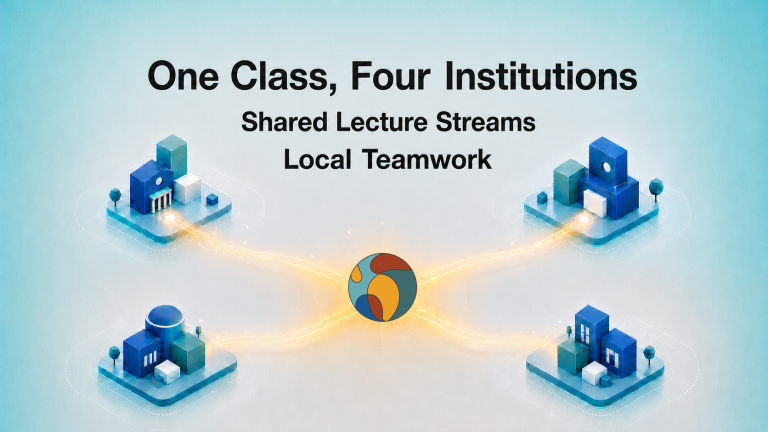
One set of live lectures streams into all four classrooms at once. From there, participants at each site work through practical, challenge-based learning activities in person, facilitated locally by faculty at each institution. The result is a single, consistent curriculum delivered at scale, without sacrificing the in-person, team-based work on which implementation science training depends.
Why This Model, and Why Now
The approach reflects a requirement built into the project from the outset: each Core Module needs to be piloted at all four partner institutions, not just one. Streaming shared content once, rather than repeating it site by site, was the model that met that requirement most efficiently, whilst preserving space for locally facilitated, hands-on practice at every location.
What’s Ready Behind the Scenes, and What Comes Next
Accreditation and Continuing Professional Development approval processes are progressing at each partner institution, with several already at an advanced stage ahead of October. Ethics approval for the project’s evaluation protocol has already been secured through the Institute of Tropical Medicine Antwerp, giving partner institutions a shared foundation as they complete their own local reviews. A working group with representation from all seven consortium partners is also shaping the project’s regional learning eHub.
IS4NCDs will begin accepting Expressions of Interest soon. The Core Modules, scheduled for piloting in early October and valued at approximately ZAR 6,000 per module, are fully funded — there is no cost to participants during the pilot phase.
The IS4NCDs project has received funding from the European Union's Erasmus+ programme under Grant Agreement no. 101179511
The IS4NCDs project has received funding from the European Union's Erasmus+ programme under Grant Agreement no. 101179511

The Know-Do Gap: Why Good Evidence Alone Does Not Change What Happens in the Clinic
The Know-Do Gap: Why Good Evidence Alone Does Not Change What Happens in the Clinic

6 August 2026
A national hypertension guideline is published, endorsed and distributed to every facility in a province. The evidence behind it is not in question — it is drawn from large trials. Reviewed by experts and consistent with World Health Organization recommendations. Eighteen months later, an audit finds that barely a third of eligible patients are being managed according to it.
Nothing was wrong with the evidence. The guideline simply never closed the distance between what is known and what is done.
The Gap That Evidence Alone Cannot Close
Implementation science calls this the know-do gap — the persistent space between what research has established works and what actually happens in routine care. It is not a knowledge problem in the way it first appears. Most clinicians in the audit above were aware the guideline existed. Awareness was never the barrier.
The gap opens for reasons that have little to do with the strength of the evidence itself: a workflow that assumes staffing the guideline’s authors never accounted for, a supply chain that cannot sustain the recommended medication combination, or a patient population whose circumstances the original trial never captured.
Efficacy Is Not the Same Question as Implementation
Much of the confusion around the know-do gap comes from treating ‘does it work’ and ‘will it work here, delivered by this workforce, under the conditions’ as the same question. They are not. Efficacy research asks whether an intervention produces the intended effect under controlled or ideal conditions. Implementation research asks something else entirely: whether, and how, the same intervention can be delivered reliably under real, resource-variable conditions of routine care.
A guideline can be extremely well evidenced on the first question and still fail completely on the second — and in low- and middle- income health systems, where the gap between ideal and routine conditions is often widest, this distinction tends to matter more, not less.
Why the Gap Persists Longer in NCD Care
For a single-encounter intervention, the know-do gap is a one-off hurdle: either the intervention is delivered on that occasion or it is not. NCD management rarely works that way. A hypertension or diabetes protocol has to be delivered consistently, visit after visit, for years, across a health workforce that turns over and a supply chain that fluctuates. Every one of those repeat encounters is a fresh opportunity for the gap to reopen, even after it has apparently been closed.
Closing the Gap is a Distinct, Learnable Skill
Recognising that a know-do gap exists in one’s own setting is a reasonable starting point. Diagnosing why it exists in a specific facility or programme — separating a workflow mismatch from a resourcing shortfall because of a training deficit, and knowing which levers actually close each kind — is a distinct and considerably harder skill. Building that capability, calibrated to one’s position in the health system, is central to what the IS4NCDs training pathway is designed to do.
The IS4NCDs project has received funding from the European Union's Erasmus+ programme under Grant Agreement no. 101179511
The IS4NCDs project has received funding from the European Union's Erasmus+ programme under Grant Agreement no. 101179511

Context: The Variable That Decides NCD Programme Success
Context: The Variable That Decides NCD Programme Success
4 August 2026
When an NCD programme succeeds in one facility and stalls in another — despite using an identical protocol, identical training, and an identical evidence base — the cause is rarely a flaw in the intervention. It is almost always context: the surrounding conditions, inside and outside the facility, that a programme is dropped into. Context can be assessed systematically before rollout; when it isn't, the mismatch tends to surface only after the programme has already stalled.
Two Clinics, One Protocol, Two Different Results
A cervical cancer screen-and-treat programme launches across a region. In an urban clinic, uptake climbs steadily and holds. In a rural facility thirty kilometres away, running the identical protocol with the identical training, uptake barely moves before stalling out entirely.
Nothing about the intervention changed between the two sites. What differed was the context each was operating in.
Inner Setting and Outer Setting: The Two Layers That Make Up Context
Implementation science splits context into two critical layers:
- The Inner Setting: What is happening inside the facility itself — leadership support, staffing levels, workflow, culture, and available resources.
- The Outer Setting: What surrounds the facility — the policy environment, funding cycles, supply chains, referral networks, and community norms.
A programme can be well-designed and well-delivered and still fail purely because one or both of these layers was not accounted for. A well-staffed urban clinic with a reliable supply chain and an engaged facility lead offers a fundamentally different context than a single-nurse rural facility managing intermittent stock-outs — even when both are nominally running "the same programme."
NCD Care is Especially Exposed to Context, Because It Depends on It Holding Steady
Unlike a one-time intervention, NCD management is ongoing and heavily relies on long-term systemic stability:
- Repeat patient visits over years rather than days
- Continuous medication supply without interruption
- Functioning referral pathways across different tiers of care
- Consistent patient follow-up mechanisms
Each of these depends on context holding steady over a long period, which gives local conditions far more opportunity to make or break an NCD programme than they would a single-encounter intervention.
Structured Assessment, Not General Familiarity, is What Implementation Science Adds
Most health professionals already know that local conditions vary from one facility to the next — that observation alone isn't the insight. What implementation science adds is a structured way to assess which specific contextual factors are likely to matter, systematically, before rollout.
Frameworks used in the field — the Consolidated Framework for Implementation Research (CFIR) among them — break context down into specific, checkable domains:
- Leadership engagement and strategic buy-in
- Compatibility with existing clinical workflows
- Communication networks and information flow
- Resource availability and infrastructure capacity
That specificity is what turns a vague intuition into something a team can actually plan around.
Local Control Versus Escalation: Knowing Which Barriers are Actually Yours To Fix
Not every contextual barrier sits within local control. Part of working effectively with context is distinguishing what can be addressed locally from what needs to be escalated:
- Local Control: Adjusting daily workflows, strengthening internal team communication, or identifying a local clinical champion.
- System Escalation: Resolving national or regional supply chain issues, structural funding gaps, or broad policy limitations.
Directing effort accordingly ensures teams do not ignore system-level barriers or exhaust local capacity trying to fix something structural.
A Capability IS4NCDs Will Equip You With: Assessing Context Before Rollout, Not After
Understanding, in hindsight, why one clinic succeeded and another stalled is a useful starting point. Systematically assessing your own facility's context before rollout — and knowing which barriers are yours to fix locally versus which need to be escalated — is a distinct, learnable skill. It is a key capability that IS4NCDs training is designed to build, at a level suited to your position in the health system.
The IS4NCDs project has received funding from the European Union's Erasmus+ programme under Grant Agreement no. 101179511
The IS4NCDs project has received funding from the European Union's Erasmus+ programme under Grant Agreement no. 101179511
IS4NCDs Marks Steady Progress Towards October Pilot Launch
IS4NCDs Marks Steady Progress Towards October Pilot Launch
29 July 2026
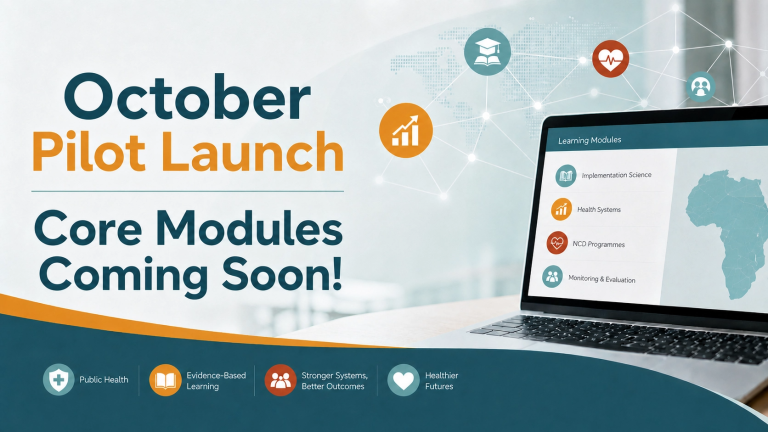
IS4NCDs held its monthly virtual meeting on 27 July 2026, bringing together representatives from all partner institutions to review progress towards the piloting of its implementation science training modules, set to begin in October.
The meeting highlighted encouraging momentum across the programme. Institutions leading the Core, Intermediate, and Advanced modules each reported on their preparations, with accreditation and continuing professional development (CPD) applications progressing at several universities. A number of modules have already secured short-course approval and CPD-eligible status, reflecting growing institutional recognition.
Work also continues on a centralised online hub. The platform is being built to streamline access to the learning modules. Prospective learners will soon be able to access programme information — including eligibility information and module goals — as well as register interest.
In addition to the piloting update, the meeting featured progress reports on two related workstreams. A master’s thesis contextualising the IS4NCDs competency framework is nearing completion, with results expected to be shared with the consortium later this year. Preparations are also continuing for the programme’s Executive-track course, with a full protocol update anticipated at the next consortium meeting.
Looking ahead, partner institutions reaffirmed their commitment to a collaborative teaching model, in which faculty from across the consortium will contribute to delivering each module — including a shared Challenge-Based Learning component woven throughout the curriculum to ensure participants apply what they learn to real-world NCD care implementation challenges.
With piloting now fast approaching, here is the confirmed target schedule for the three Core Modules:
- Module 1 - Fundamentals of Implementations Science: 5-9 October 2026
- Module 2 - NCD Epidemiology & Determinants: 26-30 November 2026
- Module 3 - Design, Monitor & Evaluate: 2-6 November 2026
Further updates on the modules and registration of interest will be shared in the coming weeks.
The IS4NCDs project has received funding from the European Union's Erasmus+ programme under Grant Agreement no. 101179511
The IS4NCDs project has received funding from the European Union's Erasmus+ programme under Grant Agreement no. 101179511
The IS4NCDs project has received funding from the European Union's Erasmus+ programme under Grant Agreement no. 101179511
The IS4NCDs project has received funding from the European Union's Erasmus+ programme under Grant Agreement no. 101179511