
Zambia’s National Strategy and IS4NCDs Target Non-Communicable Diseases
9 June 2025
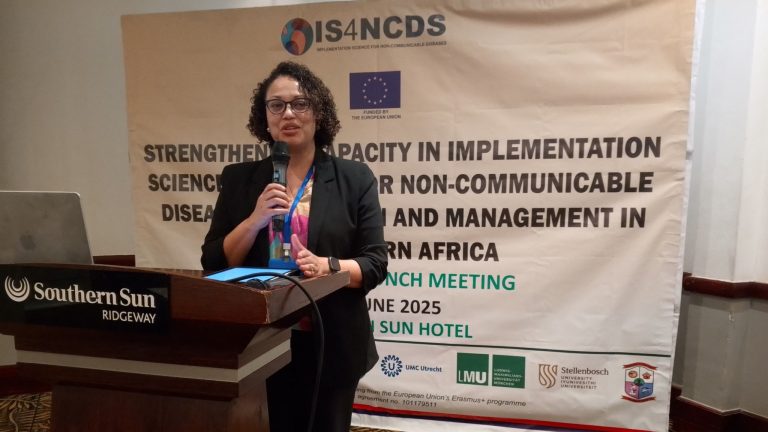
The Government of Zambia acknowledged the serious challenges posed by Non-Communicable Diseases (NCDs) and reaffirmed its commitment to combating them through comprehensive policy and strategic initiatives. This was highlighted by Health Permanent Secretary for Donor Coordination, Dr. George Sinyangwe, during the launch of the Implementation Science for Non-Communicable Diseases (IS4NCDs) Consortium.
Dr. Sinyangwe, speaking through the Ministry of Health Acting Director for Public Health, Dr. Matilda Simpungwe, emphasized the government’s recognition of NCDs as a formidable public health challenge. The government’s efforts include aligning with global frameworks such as the Framework Convention on Tobacco Control and the World Health Organization’s Global Action Plan for the Prevention and Control of NCDs.
Zambia’s National Health Strategic Plan for 2022-2026 aims to reduce mortality caused by NCDs by strengthening prevention strategies, promoting multi-sector collaboration, and enhancing healthcare capacity at the primary level. The government has also embraced a national alcohol policy since 2018 and is advancing legislation through the Tobacco Control Bill to mitigate risk factors associated with NCDs.
Despite these policies, Dr. Sinyangwe urged citizens to adopt healthier lifestyles, noting the growing prevalence of unhealthy habits linked to socioeconomic changes. These trends continue to fuel the burden of NCDs such as cardiovascular diseases, diabetes, cancer, and respiratory illnesses in the country.
The launch of the IS4NCDs Consortium represents a significant milestone in Zambia’s public health landscape. This initiative is designed to train a new cadre of health professionals equipped with not only medical knowledge but also practical skills necessary for effective implementation of interventions on the ground.
Professor Bernard Hango’mbe, Vice Chancellor for Research and Innovation at Copperbelt University, represented by Professor Ephraim Munshifwa, described the consortium launch as a landmark event for Zambia and the wider Southern African region. He praised the European Union’s support for addressing the alarming rise in NCD-related deaths in sub-Saharan Africa.
The IS4NCDs Consortium brings together expertise from leading European institutions including Utrecht University, Ludwig-Maximilian University, and the Institute of Tropical Medicine, alongside prominent African universities such as the University of Witwatersrand, Stellenbosch University, Copperbelt University, and the University of Zambia. This collaboration is expected to drive innovative research and implementation science to curb the growing impact of NCDs.
GOVERNMENT RECOGNIZES FORMIDABLE CHALLENGES OF NCDs- MOH.
Health Permanent Secretary for Donor Coordinaton Doctor...
Posted by Ministry of Health Zambia on Friday, June 6, 2025


The IS4NCDs project has received funding from the European Union's Erasmus+ programme under Grant Agreement no. 101179511
The IS4NCDs project has received funding from the European Union's Erasmus+ programme under Grant Agreement no. 101179511