
News

IS4NCDs Keeps the Pace After Johannesburg
IS4NCDs Keeps the Pace After Johannesburg

2 June 2026
The IS4NCDs consortium convened its monthly virtual meeting via Zoom video call on 1 June 2026, bringing together representatives from partner institutions across Africa and Europe after the landmark in-person consortium meeting held in Johannesburg. The call served as an opportunity to reflect on that in-person meeting, share progress updates across work packages, and align on the path forward.
Reflecting on Johannesburg
Participants opened the call with warm reflections on the Johannesburg consortium meeting, describing it as a turning point for the project. Colleagues noted that the gathering provided much-needed clarity on priorities and next steps, and that the opportunity to connect in person — many for the first time after more than a year of online collaboration — was invaluable. The meeting was praised for its capacity-building activities and for enabling productive conversations between institutions that needed to strengthen their coordination.
Work Package Updates
Core Modules — Copperbelt University (CBU)
CBU reported progress on establishing the IS4NCDs project's visibility at the institutional level, with the project now featured on both the university's main website and its school-level web page. The team also provided an update on micro-credentials: while Zambia does not yet have a national framework for micro-credentials, CBU has engaged its internal senate committee — which oversees curriculum review and short courses — to obtain formal documentation acknowledging this context. Planning for the pilot of the Fundamentals of Implementation Science module is underway, with the team working to confirm internal timelines.
Intermediate Modules — Stellenbosch University
Stellenbosch University shared particularly encouraging news. Following the Johannesburg meeting, the team moved swiftly to prepare materials for Continuing Professional Development (CPD) point applications, submitting CVs, timetables, and assessments for all relevant teaching staff. All three intermediate modules have received content approval at NQF Level 9, with CPD points awarded for each. Building on this momentum, the team subsequently submitted applications for formal short course approval within the faculty — a process that is now underway and expected to yield an outcome sooner than originally anticipated. Piloting of the three modules remains planned for October, with one module rescheduled to November to accommodate a faculty member's sabbatical leave. The team is also working to update the university website to feature the IS4NCDs project and its programmes.
Advanced Modules — WITS University
WITS provided an update, confirming that the IS4NCDs project has been featured on the institute website for some time. The team is continuing to support the broader consortium's work on the advanced modules track.
Ethics Application
The consortium reviewed the status of its ethics application for research on education, which will cover activities including the piloting of short courses. Work is progressing on the research protocol, with the team coordinating to finalise the proposal and submit it in the near term. Discussion was held on the structure of the application, including the designation of principal and co-investigators across participating institutions, reflecting the multi-country, multi-institution nature of the consortium's work.
E-Learning Platform
An update was shared on the consortium's e-hub — its planned e-learning platform. A draft vision document is being prepared and will be shared on a collaborative platform for input from all consortium members. Institutions were encouraged to identify representatives to participate in the working group that will review and comment on this draft. The goal is to ensure every partner institution has a voice in shaping the platform before development proceeds.
Research and Manuscripts
The LMU Munich team reported that their competency study has reached a significant milestone, with all analytical steps now complete. The team is currently writing up the manuscript and will share an outline with the consortium steering board in the coming days, in line with the IS4NCDs authorship guidelines. A related ancillary study — conducted by a master's student who participated actively in the Johannesburg meeting — also benefited from a substantial increase in survey responses during and after that event. The student's thesis is due by the end of July, after which the broader team will collaborate on preparing a manuscript for publication. The consortium extended a standing invitation to the student to present her work to the group at a future call.
Executive Course Development
The University of Zambia shared that discussions are actively underway regarding the development of an executive course. Conversations with a partner institution have been described as productive and insightful, covering areas such as accreditation and business planning. Early-stage work on the research ethics protocol for the needs assessment phase of this course has begun, and the consortium will continue to track progress on this initiative in upcoming calls.
One Year of IS4NCDs Online
The call also marked a quiet but meaningful milestone: the one-year anniversary of the IS4NCDs website. The consortium acknowledged this moment as a small but tangible symbol of the project's growing public presence and its commitment to transparency and communication.


The IS4NCDs project has received funding from the European Union's Erasmus+ programme under Grant Agreement no. 101179511
The IS4NCDs project has received funding from the European Union's Erasmus+ programme under Grant Agreement no. 101179511
A Week of Collaboration Closes with Commitment to Combating NCDs Across Africa
A Week of Collaboration Closes with Commitment to Combating NCDs Across Africa
8 May 2026
The fifth and final day of the IS4NCDs Regional Consortium Meeting brought together partners from across the consortium at the Wits School of Public Health in Johannesburg to consolidate a week of intense and productive discussions. With clear decisions made, timelines set, and responsibilities assigned, the meeting closed on a note of genuine optimism and shared purpose.
Finalising the Teaching Faculty
The morning session focused on several items that required final clarity before the week's close. A significant portion of the discussion centred on identifying and confirming the faculty who will lead and contribute to each module. Breakout groups worked through the core, intermediate, and advanced modules, mapping out module leads, co-facilitators, and potential guest lecturers from across the consortium's institutions.
The consortium agreed on the importance of having a clearly identified lead for each module to ensure accountability and coordination. It was also noted that visiting faculty from partner institutions, particularly those travelling to observe piloting at other sites, could actively contribute to teaching — strengthening knowledge transfer across the consortium.
Conclusions and the Path Forward
Following the coffee break, a comprehensive summary of the week's outcomes was presented, along with key next steps. Reflecting on the meeting's opening goals, it was noted that all had been achieved: relationships deepened, breakout sessions produced concrete decisions, and a provisional piloting timeline is now in place.
Core Modules will be piloted in an innovative format, with face-to-face classrooms running simultaneously at four institutions — Wits, Stellenbosch, the University of Zambia, and Copperbelt University — connected virtually. This approach effectively enables 12 pilots across three modules in approximately three weeks. The Fundamentals of Implementation Science short course is planned for the first week of October, followed by the NCD Epidemiology module in the fourth week of October and the Monitoring & Evaluation module in the first week of November. Up to 100 participants will be engaged across these workshops, drawing from a multidisciplinary pool including health professionals, social scientists, and implementation science practitioners.
Intermediate Modules — Mixed Methods, Quality Improvement, and Participatory Action Research — will be offered fully online, with delivery beginning in mid-October and running through to early December. These courses, led by the Stellenbosch team, will be open to participants from across sub-Saharan Africa, with geographically representative selection criteria ensuring broad regional participation. Each module will accommodate up to 35 participants, with a portfolio-based assessment component to support both transformative learning and project evaluation.
Advanced Modules in health economics, context and complexity, and implementation science theories and frameworks are planned for November, offered as face-to-face workshops with CPD accreditation. The theory and frameworks module will be anchored by the LMU team, while CBU and Wits will jointly lead health economics content.
The Executive Course is tentatively planned for June–July 2027, linked where possible to the next full consortium meeting. It will be a two-and-a-half-day face-to-face programme for 10 senior health leaders, with a rigorous selection process to ensure participants are true executives in their fields.
Evaluation, Ethics, and Publications
The consortium reaffirmed its commitment to a robust evaluation framework. An ethics application is being prepared through Institute of Tropical Medicine to obtain initial approval covering all module evaluations, with the goal of having ethical clearance in place before the first pilot. Key evaluation elements include pre- and post-module competency assessments, participant demographics to track equity and reach, qualitative analysis of portfolio reflections, and focus group discussions with knowledge creation teams and teaching faculty.
The group also discussed a growing body of publications emerging from the project — including a literature-based competency framework and a regional survey — and called on consortium members to consider how they might contribute to the writing and dissemination of findings.
Key Deadlines
A set of immediate action points was confirmed before the close:
- Implementation roadmaps (Parts A and B) for CBU, Wits, and Stellenbosch to be submitted by 15 May 2026
- CPD and micro-credential accreditation submissions to be completed by end of May–June 2026, depending on institution
- First version of the mid-term progress report to be ready by end of May, with final submission by 30 June 2026
- Centralised expression of interest for all modules to be live by 15 August 2026
- Participant selection completed by 1 September 2026
The formal closing of the meeting was marked by warm words of thanks from the Wits local organising team and — in a fitting Wits tradition — a group photograph in the atrium. The executive leadership offered closing remarks commending the team for an exceptional week.
Particular thanks were extended to the Wits hosting team, whose logistical support made the full in-person meeting possible, having originally been planned as a virtual event.
The next full consortium meeting will be hosted by Stellenbosch University in the Western Cape province of South Africa in 2027. In the meantime, three virtual or hybrid check-ins are planned around the piloting period to keep the consortium connected and aligned.
As the week drew to a close, the mood was clear: the foundations have been laid, the timelines are set, and the IS4NCDs consortium is ready to move from planning to action — with a shared commitment to strengthening implementation science capacity and combating non-communicable diseases across Africa.
The IS4NCDs project has received funding from the European Union's Erasmus+ programme under Grant Agreement no. 101179511
The IS4NCDs project has received funding from the European Union's Erasmus+ programme under Grant Agreement no. 101179511
Momentum in Johannesburg: IS4NCDs Consortium Advances Planning on Day Four
Momentum in Johannesburg: IS4NCDs Consortium Advances Planning on Day Four

7 May 2026
The fourth day of the IS4NCDs Regional Consortium Meeting in Johannesburg was a full and substantive one, covering project administration, pilot scheduling, publication planning, and the development of an evaluation framework.
The day opened with a project management and coordination session, during which the consortium received a comprehensive overview of upcoming deadlines, milestones, and deliverables for the remainder of the year and into the project's final year. Key administrative matters addressed included the submission of implementation programmes, applications for micro-credentials, and progress reports — all with deadlines falling within the coming months.
The consortium was reminded of the importance of timely communication regarding any anticipated delays, as well as the need to maintain thorough financial and administrative records, given that the project remains subject to external review for several years beyond its end date. Financial arrangements — including the structure of the pre-financing model and the timeline for final project payments — were also clarified, with an open invitation for partner institutions to raise any concerns about their capacity to manage interim costs.
Guidance was provided on external communication requirements, including the mandatory use of the project's visual identity and EU funding acknowledgements across all dissemination and communication activities. The consortium was also introduced to an impact tracker tool designed to help partners log their dissemination activities throughout the project's lifetime, ensuring accurate reporting at the project's conclusion.
A significant portion of the morning was dedicated to the collaborative development of a pilot schedule for the project's nine modules, which span core, intermediate, advanced, and executive levels. Working in module-type groups, consortium members worked through a shared planning tool to map out realistic timelines for piloting, taking into account academic calendars, accreditation timelines, public holidays, and staffing availability across the participating institutions.
Each group reported back to the plenary with their provisional plans. Across the board, the second half of the calendar year emerged as the most feasible window for piloting, with most contact sessions planned between August and November. The executive-level course, designed as a condensed in-person offering for a small cohort of senior professionals, was provisionally planned for the following year, to allow it to benefit from lessons learned during the earlier pilots.
The plenary noted the clustering of pilot activities in October and November, flagging this as a potential operational risk, and encouraged groups to consider spreading activities where possible. Discussions also touched on participant sequencing across modules, delivery modalities (online, face-to-face, and hybrid), and the importance of coordinating teaching responsibilities across consortium members.
The afternoon began with a structured overview of the consortium's publication pipeline. It was acknowledged that while the project's primary mandate is curriculum development, academic publication remains an important vehicle for dissemination and knowledge contribution. An authorship policy — already circulated among consortium members — was briefly revisited, with a reminder that authorship requires active contribution at multiple stages of the writing process in line with internationally recognised criteria.
Several publications were discussed, spanning the full arc of the project: from an overarching descriptive paper introducing the project as a whole, to evaluations of the individual modules, to more conceptually focused pieces on topics such as challenge-based learning, competency development, and the use of co-design in curriculum development. Two publications are already in active development, with the remainder dependent on the outcomes of the piloting phase. The consortium agreed on a process whereby new publication ideas should be submitted to the steering committee for review and approval before work commences, in order to ensure strategic coordination across the consortium.
The potential for conference presentations and abstract submissions was also raised, with members encouraged to flag relevant upcoming events early so that the consortium could be deliberate in its dissemination strategy.
The final session of the day focused on how the consortium will evaluate its work — both at the level of individual modules and across the project as a whole. Following a brief energising activity, the group engaged in an open discussion on evaluation approaches, drawing on established frameworks from the fields of implementation science and training evaluation.
The conversation explored how best to capture participant learning and professional transformation, with proposals including pre- and post-assessments, reflective portfolios, and retrospective self-assessment tools. The relative merits of quantitative and qualitative approaches were considered, and the group discussed how data gathered through module evaluations could feed into broader project-level evaluation and, ultimately, into academic publications.
A key outcome of this discussion was agreement on the need to develop an overarching evaluation protocol to be submitted for ethics review, with the aim of securing approval in time for the commencement of piloting. A small core writing group volunteered to take this forward, with an initial draft to be shared with the wider consortium in the coming weeks. It was noted that the ethics submission deadline would need to be met by June in order to receive approval before the end of September — when piloting is due to begin.
The day closed with a clear sense of momentum. The consortium had moved from broad planning to tangible commitments: a provisional pilot calendar, a coordinated publication plan, and a path forward for ethical approvals. The writing group for the evaluation protocol was asked to remain briefly to begin dividing tasks, while the rest of the group was released for the afternoon.
The IS4NCDs project has received funding from the European Union's Erasmus+ programme under Grant Agreement no. 101179511
The IS4NCDs project has received funding from the European Union's Erasmus+ programme under Grant Agreement no. 101179511
Modules, Platforms, and Pedagogy: Inside Day 3 of the IS4NCDs Regional Consortium Meeting
Modules, Platforms, and Pedagogy: Inside Day 3 of the IS4NCDs Regional Consortium Meeting
7 May 2026
The third day of the IS4NCDs Regional Consortium Meeting brought together academics, researchers, health professionals, and knowledge creation teams from across Southern Africa and beyond for another productive session. With key curriculum decisions already made on Day 2, the group turned its energy toward the substance of advanced module design, an ambitious executive course concept, and the pedagogical principles that will underpin the entire training programme.
Reflecting on Progress: Decisions That Lifted the Weight
The day opened with a recap of the week's milestones. The facilitator noted with evident relief that the group had successfully resolved some of the most consequential questions facing the project: where the pilot modules would be offered, for which audiences, in what format, and on what timelines.
The agreed approach is to offer core modules as workshops — designed to the rigour of a short course but delivered in workshop format across four participating institutions simultaneously. This model allows the consortium to pilot effectively within the project's timeframe while the formal accreditation processes run in parallel. Synchronous virtual lectures, streamed live into all four institutional venues, will ensure consistency of delivery while capping on-site attendance at each location.
Intermediate modules are being positioned for formal short course accreditation before their pilot, with particular strategic importance for Stellenbosch University, where the modules are expected to catalyse an implementation science programme that has been approved but not yet fully executed. Advanced modules will be offered initially as workshops, similarly designed as short courses, with a view to longer-term integration into existing academic programmes.
Advanced Modules Take Shape
Much of the morning was devoted to presentations and discussion of the three advanced modules under development.
Health Economics in the Implementation of Health Programmes
The first advanced module addresses a recognised gap: while many practitioners working in the NCD space may have some exposure to health economics, few have engaged with how economic thinking applies specifically during the implementation process. The module aims to equip learners — including post-graduate students, early career researchers, health professionals, and programme managers — with the conceptual knowledge and practical skills to assess costs, evaluate cost-effectiveness, conduct budget impact analyses, and communicate economic findings to multidisciplinary audiences and policy makers.
Presenters highlighted a shortage of local economic data on NCD implementation in Southern Africa and noted limited methodological capacity among implementation scientists to conduct comprehensive economic evaluations. The module is designed to bridge this gap, helping practitioners build the economic arguments necessary to drive implementation and sustain programmes in resource-constrained settings.
The proposed format is a five-day or block-week professional development course combining approximately 20 contact hours of taught content, 10 hours of case studies and practical exercises grounded in challenge-based learning, and substantial independent reading. The module's design reflects the dual needs of practitioners who may have no economics background and those who have economics training but need to understand the implementation dimension.
Theories, Models, and Frameworks in Implementation Science
The second advanced module tackles the conceptual architecture of implementation science itself — and does so with a deliberate Southern African lens. Presenters noted that most existing implementation science frameworks are Eurocentric or Western-centric in origin, and that when applied uncritically in African contexts, they may not account for the specific social, political, and infrastructural realities of low- and middle-income settings.
The module traces a five-day arc: from foundational knowledge of theories, models, and frameworks, through analysis of mechanisms of change, into the development of contextually grounded implementation frameworks, and finally into adaptation and evaluation of those frameworks. A central ambition is to equip participants not only to use existing frameworks but to critically assess their relevance, adapt them to local contexts, and, where necessary, develop new ones.
Discussion noted the importance of aligning the module's hours carefully with credit requirements and confirmed that, given its scope, the module would function as a two-and-a-half-day intensive workshop in the pilot phase, with expanded delivery possible depending on institutional accreditation needs.
Context, Complexity, and Multi-Sectoral Engagement
The third advanced module focuses on understanding context as a determinant of implementation — an area that often appears as a small sub-component of broader frameworks but rarely receives dedicated attention.
The module aims to develop advanced theoretical and practical competencies to analyse context dynamics, apply principles of complexity science, map stakeholder power, and design implementation strategies that are adaptive rather than linear. A five-day workshop structure was proposed, moving from foundations of context and systems thinking through stakeholder engagement and power analysis, adaptive strategy design, and ultimately scaling and sustainability.
A key suggestion was to strengthen the module's treatment of context monitoring and analysis — not just identifying contextual factors, but operationalising how they are measured and tracked over time. The facilitator acknowledged that the evaluation of context over time is indeed currently missing from the design and committed to incorporating it.
The Executive Course: Designing for Senior Decision-Makers
A dedicated session was given to the executive course in implementation science — a distinct offering aimed at senior managers and decision-makers, designed to equip them to drive impact on non-communicable diseases at a systems level.
Unlike the other modules, which have progressed through detailed content development, the executive course is deliberately at an earlier stage. The rationale offered by the presenting team was that the content of this course should draw substantially from the nine modules being developed by the consortium, and that its format must be shaped by a proper needs assessment of its target audience before any content decisions are made.
The planned needs assessment will take the form of a survey distributed across consortium members and key community of practice stakeholders, followed by a series of workshops — both virtual and in-person — to determine what senior professionals need to know, how they prefer to learn, and what format is feasible given the realities of their roles.
Participants in the session offered a number of insights that will shape the course's development. Several speakers emphasised that business schools — with their established models for executive education — offer useful benchmarks for format and delivery. The Graduate School of Business at the University of Cape Town was cited as one reference point, as were executive programmes at the University of Zambia.
There was broad agreement that the consortium's collective institutional credibility is sufficient to anchor the course's legitimacy without requiring partnerships with European or American institutions per se — though the importance of not reinventing content that already exists in open or accessible formats was noted. Strategic curation of existing quality resources alongside bespoke IS4NCDs content was presented as both pragmatic and efficient.
The discussion also turned to the course's longer-term sustainability. Several participants framed the executive course as a potential revenue-generating asset — a cornerstone of the E-hub platform and a means of sustaining the consortium's knowledge translation work beyond the project's funding period. Two delivery models were proposed: a regularly scheduled open-enrolment course, and a customisable package that organisations such as national health departments or UN agencies can commission and tailor to their own needs.
The E-Hub: A Digital Platform for the Long Term
One of the most striking moments of the day came with the presentation of a conceptual digital learning platform — referred to as the E-hub — envisioned as the technological infrastructure through which all IS4NCDs courses will eventually be delivered and accessed.
The presenter was careful to note that what was shown was conceptual and that names and course titles used were placeholders. The intent was to demonstrate what is possible and to invite the consortium to shape the platform's design.
The proposed system is designed around several core functions: a structured course catalogue with personalised recommendations based on learner profiles and interests; competency tracking that allows learners and institutions to monitor progress against the IS4NCDs competency framework; mentorship matching and tracking; community of practice forums that facilitate peer support and collaboration; and live and asynchronous event management.
Critically, the platform is designed for institutional flexibility. It can be accessed as a standalone hub, integrated into existing university learning management systems such as Canvas, or made available as part of government human resource development plans — enabling national health departments to offer courses to all staff using verified institutional credentials.
The presentation drew enthusiastic responses. Participants were particularly excited about the platform's potential as a regional resource — one that could serve not only individual learners but entire government departments, and that could grow into a broader ecosystem connecting research evidence, data, and implementation science capacity across Southern Africa. The potential to incorporate AI-assisted learning pathways, matching learner profiles to the most relevant courses and resources based on verifiable contextual data, was raised as a future-facing ambition that the technical team is already exploring in related work.
On the practical question of sustainability, the consortium acknowledged that operating the platform will require a sustainable business model and likely a dedicated local technology partner. The team confirmed that subcontracting arrangements have already been explored, with quotations received from four providers and a preferred partner selected on the basis of their understanding of both academic institutional requirements and online platform development.
Transformative Learning and Challenge-Based Pedagogy
The afternoon sessions brought a more pedagogical focus, as participants engaged with the didactic principles that will animate all IS4NCDs modules: transformative learning and challenge-based learning (CBL).
The presenting facilitator walked the group through a foundational understanding of transformative learning — the kind of deep learning that changes a learner's perspective by prompting critical reflection on existing beliefs and assumptions. An interactive exercise using optical illusions illustrated how perspectives can shift in a moment, grounding the concept viscerally before the theoretical discussion began.
Four dimensions of transformative learning were presented as relevant to the consortium's work: what it is, what triggers it, what it looks like in practice, and how it can be embedded in module design. Participants were invited to bring these dimensions into their group work, considering how their specific module designs can create conditions for genuine perspective shifts.
Challenge-based learning was discussed as a complementary approach, structuring learning around real-world, complex NCD problems that require learners to apply knowledge, collaborate, and propose contextually grounded solutions. The relationship between CBL and transformative learning was described as mutually reinforcing: the challenge itself can serve as a trigger for transformative reflection.
Groups then broke into their respective module teams — core, intermediate, and advanced — to apply these concepts directly to their roadmap documents, identifying transformation points, linking learning outcomes more explicitly to the competency framework, and responding to a series of guiding questions about how to create safe spaces for reflection, integrate mentorship, and make transformative potential explicit in module instructions.
Reporting back from the groups revealed productive progress across all three levels. The core group noted that many transformative and CBL elements were already present in their roadmap and that the afternoon's work was largely one of alignment and articulation. The intermediate group proposed a set of structured "transformation points" — pre-reading, explicit group dialogue in the first week, peer-to-peer reflection, and ongoing mentorship — to make the transformation journey visible and deliberate for learners. The advanced group identified a distinct "big idea" for each of their three modules: equitable resource allocation in constrained settings for health economics; complexity for the context and multi-sectoral engagement module; and context for the theories, models, and frameworks module.
Looking Ahead
The day closed with thanks to participants and a look toward the remaining days of the meeting, which will focus on project management and timelines. The facilitator called on all groups to arrive ready to assign concrete dates to their module development milestones — recognising that the next major gathering is approximately a year away and that the pilots need to be delivered within the project's timeframe.
As participants gathered for a group photograph before their free evening, there was a palpable sense that the week had achieved something substantial: a shared vision not only of what the IS4NCDs training programme will look like, but of the infrastructure, pedagogy, and values that will carry it forward.
The IS4NCDs project has received funding from the European Union's Erasmus+ programme under Grant Agreement no. 101179511
The IS4NCDs project has received funding from the European Union's Erasmus+ programme under Grant Agreement no. 101179511
Bridging the Know–Do Gap: IS4NCDs Intermediate Training Modules to Strengthen NCD Implementation in Africa
Bridging the Know–Do Gap: IS4NCDs Intermediate Training Modules to Strengthen NCD Implementation in Africa
6 May 2006
The Implementation Science for Non-Communicable Diseases (IS4NCDs) Regional Consortium has taken a significant step forward in addressing the persistent gap between evidence and practice in NCD care across Africa. On day 2 of the IS4NCDs Regional Consortium Meeting held in Johannesburg, consortium members presented and discussed an Implementation Roadmap covering three new intermediate training modules designed to equip health workers, researchers, and programme implementers with the practical skills needed to improve NCD outcomes at scale.
The roadmap — developed collaboratively by Stellenbosch University (SUN), the University of the Witwatersrand (Wits), the University of Zambia (UNZA), and other consortium partners — was shared as a structured planning document outlining both the curriculum design and the institutional delivery plans for each module.
Why These Modules? The Implementation Gap in NCD Care
Despite the availability of clinical guidelines for the prevention, screening, diagnosis, and treatment of non-communicable diseases, outcomes remain suboptimal across Sub-Saharan Africa. The roadmap's introduction frames the core challenge clearly: the chronic nature of NCDs — often involving multimorbidity, sustained self-management, and repeated contacts with health systems — means that even small failures in care delivery accumulate over time and undermine patient outcomes.
The consortium identified that existing training in quality improvement (QI) and implementation science (IS) has largely been delivered in parallel, without meaningful integration. QI programmes tend to focus on practical improvement methods, while IS programmes emphasise conceptual frameworks and research design — leaving a gap in applied, executable capability that frontline implementers urgently need. Critically, none of the existing QI training offerings in the region were specifically tailored to the NCD implementation context.
This is the gap the new IS4NCDs intermediate modules are designed to fill.
Three Modules, One Integrated Vision
The Implementation Roadmap covers three interconnected intermediate modules, each targeting a distinct but complementary capability area:
1. Quality in Implementation Science (QI Module)
Led by Stellenbosch University, this five-day intensive module targets frontline health workers and mid-level staff involved in QI initiatives. Participants work through the full arc of a quality improvement project — from problem identification and root cause analysis, to designing PDSA cycles and measuring outcomes — with explicit application to NCD service delivery.
The curriculum draws on major frameworks including the Model for Improvement (IHI), Lean, Six Sigma, and the Donabedian Model, while also engaging with South Africa's National Core Standards, Ideal Clinics Programme, and WHO's PEN and HEARTS technical packages. A notable feature is its use of Challenge-Based Learning (CBL), in which interdisciplinary participant groups identify a real-world NCD health systems gap on Day 1 and develop a full QI project proposal by Day 5 — assessed through a combination of presentations, group work, and an individual written component.
The module was developed building on Stellenbosch University's existing postgraduate QI offering, with additional input from QI experts at Wits and a structured review of offerings from UNISA, Harvard, the IHI Open School, and other institutions.
2. Mixed Methods Research in Implementation Science (MM Module)
This semester-long module (13 weeks, 10 credits) is designed for postgraduate students, early-career researchers, and NGO/government staff involved in NCD programme evaluation. Delivered in a hybrid format, it equips learners to design, conduct, and critically appraise mixed methods studies within an implementation science framework.
The rationale is compelling: implementation challenges in NCD care rarely have single-cause explanations. Quantitative data can reveal where gaps exist — in treatment initiation, retention, or disease control rates — but qualitative inquiry is needed to explain why those gaps persist. Together, mixed methods approaches strengthen causal inference, improve strategy tailoring, and enable more robust implementation evaluations.
The module covers core designs (convergent parallel, explanatory sequential, exploratory sequential, embedded, and multiphase), with a strong emphasis on integration — the defining feature that distinguishes genuine mixed methods research from simply running parallel studies. Assessment centres on a group-developed mixed methods research proposal addressing a locally relevant NCD problem.
The curriculum was benchmarked against offerings from the University of Toronto, UC San Diego, University of Southampton, and the University of Florida, while being adapted for the realities of low- and middle-income country research training.
3. Participatory Action Research in Implementation Science (PAR Module)
Coordinated by Stellenbosch University's Prof Lynn Hendricks, this 12-credit, semester-long module makes the case that effective NCD implementation depends on genuine co-creation with those who deliver and receive care — patients, communities, frontline providers, and health managers.
The PAR module covers the philosophical foundations of participatory research, community-based participatory research (CBPR), co-design methodologies, stakeholder mapping, ethics and reflexivity, and the design of participatory implementation studies. It is grounded in African health system realities and draws on a structured review of more than 20 international programmes offering participatory research training, from the University of KwaZulu-Natal and Rhodes University to Johns Hopkins, Uppsala, and Erasmus Rotterdam.
A key finding from the consortium's formative review was that while strong global content exists on participatory research and on implementation science, few curricula bring both strands together in a way that is explicitly oriented toward NCD implementation in African contexts. This module directly responds to that gap.
Designed for Sustainability and Scale
A consistent thread across all three modules is attention to long-term sustainability. Each is designed for integration as a credit-bearing elective within existing postgraduate programmes, reducing dependence on standalone short-course funding. Annual curriculum reviews, participant feedback mechanisms, and internal and external moderation processes are all built into the institutional delivery plans.
The modules will be hosted on the IS4NCD Wits online hub (QI module) and SunLearn/Ulwazi (PAR and MM modules), ensuring accessible, scalable delivery across the consortium's partner institutions.
A Roadmap With Regional Ambition
The fact that this roadmap was developed collectively — and presented at the IS4NCDs Regional Consortium Meeting in Johannesburg for cross-institutional input and alignment — reflects the programme's broader ambition. IS4NCDs is not building capacity at one institution; it is building a regional ecosystem of implementation scientists and improvement practitioners who share frameworks, tools, and a commitment to evidence-based NCD care.
For higher education institutions in the region, the programme offers curriculum innovation aligned with national priorities for chronic disease control and universal health coverage. For health systems, it promises graduates who are not only conceptually equipped but operationally ready — able to reduce variation in care, strengthen referral systems, embed continuous measurement into routine services, and carry the evidence-to-practice work forward with communities rather than at a distance from them.
The IS4NCDs Implementation Roadmap is a detailed, actionable document. But more than that, it is a signal of what becomes possible when academic institutions, health systems, and implementation science communities work together with a shared purpose: better NCD outcomes for populations who can least afford the consequences of the know–do gap.
The IS4NCDs project has received funding from the European Union's Erasmus+ programme under Grant Agreement no. 101179511
The IS4NCDs project has received funding from the European Union's Erasmus+ programme under Grant Agreement no. 101179511
Building the Future of Implementation Science Education in Africa: Highlights from Day 2 of the IS4NCDs Regional Consortium Meeting
Building the Future of Implementation Science Education in Africa: Highlights from Day 2 of the IS4NCDs Regional Consortium Meeting
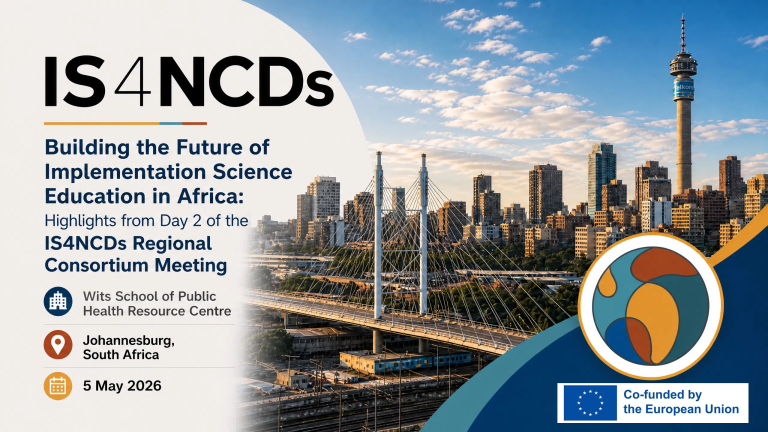
5 May 2026
The IS4NCDs (Implementation Science for Non-Communicable Diseases) programme aims to build regional capacity to address the growing burden of NCDs through evidence-based, contextualised implementation science. Central to this mission is the development and piloting of curriculum modules — core, intermediate, and advanced — designed to equip a diverse range of learners with the skills to bridge the gap between research evidence and real-world health practice.
Day 2 focused on two major areas: the operational and structural decisions needed to move the modules from design to delivery, and a deeper exploration of the content and frameworks underpinning the core modules.
Setting the Stage: From Recap to Decision-Making
The day opened with a structured recap of Day 1, which had covered the IS4NCDs competency framework — a set of five competency clusters spanning implementation science expertise, general research competence, communication and dissemination, and interpersonal and participatory research skills. These competencies formed the basis for linking learning outcomes across all modules.
Rather than proceeding directly to content discussions, the consortium made an important procedural decision: to first settle the operational questions — where modules will be piloted, in what format, under which accreditation structures, for which audiences, and over what duration. This decision-first approach was seen as essential for ensuring that subsequent content discussions would be grounded in realistic, agreed-upon parameters.
To support this process, a shared Excel template was distributed to all participants and working groups, enabling structured, parallel discussions across the core, intermediate, advanced, and executive course groups simultaneously.
Core Modules: Operational Decisions
The core module group — the Copperbelt University team — presented the following agreed positions:
Format: All core modules will be delivered in a hybrid workshop format, combining online and in-person elements. This was chosen to balance accessibility with the interactive, collaborative nature of the learning activities.
Piloting Across Four Institutions: A key proposal was to pilot all core modules at all four consortium institutions simultaneously. To make this feasible, the proposed model involves online lectures streamed into classrooms at each institution, with local facilitators supporting face-to-face group work in each location. This approach was noted for its efficiency — effectively running twelve pilots in the time of one — while also enabling institutions to slightly tailor the experience to their local context and target audience.
Accreditation: In Zambia, micro-credentialing frameworks do not yet exist in the same form as elsewhere. The consortium agreed to proceed with workshop delivery and Certificate of Attendance as an immediate outcome, while simultaneously pursuing formal accreditation through higher education authorities — a process estimated to take approximately six months. The long-term goal is formal micro-credentialing or short course accreditation across all participating institutions, with the understanding that terminology varies across national qualification frameworks (NQF).
There was substantive discussion around the distinction between a Certificate of Attendance and a Certificate of Competence. While the latter is more valuable to participants — particularly where credits could contribute toward a degree — it requires prior formal accreditation. Given programme timelines, the Certificate of Attendance approach for the pilot phase was accepted as a pragmatic necessity, with competence-based certification as a medium-term goal.
Target Audience: The core modules will target individuals with a minimum of a bachelor's degree, drawn from multidisciplinary backgrounds including health professionals, social scientists, computer scientists, and those already working in or adjacent to implementation science. Discussion surfaced important nuances around NQF levels — particularly for nurses and midwives whose qualifications may not be classified at bachelor's level in all national frameworks, and how institutions might accommodate this variation.
Duration: The core modules are planned as six-week programmes, with approximately 24 hours of contact time spread across the period, supplemented by individual study, group assignments, and field activities. Some participants advocated for a more compact format — ideally condensed into one or two weeks — based on experience that continuity and engagement tend to suffer in programmes spread over many weeks among working professionals.
Intermediate and Advanced Modules: Overview
While the core modules were the primary focus of the day's content discussions, leads from the intermediate and advanced module groups also presented their operational decisions.
Intermediate Modules: All intermediate modules — covering Quality Improvement, Mixed Methods, and Participatory Action Research — will be delivered fully online, structured as five-day intensive short courses with subsequent assignment periods. The exception is the Mixed Methods module, which will run over six months, with the intensive week followed by a forty-hour proposal preparation phase. Accreditation will be sought at NQF Level 9. The target audience includes health systems programme managers, clinicians, and public health practitioners, with researchers included specifically for the Mixed Methods and Participatory Action Research modules.
Advanced Modules: The advanced modules — covering Health Economics and Implementation Science, Multisectoral Approaches and Context Adaptation, and Adapting Theories, Models and Frameworks — will be delivered in a hybrid format, largely because challenge-based learning (a key pedagogical approach) was seen as difficult to implement effectively in a fully online environment. The advanced modules target participants with at least two years of experience as implementers, researchers, or programme officers. Health Economics will be offered as a five-day course, while the other two will be delivered as intensive two-and-a-half-day workshops.
Core Module Content: What Will Be Taught?
Following the operational discussion, the consortium turned to the substance of the core modules, presented by the Copperbelt University team responsible for their development.
Module 1: Fundamentals of Implementation Science
This foundational module introduces participants to the theory and practice of implementation science, with a particular focus on the African health context. Key conceptual areas include:
- Differentiating efficacy, effectiveness, and implementation — moving from "can it work?" to "does it work?" to "how can we make it work in our setting?"
- The Consolidated Framework for Implementation Research (CFIR 2.0) — a widely used framework covering intervention characteristics, inner and outer organisational settings, individual factors, and implementation processes.
- The RE-AIM Framework — focusing on Reach, Effectiveness, Adoption, Implementation, and Maintenance, with particular attention to equity across each dimension.
- Fidelity and Adaptation — exploring the balance between implementing a programme as designed and contextualising it for local realities, and the concept of core functions versus adaptable forms.
The module grounds these frameworks in the African context, where health systems have historically been oriented toward infectious disease management and are now navigating a significant epidemiological transition toward NCDs.
Module 2: NCD Epidemiology and Determinants
This module situates NCDs within the broader epidemiological and social landscape of Africa. Key areas include:
- The Syndemic Framework — rather than viewing NCDs in isolation, this framework examines the interactions between infectious diseases, NCDs, and structural barriers. For example, long-term HIV treatment has contributed to rising rates of metabolic conditions and cardiovascular disease in the region.
- The Social Ecological Model — exploring how individual health outcomes are shaped by community, organisational, and policy-level factors, and how implementation strategies must account for this hierarchy.
- Commercial Determinants of Health — including the role of industries such as tobacco, alcohol, and processed food in undermining health promotion efforts.
- Equity — a throughline across the module, examining how social determinants such as socioeconomic status continue to produce health disparities even when programmes are being implemented.
Module 3: Monitoring, Evaluation, and Programme Design
This module focuses on designing, implementing, and evaluating programmes using implementation science tools. Key areas include:
- The ERIC Taxonomy — a framework of 73 implementation strategies grouped into categories, supporting practitioners in selecting and categorising their implementation approach.
- The Implementation Logic Model — mapping from problem identification through inputs, activities, outputs, and proximal and distal outcomes.
- Implementation, Service, and Client Outcomes — understanding how effectiveness is measured at multiple levels, from programme penetration to quality of life improvements.
- Economic Evaluation — an introduction to costing and economic considerations in implementation, with deeper content reserved for the advanced Health Economics module.
Curriculum Development: A Knowledge Co-Creation Process
A distinctive feature of the IS4NCDs curriculum development process has been the formation of Knowledge Creation Teams (KCTs) — multi-stakeholder groups that contributed to shaping the content of each module. KCT members included academic staff from consortium universities, postgraduate students (including Master of Public Health students), frontline health workers such as physicians, and policy makers from Ministries of Health.
Through structured needs assessments and consultations, the KCTs informed the curriculum in four key areas: institutional resource assessment, learner career trajectory and demand, practitioner buy-in and perceived need, and policy alignment. The resulting curriculum content was then mapped against the IS4NCDs competency framework to ensure alignment and completeness.
This process also surfaced important contextual differences between institutions — for example, stronger methodological expertise at some institutions and deeper clinical context at others — which informed how content is balanced and where each institution's contribution is most valuable.
Cross-Cutting Themes: Equity, Sustainability, and South-to-South Learning
Several themes recurred throughout the day's discussions, reflecting the programme's broader values and commitments.
Equity was raised repeatedly — not only in terms of curriculum content (ensuring that learning addresses the needs of marginalised populations), but also in terms of access to the programmes themselves. Participants emphasised the importance of avoiding financial or logistical barriers that would exclude the very practitioners the programme seeks to reach. The observation that previous online pilot offerings attracted hundreds of applicants was taken as evidence of strong demand — and as a reminder that design choices around format, cost, and scheduling have real equity implications.
Long-term sustainability was a major concern. The consensus view was that the pilot phase serves not only project deliverables but also the long-term goal of embedding these modules into the regular offerings of each consortium university. Some institutions are already planning to integrate short-course participants into existing postgraduate classes, creating a pathway that serves both short-course and degree-seeking students simultaneously.
South-to-South collaboration was highlighted as a distinctive and underappreciated strength of the programme. While much global health capacity building flows from North to South, IS4NCDs deliberately fosters peer-to-peer exchange between Zambia and South Africa — building shared knowledge and institutional relationships that will outlast the project itself.
Looking Ahead
The discussions concluded with a clear sense of direction. Operational decisions have been made — or are close to being finalised — across all module tiers. The curriculum content for the core modules has been presented and is undergoing refinement through competency and learning outcome mapping. The next steps involve deeper content-level discussions for all modules, finalising roadmaps for each institutional pilot, and continuing the parallel accreditation processes.
The IS4NCDs consortium is demonstrating what becomes possible when institutions across countries and disciplines work together with a shared commitment to relevance, equity, and rigour. The modules being designed are not just courses — they are an investment in a generation of implementation scientists equipped to address the NCD challenge in Africa and beyond.
The IS4NCDs project has received funding from the European Union's Erasmus+ programme under Grant Agreement no. 101179511
The IS4NCDs project has received funding from the European Union's Erasmus+ programme under Grant Agreement no. 101179511
Key Takeaways from the Didactic Foundation and Competency Framework Workshop
Key Takeaways from the Didactic Foundation and Competency Framework Workshop
4 May 2026
We're thrilled to share key takeaways from our workshop, presented by Lisa Pfadenhauer, Marie Therese Schultes, and Judith van de Kamp on Day 1 of the IS4NCDs Regional Consortium Meeting, focusing on the didactic foundation and competency framework for Implementation Science in Non-Communicable Diseases (NCDs). This vital work, supported by the European Union's Erasmus+ programme, is paving the way for more effective NCD interventions, especially in Low- and Middle-Income Countries (LMICs).
Our workshop delved into several crucial areas:
- Principles of Learning: We explored crafting reality-based, context-sensitive learning environments that foster diversity, trust, and critical reflection.
- Learning Orientation: The discussion emphasized cultivating systems thinking, critical analysis, and the ability to map relevant disciplines and stakeholders for integrated approaches.
- Competency Framework: A robust framework was presented, developed through extensive research and contextualization. This framework identifies crucial skills for NCD implementation science expertise, research, communication, and interpersonal collaboration.
The IS4NCDs project aims to synthesize existing implementation science (IS) competency frameworks for applying them to NCD prevention and care in LMICs. It also seeks to provide an evidence base for capacity building in implementation science education for non-communicable disease prevention and management in Africa.
The development of this framework involved a rigorous methodology:
- A rapid review of the literature describing IS competency frameworks.
- Searches were conducted in MEDLINE, EMBASE, and PsycInfo.
- Screening of 8888 abstracts and 117 full-texts in Rayyan.
- Inductive coding of competencies in MAXQDA.
A recent survey study, involving professionals from 22 LMICs, provided invaluable insights into the prioritization, appropriateness, feasibility, and acceptability of our competency framework. We identified key barriers such as funding and resource constraints, and facilitators including leadership, organizational commitment, and capacity building.
The framework consolidates competencies into 5 clusters, each with 3-5 sub-competencies. These clusters include:
- Implementation Science Expertise: Define & understand IS, describe, select & apply IS TMFs, incorporate health equity in IS, apply organizational & policy knowledge.
- General Research Competencies: Identify & prioritize needs & problems, acquire & manage research projects, search for, synthesize & appraise evidence, evaluate implementation outcomes systematically, scientifically assess & analyze data.
- Implementation Research Competencies: Design implementation research studies, identify & understand contextual factors, select & apply de-implementation strategies, monitor outcomes & tailor strategies/interventions, apply principles of sustainability & scale-up.
- Communication & Dissemination Competencies: Communicate clearly & appropriately, build capacity for research & implementation, disseminate research findings.
- Interpersonal Competencies: Apply leadership & teamwork skills, engage & co-create with community members, collaborate interprofessionally & build sustainable partnerships.
To further contextualize the competency framework for NCD prevention & care in LMICs and determine the relevance of competencies for different target groups, the next steps include:
- Focus group discussions with NCD experts.
- A survey study with interest holders with different roles in NCD management in LMICs.
The IS4NCDs project has received funding from the European Union's Erasmus+ programme under Grant Agreement no. 101179511
The IS4NCDs project has received funding from the European Union's Erasmus+ programme under Grant Agreement no. 101179511
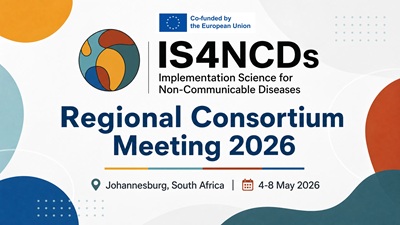
Exciting Week Ahead at the IS4NCDs Regional Consortium Meeting
Exciting Week Ahead at the IS4NCDs Regional Consortium Meeting
The IS4NCDs Regional Consortium Meeting is taking place from 4 to 8 May 2026 at the esteemed University of the Witwatersrand in Johannesburg, South Africa.
This crucial five-day event will gather consortium members and dedicated educators from across the region to collaborate on advancing the vital field of implementation science for non-communicable diseases. The meeting serves as a cornerstone for strengthening regional capacities, fostering innovative approaches, and collectively addressing the growing global burden of NCDs.
Key Objectives and Agenda Highlights
The meeting's overarching objectives include enhancing educational frameworks by familiarizing new teachers with cutting-edge course content and Challenge Based Learning (CBL) methodologies; strategic implementation planning through reflecting on and refining the implementation roadmap for core, intermediate, and advanced modules; piloting future initiatives by concluding the preparation phase for various modules and reaching consensus on the piloting of short courses planned for 2026 and 2027; knowledge exchange by sharing initial experiences and best practices from the preparation phase among all participants; and ensuring sustainability by initiating critical discussions on the long-term sustainability of project outcomes and their broader impact.
Participants will engage in a dynamic program designed to foster collaboration and strategic planning. Key agenda highlights include:
- Monday, 4 May: The meeting will commence with participant arrivals, a project re-introduction, and a dedicated workshop on competency frameworks and didactical elements.
- Tuesday, 5 May: Discussions will focus on the core, intermediate, and advanced modules, aiming to refine educational approaches.
- Wednesday, 6 May: The agenda features executive course discussions, eHub updates, further alignment of didactical elements, and intensive breakout sessions for module development.
- Thursday, 7 May: Key activities will involve project management, planning, and the crucial development of piloting agendas for all modules, alongside evaluation framework discussions.
- Friday, 8 May: The final day will be dedicated to summarizing conclusions, clarifying outstanding points, and outlining the critical next steps for the consortium's collective efforts.
This meeting is a testament to IS4NCDs' commitment to driving impactful research and educational initiatives that translate scientific discoveries into tangible health improvements. The outcomes of this gathering are expected to significantly contribute to the development of effective strategies for NCD prevention and management in the region.
We look forward to a productive week of collaboration and innovation that will shape the future of implementation science for non-communicable diseases.
The IS4NCDs project has received funding from the European Union's Erasmus+ programme under Grant Agreement no. 101179511
The IS4NCDs project has received funding from the European Union's Erasmus+ programme under Grant Agreement no. 101179511

IS4NCDs Gears Up for Regional Meeting in Johannesburg to Advance NCD Training
IS4NCDs Gears Up for Regional Meeting in Johannesburg to Advance NCD Training

18 March 2026
As the fight against non-communicable diseases (NCDs) intensifies in low- and middle-income countries, the IS4NCDs consortium is set to convene its highly anticipated regional meeting from 4 to 8 May 2026 at the University of the Witwatersrand (Wits) in Johannesburg, South Africa. Hosted by one of Africa's leading public universities, this gathering brings together educators, implementers and health experts from partner institutions to propel the project's mission: equipping Southern African universities with innovative, scalable training programmes to combat NCDs such as diabetes, cardiovascular disease and cancer.
IS4NCDs (Implementation Science for Non-Communicable Diseases) is a collaborative initiative focused on strengthening implementation science education for NCD prevention and management in South Africa and Zambia. By emphasising practical, context-adapted education, the consortium develops short courses and postgraduate modules at core, intermediate and advanced levels, along with an executive programme and a regional eHub. These offerings use innovative pedagogies, including challenge-based and other active learning approaches, to immerse participants in real-world health challenges and foster skills in evidence-based interventions, policy translation and stakeholder engagement. The Johannesburg meeting marks a critical juncture, shifting from preparation to piloting and long-term sustainability.
Key Objectives: From Onboarding to Consensus
The agenda is packed with targeted objectives designed to build momentum and resolve key challenges for the next project phase.
First, the meeting will make new teachers familiar with the course content and Challenge Based Learning (CBL). Through interactive sessions and demonstrations, newcomers will explore how CBL and related methods can transform passive learning into active problem-solving. For example, a module on hypertension management might ask participants to design and test context-appropriate strategies for improving treatment adherence in a specific clinic or district, ensuring that educators are prepared to guide learners through applied implementation challenges.
Participants will then reflect on Parts A and B of the implementation roadmap for each module, which guide planning and roll-out across partner institutions. Part A is concerned with early steps such as defining learning outcomes, adapting content to institutional contexts and mapping available resources, while Part B focuses on practical aspects of delivery, including teacher preparation, stakeholder engagement and evaluation. Building on experiences from earlier consortium meetings and work package activities, partners will examine what has worked well and where adjustments are required to ensure smooth implementation.
A major focus in Johannesburg will be concluding the preparation phase of the core, intermediate and advanced modules. Attendees will review teaching materials, case studies and assessment strategies, and align on minimum quality standards before piloting begins. Sharing initial experiences from the preparation phase—such as how teams integrated local data, or adapted examples to different health system settings—will help build a shared understanding and promote cross-country learning.
Piloting and Sustainability on the Horizon
The consortium also aims to reach consensus on the piloting of the short courses and modules in 2026 and 2027. Discussions will address which sites and programmes will host early pilots, indicative timelines, and broad principles for monitoring outcomes such as learner engagement, competency development and perceived relevance for NCD-related work. Lessons from these pilots will inform further refinement and, ultimately, integration of the modules into accredited postgraduate pathways.
In addition, the meeting will open the first structured discussions on sustainability of the project outcomes after the formal project end date. Themes are expected to include how best to embed the modules into existing degree structures, maintain and expand access to the eHub, and continue collaboration between South African, Zambian and European higher education institutions. With NCDs rising sharply across South Africa and Zambia and placing increasing strain on health systems, building lasting institutional capacity in implementation science education is central to the IS4NCDs vision.
A Working Space for Consortium Partners
The Johannesburg regional consortium meeting is designed as an internal working space for IS4NCDs partners. Attendance will consist of consortium members and invited teaching staff, including approximately four teachers from each participating higher education institution in South Africa and Zambia. By creating dedicated time and space for joint reflection, detailed planning and hands-on engagement with the new modules and teaching approaches, the meeting aims to strengthen the shared ownership and readiness needed for successful piloting and long-term sustainability of IS4NCDs training activities.
The IS4NCDs project has received funding from the European Union's Erasmus+ programme under Grant Agreement no. 101179511
The IS4NCDs project has received funding from the European Union's Erasmus+ programme under Grant Agreement no. 101179511
IS4NCDs Implementation Roadmap for NCD Programmes: Parts A & B – Intermediate Modules in Quality, Mixed-Methods Research, and Participatory Action Research
IS4NCDs Implementation Roadmap for NCD Programmes: Parts A & B – Intermediate Modules in Quality, Mixed-Methods Research, and Participatory Action Research
9 March 2026
The IS4NCDs consortium's implementation science roadmap for non-communicable disease (NCD) programmes – currently under development – recognises that bridging the 'know-do' gap requires more than just effective interventions. Practical expertise is needed to deploy them reliably, equitably, and with consistent quality across diverse settings and populations. Despite solid clinical protocols for prevention, screening, diagnosis, treatment initiation, adherence support, and sustained follow-up, NCD outcomes frequently disappoint owing to patchy delivery and health systems unprepared for reliable, ongoing care. NCDs' chronic, multimorbid profile – requiring persistent self-management, interdisciplinary teamwork, and regular system touchpoints – allows even minor procedural slips to compound over time, jeopardising results. A structured suite of modules is thus vital to empower the workforce in translating evidence into routine NCD practice through measurable, collaborative, and viable means.
The programme fosters progressive skill-building. Foundational implementation science modules cover essential concepts, theories, frameworks, and outcomes (including acceptability, feasibility, fidelity, adoption, reach, equity, and sustainment), alongside skills for pinpointing contextual drivers and adapting strategies. Subsequent intermediate modules in quality improvement, mixed-methods research, and participatory action research (PAR) supply practical tools for service deployment. The quality module enables learners to build dependable learning systems, curb unjustified variation, and leverage metrics for advancement (via process/balancing measures, run charts, and time-series tracking), all while balancing fidelity against necessary adaptations in multifaceted NCD pathways. Mixed-methods approaches are indispensable, since NCD issues rarely trace to singular causes: quantitative data highlights gaps (e.g., in treatment starts, retention, or control rates), while qualitative insights reveal root explanations (e.g., workflow bottlenecks, patient challenges, team interplay, or cultural norms). In tandem, they bolster causal understanding, strategy refinement, and rigorous evaluations – even hybrid types. PAR stands out for NCD contexts, where enduring shifts rely on co-design with service users and providers: patients, communities, frontline workers, and managers. It cultivates expertise in joint problem identification, ethical collaboration, cyclical co-development, and shared review, enhancing strategy legitimacy, adoption, and endurance – particularly for self-care and care continuity.
Participating higher education institutions gain curriculum renewal attuned to national imperatives for chronic disease control, primary healthcare bolstering, and universal coverage. The programme equips graduates to champion hands-on implementation, quality drives, and inquiry partnerships; ignites inter-field education and research across public health, clinical practice, management, and data expertise; and forges avenues for scholarly work like implementation reviews, mixed-methods analyses, and PAR learning collaborations. It further casts institutions as leaders in learning health systems that yield practice-derived evidence to guide redesign and scaling.
Nationally, this IS4NCDs consortium initiative – actively being shaped – elevates NCD performance by fortifying evidence-based intervention delivery with reliability, efficiency, equity, and durability. Graduates emerge equipped to narrow care inconsistencies, reinforce referral/follow-up networks, uphold clinical protocols, and weave continuous measurement and adaptation into everyday services. Integrating implementation science with quality, mixed-methods, and PAR not only hones strategy decisions but cultivates grassroots commitment, astute modifications, and compelling scale-up evidence – yielding better control, fewer complications and avoidable admissions, enhanced patient journeys, and resource efficiencies over time.
The IS4NCDs project has received funding from the European Union's Erasmus+ programme under Grant Agreement no. 101179511
The IS4NCDs project has received funding from the European Union's Erasmus+ programme under Grant Agreement no. 101179511
IS4NCDs Presents Insights on Implementation Science and Practice at IMPACT 2026
IS4NCDs Presents Insights on Implementation Science and Practice at IMPACT 2026
17 February 2026
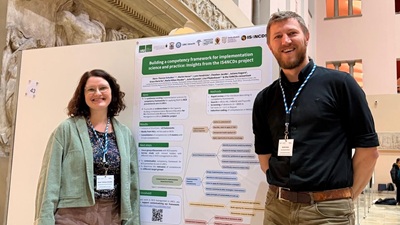
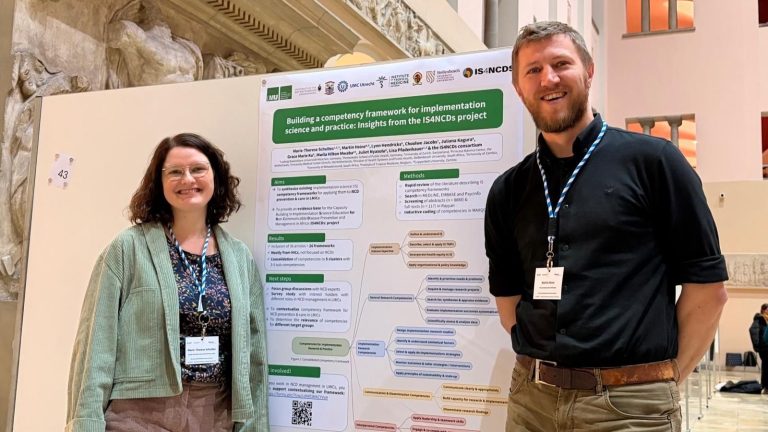
The IS4NCDs consortium shared insights on strengthening implementation science capacity at the 4th Swiss Implementation Science Conference “True IMPACT – Providing Innovation for Patients and the Public”, held on 12–13 February 2026 at the University of Zurich. At a well‑attended poster presentation, Marie‑Therese Schultes and Martin Heine invited delegates to discuss 26 unique competency frameworks for implementation science and practice.
Poster Highlights: 26 Frameworks, One Shared Goal
The poster showcased how diverse competency frameworks describe what implementation scientists and practitioners should know and be able to do. The work identified 26 frameworks and consolidated their competencies into five clusters and three sub‑competence domains, capturing areas such as theoretical and methodological knowledge, stakeholder engagement, contextual adaptation, and evaluation of implementation processes and outcomes.
From Competency Framework to Real‑World Capacity
The IS4NCDs consortium is co‑developing new modules, an executive course, and an open eHub that draw on these synthesised competencies while adapting them to regional health system priorities and resource constraints.
This work supports the broader goal of IS4NCDs: strengthening institutional capacity so that health professionals, educators, and researchers are equipped to translate evidence and NCD policies into sustainable practice.
Engagement and Next Steps After IMPACT 2026
Throughout the conference, Schultes and Heine used the poster as a conversation starter with researchers, practitioners, and policy‑makers interested in clarifying and benchmarking implementation science competencies. Discussions touched on how the synthesised frameworks could be applied in different health systems, and where additional work is needed to reflect the realities of low‑ and middle‑income countries and NCD‑focused implementation efforts.
Following IMPACT 2026, the IS4NCDs consortium will continue with the development of its competency‑based modules and executive course, and share emerging lessons through its training and engagement platforms.
The IS4NCDs project has received funding from the European Union's Erasmus+ programme under Grant Agreement no. 101179511
The IS4NCDs project has received funding from the European Union's Erasmus+ programme under Grant Agreement no. 101179511

IS4NCDs Consortium Members to Join 4th Swiss Implementation Science Conference in Zurich
IS4NCDs Consortium Members to Join 4th Swiss Implementation Science Conference in Zurich
31 January 2026
IS4NCDs consortium members will join global implementation science leaders at the 4th Swiss Implementation Science / IMPACT Conference 2026 in Zurich, highlighting the consortium’s growing role in shaping how innovations reach patients and communities. The conference, themed True IMPACT – Delivering Innovation for Patients and the Public, will take place on 12–13 February 2026 at the University of Zurich and brings together researchers, practitioners, policy makers, and other stakeholders committed to closing the gap between research and real-world practice.
Implementation science is at the heart of both IMPACT 2026 and IS4NCDs’ mission. The conference will showcase Swiss and international projects that have successfully translated research findings into clinical practice and diverse care settings, emphasizing practical tools, methodological advances, and lessons learned from implementation efforts. Preconference workshops, keynotes, and oral and poster sessions will offer participants hands-on opportunities to deepen their knowledge, engage with cutting-edge frameworks, and explore how implementation science can support more effective and sustainable health interventions.
This focus aligns closely with IS4NCDs (Implementation Science for Non-Communicable Diseases), a consortium that addresses the urgent need to build a skilled health and research workforce in Southern Africa capable of applying implementation science to the prevention and management of non-communicable diseases (NCDs). IS4NCDs brings together universities in South Africa and Zambia with leading European partners, including UMC Utrecht, Ludwig-Maximilians-Universität München, and the Institute of Tropical Medicine Antwerp, to co-develop innovative curricula and training programs in implementation science. The project includes the development of new course modules, an executive programme, and an open access eHub, with content embedded into existing education programmes and adapted for continuing professional development.
The presence of IS4NCDs consortium members at IMPACT 2026 creates a platform to connect African and European perspectives on how implementation science can respond to the growing NCD burden. By engaging with peers from across disciplines and regions, IS4NCDs representatives will share experiences from curriculum development, capacity-building initiatives, and partnerships that support evidence-based NCD care. These exchanges are expected to spark new collaborations around joint research, education, and implementation projects that can be adapted to different health system contexts, from Switzerland to Southern Africa.
Participation in the conference also reinforces IS4NCDs’ commitment to ensuring that implementation science is not only an academic field, but a practical driver of change in health systems. By contributing to discussions at IMPACT 2026 and learning from other implementation success stories, the consortium aims to strengthen its efforts to develop a diverse NCD workforce and to support the translation of evidence into better health outcomes for patients and communities.
The IS4NCDs project has received funding from the European Union's Erasmus+ programme under Grant Agreement no. 101179511
The IS4NCDs project has received funding from the European Union's Erasmus+ programme under Grant Agreement no. 101179511
Empowering Institutions to Respond to Rising NCDs: Implementation Science for South Africa and Zambia
Empowering Institutions to Respond to Rising NCDs: Implementation Science for South Africa and Zambia
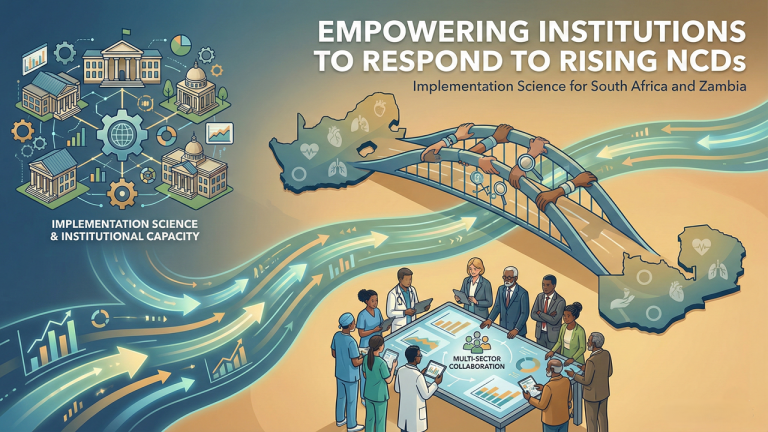
22 November 2025
Noncommunicable diseases (NCDs) present an urgent and growing health challenge across sub-Saharan Africa, including South Africa and Zambia. According to an analysis of the Global Burden of Disease Study 2023, recently published in The Lancet, NCDs are now responsible for nearly two-thirds of global disability-adjusted life years (DALYs), with ischaemic heart disease, stroke, diabetes, and chronic respiratory diseases as leading contributors. In Southern Africa, this burden is compounded by rapid urbanisation, economic and social transitions, and persistent inequities, placing immense strain on public health systems.
In South Africa, the percentage of deaths due to NCDs increased from 24.2% in 2000 to 49.6% in 2023; this equates to 1 out of every 2 deaths in South Africa due to an NCD.. Significantly, 54% of NCD deaths occur in those aged less than 70 years, indicating a high rate of premature mortality . Despite national strategies and policies, such as the National Strategic Plan for the Prevention and Control of NCDs 2020–2025, implementation is challenging due to a complex interaction of competing priorities, insufficient access to essential medicines, health workforce challenges, and infrastructure gaps, amongst others.
In Zambia, nearly 40% of all deaths can be attributed to NCDs, of which nearly three quarters are premature. Diabetes, cardiovascular disease, chronic respiratory conditions, and cancers dominate disease patterns. The 2017 WHO STEPS survey identified three distinct risk groups within the Zambian population: Low-Risk (12%), Intermediate-Risk (64%), and High-Risk (24%), placing nearly 88% of the population at immediate or high risk for NCDs. This is expected to further strain the health system and resources, and pose higher economic burden. Zambia’s National Health Strategic Plan (2022–2026) aims to reduce NCD-driven mortality by strengthening prevention, multi-sector collaboration, and primary care capacity, recognising the need for a holistic approach to tackle the burden of NCDs.
Implementation Science: The Pathway to Sustainable Progress
Many risk factors could be mitigated through effective and sustainable implementation of contextual solutions. The 2023 global burden of disease study highlights that 88 modifiable risk factors - including blood pressure, diet, tobacco use, and air pollution - are responsible for a significant portion of the NCD burden. Adapting global evidence into local practice, with robust monitoring and catalysed by a multi-sector approach, can strongly contribute in achieving more sustainable progress Implementation science and research offers a methodological paradigm for this translation, supporting professionals along the implementation pathway through theory, models, frameworks, rigorous appraisal of context in relation to implementation outcomes, and monitoring and evaluation of the implementation-effectiveness of implementation strategies, amongst others.
Strengthening Institutional Capacity
IS4NCDs, a consortium led by universities in South Africa, Zambia, and Europe, targets the urgent need to develop skilled health, education, and research teams in implementation science; to strengthen the capacity for navigating change in the very professionals that are responsible for implementing innovation within their setting and across the (health) system IS4NCDs’ competency-based modules and including an executive implementation science course, created in collaboration with local stakeholders, will prepare professionals to lead change from the clinic to the policy level. The programmes will build capacity in integrating and sustaining NCD prevention and care strategies into broader health systems and educational institutions.
The IS4NCDs project has received funding from the European Union's Erasmus+ programme under Grant Agreement no. 101179511
The IS4NCDs project has received funding from the European Union's Erasmus+ programme under Grant Agreement no. 101179511

Celebrating the Promotion of Dr. Choolwe Nkwemu-Jacobs!
Celebrating the Promotion of Dr. Choolwe Nkwemu-Jacobs!
23 October 2025
Better late than never—we are thrilled to finally celebrate the June 2025 promotion of Dr. Choolwe Nkwemu-Jacobs to Associate Professor in the School of Public Health at the University of Zambia. This milestone is significant not only for Dr. Jacobs personally but also for the IS4NCDs (Implementation Science Education for Non-Communicable Disease) community, where her passionate involvement drives impactful change.
Dr. Jacobs is a distinguished global health researcher whose work greatly advances health equity and strengthens public health outcomes both locally and internationally. As the first female Associate Professor in the School of Public Health, she has made history and set a powerful example of inclusive leadership and resilience. Her visionary thinking, tireless advocacy, and dedication to mentorship continue to inspire colleagues, students, and all those engaged in IS4NCDs.
Beyond her academic achievements, Dr. Jacobs’s role as Founder and Country Lead of Women in Global Health Zambia amplifies her commitment to elevating diverse voices and fostering collaboration in health research and policy. Her leadership embodies the spirit of our community—championing excellence, empowerment, and innovation in the fight against non-communicable diseases.
Congratulations, Professor Jacobs! This achievement is a well-deserved recognition of your unwavering commitment to advancing public health and implementing science for better outcomes. Your impact continues to inspire and uplift the IS4NCDs community and beyond.
The IS4NCDs project has received funding from the European Union's Erasmus+ programme under Grant Agreement no. 101179511
The IS4NCDs project has received funding from the European Union's Erasmus+ programme under Grant Agreement no. 101179511

Preparing for the Fourth UN High-Level Meeting: Key WHO Financing Insights on NCDs and Mental Health
Preparing for the Fourth UN High-Level Meeting: Key WHO Financing Insights on NCDs and Mental Health

23 September 2025
The Fourth United Nations General Assembly High-Level Meeting (HLM4) on the 25th of September 2025 represents a pivotal moment for global leaders to renew commitments toward enhancing and expanding financing for noncommunicable diseases (NCDs) and mental health. Sustainable financing strategies must integrate targeted interventions with broader health system reforms, emphasising equitable access and multisectoral cooperation. Achieving progress toward universal health coverage means ensuring affordable, high-quality care for these conditions—an essential step toward a healthier and more equitable future for all.
Building on this, the World Health Organization (WHO) has released insightful guidance on financing NCDs and mental health ahead of HLM4. These insights spotlight the economic and health benefits of investing in cost-effective interventions, the urgent need for increased domestic funding, innovative revenue mechanisms, and the importance of bridging treatment gaps.
Investment Case for Noncommunicable Diseases and Mental Health
WHO underscores that investing in NCD and mental health interventions is not only vital for health but makes strong economic sense. An additional investment of just $3 per person annually in NCD prevention and management could generate up to $1 trillion in economic returns by 2030 globally. Furthermore, every $1 invested in evidence-based NCD policies can yield as much as $7 in returns through productivity gains, reduced health care costs, and other economic benefits.
Increased Domestic and Strategic Spending
Despite the growing burden of NCDs and mental health disorders, funding for these conditions constitutes a small fraction of health budgets, particularly in low- and middle-income countries. WHO calls for substantial increases in public domestic financing directed at equitable access and prioritisation of primary health care-based services. This requires strategic allocation of resources toward interventions proven to be cost-effective and targeted to reach underserved populations equitably.
Innovative Financing Mechanisms
WHO advocates for innovative financing approaches beyond traditional government budgets to close persistent financial gaps. Health taxes on products such as tobacco, alcohol, and sugar-sweetened beverages have triple benefits: discouraging harmful consumption, generating revenue for health services, and supporting poorer households by reducing spending on these products. Additionally, international development assistance remains crucial to catalyse national actions and help overcome barriers to implementation.
Multisectoral Governance and Action
Addressing NCDs and mental health effectively requires multisectoral collaboration across health, finance, education, agriculture, transport, and other sectors. WHO recommends institutionalising governance frameworks with clear roles and accountability mechanisms to develop, implement, and monitor coherent NCD and mental health policies that reduce risks and promote healthy environments.
Strengthening Health Systems
WHO highlights a pressing need to strengthen health systems by adopting more flexible public financial management, moving away from rigid budget structures, and prioritising integrated care models. Improved data governance and digital tools can facilitate cross-sector coordination, while financial protection mechanisms can shield individuals from catastrophic health expenses related to chronic conditions.
Addressing Mental Health Treatment Gaps
Mental, neurological, and substance use conditions are a major and growing source of global disease burden, but a large majority of affected individuals receive no treatment. WHO emphasises the need for equitable financing of mental health services supported by legal and policy reforms, sustained workforce investment, and expanded community-based care. The WHO Special Initiative for Mental Health represents a major effort to scale up services universally in community settings, particularly within primary and secondary health care frameworks.
Input from IS4NCDs Consortium Member
Adding to the global dialogue, Dr Grace Marie V. Ku, a Public Health Expert, Family and Community Medicine Physician-Specialist, Health Researcher and Academic, currently with the Institute of Tropical Medicine Antwerp and a consortium member of the IS4NCDs project, shared her perspectives as a discussant in the fifth and final webinar hosted by the World Bank and WHO on financing NCDs and mental health, which was held on the 18th of September 2025. She emphasised that the concept of integrated care should extend far beyond the common interpretation of collaboration among healthcare professionals. Dr Ku advocates for integration that includes care delivered at home by the individual or their primary carer, addressing the biomedical, psychological, and social dimensions of the person for true person-centred care. She outlined a comprehensive vision wherein integration encompasses promotion and prevention throughout the life course, timely risk identification, immediate connection to care, sustained patient retention and self-management support, early complication management, rehabilitation, end-of-life care, and support for informal carers. Furthermore, Dr Ku stressed that integration must also cover services beyond direct patient care, including access to quality medicines, seamless health information systems, and community-based promotive and preventive services. Importantly, she called for multisectoral engagement beyond the health sector to tackle the underlying determinants of NCDs. Her insights underscore a broad and ambitious approach to integration as central to advancing NCD care and prevention at the global level.
Looking Ahead to HLM4
The 2025 Fourth UN High-Level Meeting offers a critical opportunity for governments to review progress, strengthen financial commitments, and adopt ambitious policies for the prevention and control of NCDs and promotion of mental health and well-being. Strong, sustained financing mechanisms paired with equitable, multisectoral governance and robust health systems will be key to advancing towards the Sustainable Development Goals related to health and well-being by 2030.
The IS4NCDs project has received funding from the European Union's Erasmus+ programme under Grant Agreement no. 101179511
The IS4NCDs project has received funding from the European Union's Erasmus+ programme under Grant Agreement no. 101179511
The IS4NCDs project has received funding from the European Union's Erasmus+ programme under Grant Agreement no. 101179511
The IS4NCDs project has received funding from the European Union's Erasmus+ programme under Grant Agreement no. 101179511