Clifford Mwamba

Clifford Mwamba
Quality Assurance Manager at the Centre for Academic Development (CAD) at the Copperbelt University

Clifford Mwamba

Quality Assurance Manager at the Centre for Academic Development (CAD) at the Copperbelt University

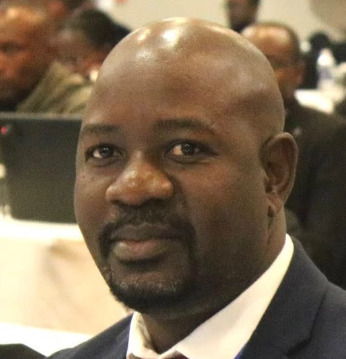
Mr. Clifford Mwamba is the Quality Assurance Manager at the Centre for Academic Development (CAD) at the Copperbelt University. He holds a Bachelor’s Degree in Production and Operations Management and a Master’s Degree in Business Administration and currently pursuing a PhD. His research interests and experience are in quality assurance and education management.

The IS4NCDs project has received funding from the European Union's Erasmus+ programme under Grant Agreement no. 101179511

The IS4NCDs project has received funding from the European Union's Erasmus+ programme under Grant Agreement no. 101179511

Victor Daka, Ph.D.

Victor Daka, Ph.D.
Lecturer in the Department of Public Health at the Copperbelt University, School of Medicine

Victor Daka, Ph.D.

Lecturer in the Department of Public Health at the Copperbelt University, School of Medicine

Victor Daka is a lecturer in the Department of Public Health at the Copperbelt University, School of Medicine. He holds a Bachelor of Science in Biomedical Sciences, Master of Science in One Health Analytical Epidemiology and a PhD in Public Health and Epidemiology. He has worked for 13 years at the National Health and Research Training Institute (formerly Tropical Diseases Research Centre) where he gained extensive experience in applying and implementing collaborative grants especially in malaria clinical trials and 7 years at the Copperbelt University. At the Copperbelt University he has worked on both communicable and non-communicable studies culminating multiple publications in peer reviewed journals. Victor is passionate about community service, serving as President of the Biomedical Sciences from 2016 to 2021. The IS4NCDs project will leverage Victor’s experience and networks to ensure optimum program outcomes.

The IS4NCDs project has received funding from the European Union's Erasmus+ programme under Grant Agreement no. 101179511

The IS4NCDs project has received funding from the European Union's Erasmus+ programme under Grant Agreement no. 101179511

Building Sustainable Financing and Integrated Care for NCDs and Mental Health: Insights for the 2025 UN High-Level Meeting

Building Sustainable Financing and Integrated Care for NCDs and Mental Health: Insights for the 2025 UN High-Level Meeting

Building Sustainable Financing and Integrated Care for NCDs and Mental Health: Insights for the 2025 UN High-Level Meeting

20 July 2025

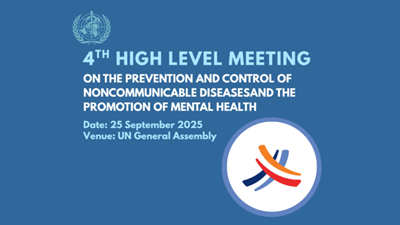
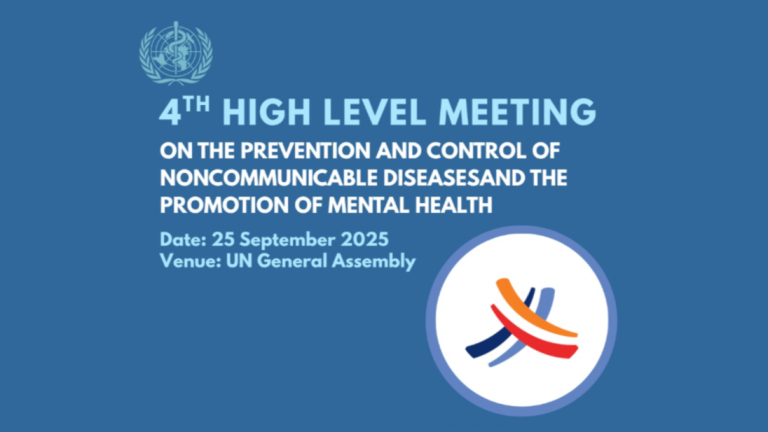
Ahead of the 2025 UN High-Level Meeting on Noncommunicable Diseases (NCDs) and Mental Health, efforts are intensifying to transform global dialogue into actionable financing strategies. The meeting, scheduled for September 25, 2025, at the United Nations Headquarters in New York, will bring together Heads of State, civil society, academia, philanthropies, and private sector representatives to commit to accelerated action on NCDs and mental health. The registration deadline for participation is August 8, 2025, underscoring the urgency for stakeholders to engage early in preparations.

Key Themes and Goals

Financing Integration:
Central to the meeting's agenda is identifying and implementing sustainable financing mechanisms for both NCDs and mental health. The focus is on moving beyond discussion to securing concrete financial commitments that support long-term action.

Country-Led Initiatives:
Success stories from nations such as Barbados, Norway, and Spain highlight effective national strategies for financing NCD care. These examples serve as replicable models demonstrating practical pathways for other countries.

Strengthening Health Systems:
There is a concerted push to integrate NCD and mental health services into broader health system designs, particularly through primary care. This approach ensures comprehensive and coordinated care rather than fragmented, siloed interventions.

Addressing Critical Gaps:
The dialogues aim to confront challenges including the commercial determinants of health, the climate crisis, gaps in accountability, and the expansion of care in humanitarian and conflict-affected settings.

Youth and Vulnerable Groups:
Special attention is being paid to low investment in youth mental health and the need to scale up community-based and human rights-focused services to better support vulnerable populations.

Key Events and Initiatives

Side Events and Dialogues:
Multiple side events and official dialogue sessions, such as the "Equity and Integration" event at the World Health Assembly and WHO-led financing discussions, are fostering cross-sectoral learning and accelerating momentum.

Focus on Policy and Data:
New data and insights are being shared to inform policy development and facilitate the scaling-up of successful country initiatives.

Advocacy by Key Stakeholders:
Organisations including the NCD Alliance and United for Global Mental Health are at the forefront of advocacy, pushing for progress on key resolutions and thematic discussions ahead of the meeting.

Looking Ahead to the 2025 UN High-Level Meeting

The 2025 meeting on September 25 represents a landmark opportunity to secure increased political commitment and investment in the prevention and care of NCDs and mental health worldwide. The goal is to translate preparatory dialogues and evidence into a strong political declaration that will guide global health policy through 2030 and beyond. With the registration deadline on August 8, stakeholders are encouraged to engage promptly to help shape this pivotal moment for global health equity and integrated care.

This meeting signals a critical juncture for fostering more inclusive, sustainable, and impactful responses to NCDs and mental health challenges globally, emphasizing equity, integration, and leadership.

The IS4NCDs project has received funding from the European Union's Erasmus+ programme under Grant Agreement no. 101179511

The IS4NCDs project has received funding from the European Union's Erasmus+ programme under Grant Agreement no. 101179511

Exploring Global Challenges in Non-Communicable Diseases: Insights from the 2025 Utrecht Summer School

Exploring Global Challenges in Non-Communicable Diseases: Insights from the 2025 Utrecht Summer School

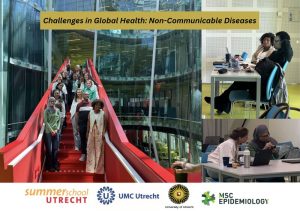
Challenges in Global Health: Non-Communicable Diseases

16 July 2025

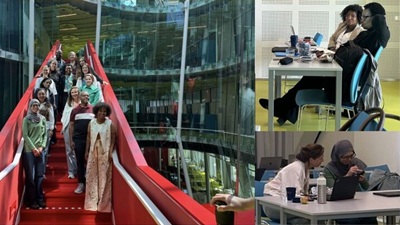
The 2025 "Challenges in Global Health: Non-Communicable Diseases" summer school, held from July 7 to July 11 at the University Medical Centre Utrecht, offered a comprehensive and interactive learning experience focused on addressing the global impact of non-communicable diseases (NCDs). Coordinated by Prof. Kerstin Klipstein-Grobusch, the course brought together participants and experts from Europe, Africa, Asia, and South America, including members of IS4NCDs and the Capstone West Africa consortium, to explore critical issues surrounding NCDs in diverse global settings.

Course Highlights and Objectives
Over the intensive one-week program, participants examined the burden and risk factors associated with NCDs, the influence of early life environments, and the complex interplay between communicable and non-communicable diseases. The curriculum also addressed the effects of globalization, migration, climate change, and environmental factors on health outcomes. Key discussions focused on effective prevention, management strategies across different health systems, and innovative policy responses, including the application of e-health, m-health, and big data technologies.

By the conclusion of the course, participants had enhanced their ability to:

  • Describe the epidemiology and global burden of NCDs.
  • Explain how early life experiences contribute to disease variation.
  • Analyze the intersection between communicable and non-communicable diseases.
  • Assess how global health threats influence NCD prevention and control.
  • Apply principles of disease surveillance, control, and prevention in various contexts.

Expert Faculty and Collaboration
The summer school was part of Utrecht University’s MSc Epidemiology program and organized through the UMC Utrecht's Global Health initiative. It featured an international and interdisciplinary faculty renowned for their expertise in global health and NCDs, including:

  • Assoc. Prof. Dr. Regien Biesma (UMC Utrecht)
  • Dr. Daniel Boateng (Kwame Nkrumah University of Science and Technology, Ghana & UMC Utrecht)
  • Dr. Olga Cambaco (Universidade Eduardo Mondlane, Mozambique)
  • Dr. George Downward (UMC Utrecht)
  • Dr. Grace Marie V. Ku (Institute of Tropical Medicine, Belgium)
  • Assoc. Prof. Dr. Ana Mocumbi (Universidade Eduardo Mondlane, Mozambique)
  • Dr. Daniel Opoku (Technical University Berlin & Kwame Nkrumah University, Ghana)
  • Prof. Dr. Monique Verschuren (UMC Utrecht)

These experts facilitated rich discussions and fostered cross-cultural academic exchange.

Participants and Impact
The course was open to master's students and professionals from epidemiology, public health, medicine, biomedical, and social sciences backgrounds with an interest in global health and NCD challenges. Through interactive sessions and collaborative learning, participants gained a deeper understanding of the varied challenges faced by low-, middle-, and high-income countries in managing NCDs.

Future Directions
Following this successful 2025 session, the Global Health Summer Schools at Utrecht continue with courses on Implementation Sciences in Global Health, Global Health Ethics & Equity, and Planetary Health. Preparations are underway for the 2026 edition, continuing to provide interdisciplinary education on urgent global health issues.

The IS4NCDs project has received funding from the European Union's Erasmus+ programme under Grant Agreement no. 101179511

The IS4NCDs project has received funding from the European Union's Erasmus+ programme under Grant Agreement no. 101179511