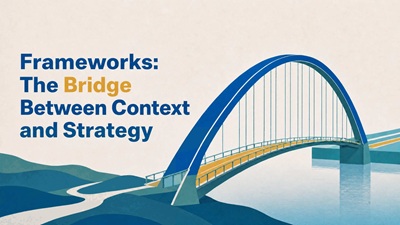
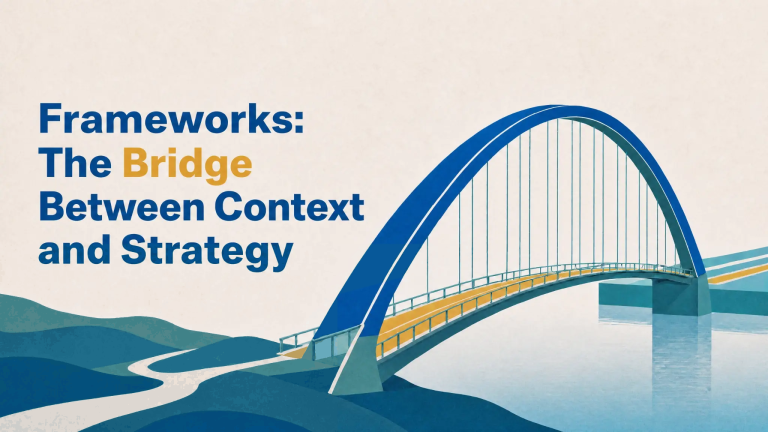
Frameworks: The Bridge Between Context and Strategy

Frameworks: The Bridge Between Context and Strategy

Frameworks: The Bridge Between Context and Strategy

18 August 2026

A structured framework is essential for a successful protocol roll-out; without one, teams default to the loudest barrier in the room while quieter, decisive factors go unchecked. A programme team preparing to roll out a new hypertension treatment protocol can easily list dozens of things that might affect it—staff turnover, drug stock-outs, patient trust, referral delays, and funding cycles. However, a long list of maybes is not an actionable plan.

What turns that list into something usable is a framework: a structured set of categories that tells a team which factors are worth checking, in what order, and why. Without one, teams naturally fall back on whichever barrier is loudest in the room at the time—often staffing, because it is visible—while equally critical factors, like whether the protocol fits existing workflows, go ignored until the programme has already stalled.

Frameworks Turn a List of Maybes Into a Specific Checkable Plan

A framework doesn’t tell a team what its local barriers are — it tells them where to look. Instead of a vague sense that ‘context matters’, a team working through a framework is prompted to check specific, named domains: leadership buy-in, compatibility with existing workflows, communication channels, resource availability, and more, depending on which framework they are using.

That specificity is the entire value. ‘We should think about context’ produces a discussion. ‘Check whether this protocol is compatible with how staff already triage patients’ produces an answer.

Different Frameworks Answer Different Questions

Not every framework does the same job. Broadly, they fall into a few families:

  • Diagnostic frameworks, such as CFIR (Consolidated Framework for Implementation Research), map the context a programme is being dropped into, before and during roll-out.
  • Evaluative frameworks, such as RE-AIM (Reach, Effectiveness, Adoption, Implementation, and Maintenance), judge how a programme performed after the fact across all five of its core dimensions.
  • Process frameworks, such as NPT (Normalization Process Theory), explain how a new practice does or doesn’t become embedded into everyday routine work over time.
  • Integrated frameworks, such as i-PARIHS (integrated Promoting Action on Research Implementation in Health Services), combine the evidence, the context, and the facilitation effort needed to bridge that evidence with the local clinical context.

Picking the wrong type for the job is a common misstep — using an evaluative framework to plan a roll-out, for instance, tells a team how things went, not what to check beforehand.

Frameworks are the Bridge Between Reading Context and Choosing a Strategy

Context describes the local conditions a programme has to work within. Implementation strategies are the deliberate actions chosen to work with those conditions. A framework is what connects the two: it structures how a team reads the context in the first place, so the strategy that follows is a response to something specific rather than a guess.

The same logic that frameworks bring to diagnosis before roll-out also applies to diagnosing performance afterwards — which is exactly the territory implementation outcomes cover.

IS4NCDs Training Helps Teams Choose and Apply the Right Framework

IS4NCDs training is for people working within the health system across Southern Africa. The training programme builds the confidence to use these frameworks effectively, teaching participants to match the right tool to the correct stage of a project rather than simply relying on familiar options. The goal is to establish this as a standardised, teachable skill throughout the region.

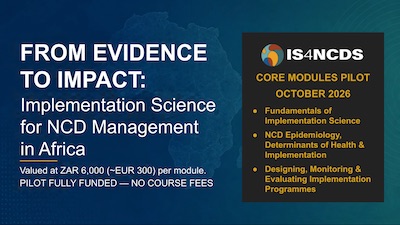
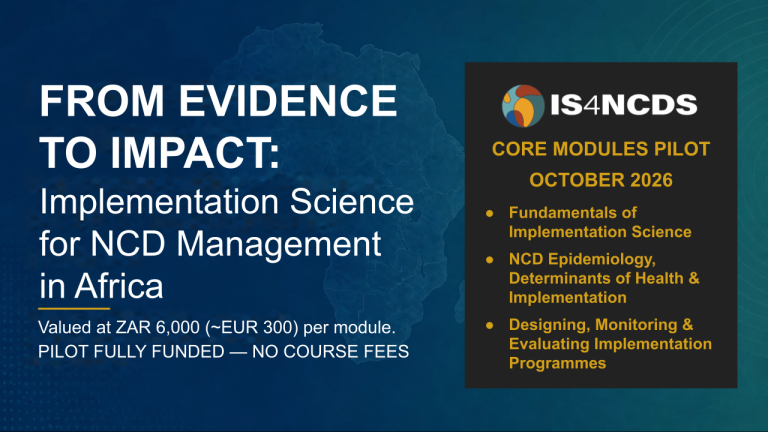
IS4NCDs has scheduled the Core Modules pilot to launch in early October 2026, followed by the Intermediate Modules pilot in the third week of October, and the Advanced Modules pilot in November.

IS4NCDs will begin accepting Expressions of Interest soon. The training modules, valued at approximately ZAR 6,000 per module, are fully funded — there is no cost to participants during the pilot phase.

The IS4NCDs project has received funding from the European Union's Erasmus+ programme under Grant Agreement no. 101179511


The IS4NCDs project has received funding from the European Union's Erasmus+ programme under Grant Agreement no. 101179511

One Class, Four Institutions: Shared Lecture Streams and Local Teamwork

One Class, Four Institutions: Shared Lecture Streams and Local Teamwork

One Class, Four Institutions: Shared Lecture Streams and Local Teamwork

11 August 2026

When IS4NCDs set out to pilot its Core Modules, it faced a practical constraint common to multi-country training programmes: how to deliver the same rigorous, faculty-led training across four institutions without either repeating the same module four times or asking faculty to travel constantly between sites.

The answer is a hybrid delivery model built specifically for this challenge.

A Shared Lecture Stream, Delivered Locally

Beginning the first week of October 2026, the three Core Modules

  • Fundamentals of Implementation Science
  • NCD Epidemiology, Determinants of Health & Implementation
  • Designing, Monitoring & Evaluating Implementation Programs

will be piloted simultaneously at Copperbelt University, The University of Zambia, Stellenbosch University, and the University of the Witwatersrand.

One set of live lectures streams into all four classrooms at once. From there, participants at each site work through practical, challenge-based learning activities in person, facilitated locally by faculty at each institution. The result is a single, consistent curriculum delivered at scale, without sacrificing the in-person, team-based work on which implementation science training depends.

Why This Model, and Why Now

The approach reflects a requirement built into the project from the outset: each Core Module needs to be piloted at all four partner institutions, not just one. Streaming shared content once, rather than repeating it site by site, was the model that met that requirement most efficiently, whilst preserving space for locally facilitated, hands-on practice at every location.

What’s Ready Behind the Scenes, and What Comes Next

Accreditation and Continuing Professional Development approval processes are progressing at each partner institution, with several already at an advanced stage ahead of October. Ethics approval for the project’s evaluation protocol has already been secured through the Institute of Tropical Medicine Antwerp, giving partner institutions a shared foundation as they complete their own local reviews. A working group with representation from all seven consortium partners is also shaping the project’s regional learning eHub.

IS4NCDs will begin accepting Expressions of Interest soon. The Core Modules, scheduled for piloting in early October and valued at approximately ZAR 6,000 per module, are fully funded — there is no cost to participants during the pilot phase.

The IS4NCDs project has received funding from the European Union's Erasmus+ programme under Grant Agreement no. 101179511

The IS4NCDs project has received funding from the European Union's Erasmus+ programme under Grant Agreement no. 101179511
The Know-Do Gap: Why Good Evidence Alone Does Not Change What Happens in the Clinic

The Know-Do Gap: Why Good Evidence Alone Does Not Change What Happens in the Clinic

The Know-Do Gap: Why Good Evidence Alone Does Not Change What Happens in the Clinic

6 August 2026

A national hypertension guideline is published, endorsed and distributed to every facility in a province. The evidence behind it is not in question — it is drawn from large trials. Reviewed by experts and consistent with World Health Organization recommendations. Eighteen months later, an audit finds that barely a third of eligible patients are being managed according to it.

Nothing was wrong with the evidence. The guideline simply never closed the distance between what is known and what is done.

The Gap That Evidence Alone Cannot Close

Implementation science calls this the know-do gap — the persistent space between what research has established works and what actually happens in routine care. It is not a knowledge problem in the way it first appears. Most clinicians in the audit above were aware the guideline existed. Awareness was never the barrier.

The gap opens for reasons that have little to do with the strength of the evidence itself: a workflow that assumes staffing the guideline’s authors never accounted for, a supply chain that cannot sustain the recommended medication combination, or a patient population whose circumstances the original trial never captured.

Efficacy Is Not the Same Question as Implementation

Much of the confusion around the know-do gap comes from treating ‘does it work’ and ‘will it work here, delivered by this workforce, under the conditions’ as the same question. They are not. Efficacy research asks whether an intervention produces the intended effect under controlled or ideal conditions. Implementation research asks something else entirely: whether, and how, the same intervention can be delivered reliably under real, resource-variable conditions of routine care.

A guideline can be extremely well evidenced on the first question and still fail completely on the second — and in low- and middle- income health systems, where the gap between ideal and routine conditions is often widest, this distinction tends to matter more, not less.

Why the Gap Persists Longer in NCD Care

For a single-encounter intervention, the know-do gap is a one-off hurdle: either the intervention is delivered on that occasion or it is not. NCD management rarely works that way. A hypertension or diabetes protocol has to be delivered consistently, visit after visit, for years, across a health workforce that turns over and a supply chain that fluctuates. Every one of those repeat encounters is a fresh opportunity for the gap to reopen, even after it has apparently been closed.

Closing the Gap is a Distinct, Learnable Skill

Recognising that a know-do gap exists in one’s own setting is a reasonable starting point. Diagnosing why it exists in a specific facility or programme — separating a workflow mismatch from a resourcing shortfall because of a training deficit, and knowing which levers actually close each kind — is a distinct and considerably harder skill. Building that capability, calibrated to one’s position in the health system, is central to what the IS4NCDs training pathway is designed to do.

The IS4NCDs project has received funding from the European Union's Erasmus+ programme under Grant Agreement no. 101179511

The IS4NCDs project has received funding from the European Union's Erasmus+ programme under Grant Agreement no. 101179511

Context: The Variable That Decides NCD Programme Success

Context: The Variable That Decides NCD Programme Success

Context: The Variable That Decides NCD Programme Success

4 August 2026

When an NCD programme succeeds in one facility and stalls in another — despite using an identical protocol, identical training, and an identical evidence base — the cause is rarely a flaw in the intervention. It is almost always context: the surrounding conditions, inside and outside the facility, that a programme is dropped into. Context can be assessed systematically before rollout; when it isn't, the mismatch tends to surface only after the programme has already stalled.

Two Clinics, One Protocol, Two Different Results

A cervical cancer screen-and-treat programme launches across a region. In an urban clinic, uptake climbs steadily and holds. In a rural facility thirty kilometres away, running the identical protocol with the identical training, uptake barely moves before stalling out entirely.

Nothing about the intervention changed between the two sites. What differed was the context each was operating in.

Inner Setting and Outer Setting: The Two Layers That Make Up Context

Implementation science splits context into two critical layers:

  • The Inner Setting: What is happening inside the facility itself — leadership support, staffing levels, workflow, culture, and available resources.
  • The Outer Setting: What surrounds the facility — the policy environment, funding cycles, supply chains, referral networks, and community norms.

A programme can be well-designed and well-delivered and still fail purely because one or both of these layers was not accounted for. A well-staffed urban clinic with a reliable supply chain and an engaged facility lead offers a fundamentally different context than a single-nurse rural facility managing intermittent stock-outs — even when both are nominally running "the same programme."

NCD Care is Especially Exposed to Context, Because It Depends on It Holding Steady

Unlike a one-time intervention, NCD management is ongoing and heavily relies on long-term systemic stability:

  • Repeat patient visits over years rather than days
  • Continuous medication supply without interruption
  • Functioning referral pathways across different tiers of care
  • Consistent patient follow-up mechanisms

Each of these depends on context holding steady over a long period, which gives local conditions far more opportunity to make or break an NCD programme than they would a single-encounter intervention.

Structured Assessment, Not General Familiarity, is What Implementation Science Adds

Most health professionals already know that local conditions vary from one facility to the next — that observation alone isn't the insight. What implementation science adds is a structured way to assess which specific contextual factors are likely to matter, systematically, before rollout.

Frameworks used in the field — the Consolidated Framework for Implementation Research (CFIR) among them — break context down into specific, checkable domains:

  • Leadership engagement and strategic buy-in
  • Compatibility with existing clinical workflows
  • Communication networks and information flow
  • Resource availability and infrastructure capacity

That specificity is what turns a vague intuition into something a team can actually plan around.

Local Control Versus Escalation: Knowing Which Barriers are Actually Yours To Fix

Not every contextual barrier sits within local control. Part of working effectively with context is distinguishing what can be addressed locally from what needs to be escalated:

  • Local Control: Adjusting daily workflows, strengthening internal team communication, or identifying a local clinical champion.
  • System Escalation: Resolving national or regional supply chain issues, structural funding gaps, or broad policy limitations.

Directing effort accordingly ensures teams do not ignore system-level barriers or exhaust local capacity trying to fix something structural.

A Capability IS4NCDs Will Equip You With: Assessing Context Before Rollout, Not After

Understanding, in hindsight, why one clinic succeeded and another stalled is a useful starting point. Systematically assessing your own facility's context before rollout — and knowing which barriers are yours to fix locally versus which need to be escalated — is a distinct, learnable skill. It is a key capability that IS4NCDs training is designed to build, at a level suited to your position in the health system.

The IS4NCDs project has received funding from the European Union's Erasmus+ programme under Grant Agreement no. 101179511

The IS4NCDs project has received funding from the European Union's Erasmus+ programme under Grant Agreement no. 101179511

IS4NCDs Marks Steady Progress Towards October Pilot Launch

IS4NCDs Marks Steady Progress Towards October Pilot Launch

IS4NCDs Marks Steady Progress Towards October Pilot Launch

29 July 2026

IS4NCDs held its monthly virtual meeting on 27 July 2026, bringing together representatives from all partner institutions to review progress towards the piloting of its implementation science training modules, set to begin in October.

The meeting highlighted encouraging momentum across the programme. Institutions leading the Core, Intermediate, and Advanced modules each reported on their preparations, with accreditation and continuing professional development (CPD) applications progressing at several universities. A number of modules have already secured short-course approval and CPD-eligible status, reflecting growing institutional recognition.

Work also continues on a centralised online hub. The platform is being built to streamline access to the learning modules. Prospective learners will soon be able to access programme information — including eligibility information and module goals — as well as register interest.

In addition to the piloting update, the meeting featured progress reports on two related workstreams. A master’s thesis contextualising the IS4NCDs competency framework is nearing completion, with results expected to be shared with the consortium later this year. Preparations are also continuing for the programme’s Executive-track course, with a full protocol update anticipated at the next consortium meeting.

Looking ahead, partner institutions reaffirmed their commitment to a collaborative teaching model, in which faculty from across the consortium will contribute to delivering each module — including a shared Challenge-Based Learning component woven throughout the curriculum to ensure participants apply what they learn to real-world NCD care implementation challenges.

With piloting now fast approaching, here is the confirmed target schedule for the three Core Modules:

  • Module 1 - Fundamentals of Implementations Science: 5-9 October 2026
  • Module 2 - NCD Epidemiology & Determinants: 26-30 November 2026
  • Module 3 - Design, Monitor & Evaluate: 2-6 November 2026

Further updates on the modules and registration of interest will be shared in the coming weeks.

The IS4NCDs project has received funding from the European Union's Erasmus+ programme under Grant Agreement no. 101179511

The IS4NCDs project has received funding from the European Union's Erasmus+ programme under Grant Agreement no. 101179511
Implementation Strategies: The Deliberate Choice That Decides Whether an NCD Programme Survives

Implementation Strategies: The Deliberate Choice That Decides Whether an NCD Programme Survives

Implementation Strategies: The Deliberate Choice That Decides Whether an NCD Programme Survives

23 July 2026

When an NCD programme underperforms, the clinical evidence is rarely the problem. The deciding factor is almost always the implementation strategy — the deliberate method used to support a protocol's adoption, delivery, and sustainment, distinct from the clinical intervention itself. Training, audit-and-feedback, local champions, task-shifting, workflow redesign, and financial incentives are all examples. Programmes that diagnose their specific barrier and match a strategy to it tend to survive past the pilot stage; programmes that default to generic training regardless of the barrier tend to fade once initial momentum runs out.

That single distinction — matched strategy versus generic response — is usually what separates an NCD programme that sticks from one that quietly reverts to baseline.

Two Districts, One Protocol, Two Different Outcomes

Two districts roll out the same diabetes screening protocol, built on the same evidence, using the same forms and training materials. District A trains staff once and moves on; eighteen months later, screening rates have slid back to where they started.

District B adds a monthly supervisor check-in, adjusts its forms after frontline staff flag a problem in week two, and installs a local champion in each clinic; eighteen months later, screening hasn't just held, it has spread on its own to three neighbouring facilities.

Same evidence, same forms — different implementation strategy, different outcome.

Training Alone Rarely Fixes a Struggling Programme

Training is the default response when a programme underperforms, and it's not the wrong instinct — it's simply the weakest one when used alone, especially when the actual barrier has nothing to do with knowledge. A workflow that doesn't fit how a clinic operates, a supply chain that can't sustain the intervention, or a lack of leadership buy-in won't be solved by another workshop.

The stronger, better-evidenced approach is to diagnose the specific barrier first, then select — or combine — strategies matched to it. Two or three well-chosen strategies together consistently outperform either a single generic one or an overcomplicated bundle assembled without a clear rationale.

NCD Care Depends on Consistent Delivery, Not Just Proven Evidence

Much of the evidence base for NCD prevention and management is already strong: WHO PEN protocols, the HEARTS technical package, established screening guidelines. The recurring bottleneck across health systems is rarely "does this intervention work" — it's "how do we get it delivered consistently, at scale, under real conditions." That is precisely the gap implementation strategies exist to close, and precisely why the same protocol can succeed in one district and fail in the next.

Cost is Not the Same as Complexity

A common concern is that implementation strategies sound resource-intensive. Many aren't: a peer champion drawn from existing staff, an audit-and-feedback loop built from data the facility already collects, or a small workflow adjustment are all legitimate, low-cost strategies. The skill isn't budget — it's deliberate matching, and most experienced health workers are already running informal versions of this without naming it (a senior nurse mentoring a newer colleague is, functionally, running a champion strategy).

The Capability IS4NCDs Will Equip You With: Diagnosing Barriers and Matching Strategies

Reading a comparison like the one above and recognising, in hindsight, that District B chose better is a reasonable starting point. Diagnosing a barrier correctly and matching a strategy to it — in your own setting, before months of staff time and budget are already committed — is a distinct and considerably harder skill. Building that capability, calibrated to your role in the system, is what IS4NCDs' training pathway is designed to do.

The IS4NCDs project has received funding from the European Union's Erasmus+ programme under Grant Agreement no. 101179511
The IS4NCDs project has received funding from the European Union's Erasmus+ programme under Grant Agreement no. 101179511
Fidelity Drift: The Silent Reason Programmes Stop Working at Scale

Fidelity Drift: The Silent Reason Programmes Stop Working at Scale

Fidelity Drift: The Silent Reason Programmes Stop Working at Scale

13 July 2026

A district rolls out a new hypertension protocol. The training is done, the job aids are printed, everyone signs off. Six months later, an audit turns up something quiet but troubling: most nurses are still measuring blood pressure the old way — wrong cuff size, no rest period beforehand, a single reading instead of two.

Nobody decided to ignore the new protocol. Nobody was told to stop following it. It simply drifted.

How an Established Protocol Quietly Becomes a Different One

Implementation science calls this fidelity drift — the gradual, often unnoticed gap between how a programme is designed to be delivered and how it actually plays out in daily practice. It rarely happens through one bad decision. It accumulates through small workarounds under time pressure, staff turnover that loses the original training, and informal shortcuts that nobody flags because each one, on its own, seems minor.

For chronic, multi-step NCD protocols — hypertension algorithms, diabetes screening pathways, cervical cancer screen-and-treat programmes — there are far more opportunities for drift than in a single, one-time intervention. This is one of the most common reasons a programme that performed well in a pilot fails to reproduce those results once it scales into routine care.

Broken Programme or Broken Delivery? Why You're Probably Diagnosing Failure Wrong

When a programme “isn’t working,” it’s tempting to conclude the intervention itself is flawed, or that staff aren’t trying hard enough. Implementation science pushes back on both assumptions. Often, the intervention is sound and the staff are trying; the actual delivery has simply moved away from what was designed, one small adjustment at a time. Telling these apart matters, because the fix is completely different depending on which one you’re facing: retaining staff on a protocol they’ve forgotten looks nothing like redesigning a protocol that never fit local conditions in the first place.

Adaptation vs. Erosion: Where Local Flexibility Ends

None of this means every local adjustment is a problem. Implementation science recognises that some adaptation to local context is not only expected but often necessary and beneficial. The distinction that matters is between adapting how something is delivered — language, timing, format — and quietly losing the active components that make the intervention work in the first place, such as skipping a required step or reducing dosage frequency without any clinical rationale.

Recognising where that line sits, in a specific programme, is a skill, one built through structured attention to what’s actually happening in daily practice, not assumption.

From Hindsight to Habit: Catching Drift Before It Costs You

Noticing fidelity drift isn’t about assigning blame. It’s often the first clue that something in the surrounding system — supply, staffing, workflow, training refresh cycles — needs attention.

But recognising drift in a story like the one above, after the fact, is a different skill from catching it early and reliably in your own facility, before it quietly undoes months of work. Building that ongoing, working method, one that also tells drift apart from a design flaw that needs a different fix entirely, is exactly the kind of applied capability that the IS4NCDs training tracks are being built to develop, at a level matched to where you sit in the health system, from frontline practice through to policy.

The IS4NCDs project has received funding from the European Union's Erasmus+ programme under Grant Agreement no. 101179511
The IS4NCDs project has received funding from the European Union's Erasmus+ programme under Grant Agreement no. 101179511

October 2026 Target Confirmed for Core Modules Pilot

October 2026 Target Confirmed for Core Modules Pilot

October 2026 Target Confirmed for Core Modules Pilot

30 June 2026

Core training modules are set to be piloted from the first week of October 2026, to be taught simultaneously across four African partner universities through an innovative hybrid teaching model. The target, first set at an earlier meeting, was reaffirmed during the IS4NCDs virtual meeting on 29 June 2026.

During the meeting, partners also reported steady progress on accreditation and ethics approvals, and a working group with representation from all seven partner institutions has been established to guide development of the project’s regional learning eHub.

A Hybrid Classroom Across Four Countries

Piloting of the three core modules will run between October and November 2026 at Copperbelt University, the University of Zambia, Stellenbosch University, and the University of the Witwatersrand. The delivery model was designed to make the most efficient use of teaching resources while still meeting the project’s requirement to pilot each core module at all four institutions. Rather than having lecturers travel to, or repeat, the same module at each site, one set of live lectures will be streamed simultaneously into all four classrooms, while participants attend in person and work through practical, challenge-based learning activities facilitated locally.

Accreditation and Ethics Approvals

Accreditation and Continuing Professional Development (CPD) approval processes are advancing across all partner institutions, with several already at an advanced stage ahead of the October pilots. Each institution is pursuing the recognition appropriate to its own academic processes, and partners are coordinating closely to streamline this work and avoid duplication of effort.

Ethics approval for the project’s evaluation protocol has already been secured through the Institute of Tropical Medicine, providing a charred foundation that partner institutions are now building on through their own local review processes.

Shaping the Project’s Digital Platform

A new working group has been formed to guide the development of the regional learning eHub, with a representative from every partner institution. Further review is planned once a trial version of the platform is ready.

The IS4NCDs project has received funding from the European Union's Erasmus+ programme under Grant Agreement no. 101179511

The IS4NCDs project has received funding from the European Union's Erasmus+ programme under Grant Agreement no. 101179511
IS4NCDs Keeps the Pace After Johannesburg

IS4NCDs Keeps the Pace After Johannesburg

IS4NCDs Keeps the Pace After Johannesburg

2 June 2026

The IS4NCDs consortium convened its monthly virtual meeting via Zoom video call on 1 June 2026, bringing together representatives from partner institutions across Africa and Europe after the landmark in-person consortium meeting held in Johannesburg. The call served as an opportunity to reflect on that in-person meeting, share progress updates across work packages, and align on the path forward.

Reflecting on Johannesburg

Participants opened the call with warm reflections on the Johannesburg consortium meeting, describing it as a turning point for the project. Colleagues noted that the gathering provided much-needed clarity on priorities and next steps, and that the opportunity to connect in person — many for the first time after more than a year of online collaboration — was invaluable. The meeting was praised for its capacity-building activities and for enabling productive conversations between institutions that needed to strengthen their coordination.

Work Package Updates

Core Modules — Copperbelt University (CBU)

CBU reported progress on establishing the IS4NCDs project's visibility at the institutional level, with the project now featured on both the university's main website and its school-level web page. The team also provided an update on micro-credentials: while Zambia does not yet have a national framework for micro-credentials, CBU has engaged its internal senate committee — which oversees curriculum review and short courses — to obtain formal documentation acknowledging this context. Planning for the pilot of the Fundamentals of Implementation Science module is underway, with the team working to confirm internal timelines.

Intermediate Modules — Stellenbosch University

Stellenbosch University shared particularly encouraging news. Following the Johannesburg meeting, the team moved swiftly to prepare materials for Continuing Professional Development (CPD) point applications, submitting CVs, timetables, and assessments for all relevant teaching staff. All three intermediate modules have received content approval at NQF Level 9, with CPD points awarded for each. Building on this momentum, the team subsequently submitted applications for formal short course approval within the faculty — a process that is now underway and expected to yield an outcome sooner than originally anticipated. Piloting of the three modules remains planned for October, with one module rescheduled to November to accommodate a faculty member's sabbatical leave. The team is also working to update the university website to feature the IS4NCDs project and its programmes.

Advanced Modules — WITS University

WITS provided an update, confirming that the IS4NCDs project has been featured on the institute website for some time. The team is continuing to support the broader consortium's work on the advanced modules track.

Ethics Application

The consortium reviewed the status of its ethics application for research on education, which will cover activities including the piloting of short courses. Work is progressing on the research protocol, with the team coordinating to finalise the proposal and submit it in the near term. Discussion was held on the structure of the application, including the designation of principal and co-investigators across participating institutions, reflecting the multi-country, multi-institution nature of the consortium's work.

E-Learning Platform

An update was shared on the consortium's e-hub — its planned e-learning platform. A draft vision document is being prepared and will be shared on a collaborative platform for input from all consortium members. Institutions were encouraged to identify representatives to participate in the working group that will review and comment on this draft. The goal is to ensure every partner institution has a voice in shaping the platform before development proceeds.

Research and Manuscripts

The LMU Munich team reported that their competency study has reached a significant milestone, with all analytical steps now complete. The team is currently writing up the manuscript and will share an outline with the consortium steering board in the coming days, in line with the IS4NCDs authorship guidelines. A related ancillary study — conducted by a master's student who participated actively in the Johannesburg meeting — also benefited from a substantial increase in survey responses during and after that event. The student's thesis is due by the end of July, after which the broader team will collaborate on preparing a manuscript for publication. The consortium extended a standing invitation to the student to present her work to the group at a future call.

Executive Course Development

The University of Zambia shared that discussions are actively underway regarding the development of an executive course. Conversations with a partner institution have been described as productive and insightful, covering areas such as accreditation and business planning. Early-stage work on the research ethics protocol for the needs assessment phase of this course has begun, and the consortium will continue to track progress on this initiative in upcoming calls.

One Year of IS4NCDs Online

The call also marked a quiet but meaningful milestone: the one-year anniversary of the IS4NCDs website. The consortium acknowledged this moment as a small but tangible symbol of the project's growing public presence and its commitment to transparency and communication.

The IS4NCDs project has received funding from the European Union's Erasmus+ programme under Grant Agreement no. 101179511
The IS4NCDs project has received funding from the European Union's Erasmus+ programme under Grant Agreement no. 101179511
A Week of Collaboration Closes with Commitment to Combating NCDs Across Africa

A Week of Collaboration Closes with Commitment to Combating NCDs Across Africa

A Week of Collaboration Closes with Commitment to Combating NCDs Across Africa


8 May 2026

The fifth and final day of the IS4NCDs Regional Consortium Meeting brought together partners from across the consortium at the Wits School of Public Health in Johannesburg to consolidate a week of intense and productive discussions. With clear decisions made, timelines set, and responsibilities assigned, the meeting closed on a note of genuine optimism and shared purpose.

Finalising the Teaching Faculty

The morning session focused on several items that required final clarity before the week's close. A significant portion of the discussion centred on identifying and confirming the faculty who will lead and contribute to each module. Breakout groups worked through the core, intermediate, and advanced modules, mapping out module leads, co-facilitators, and potential guest lecturers from across the consortium's institutions.

The consortium agreed on the importance of having a clearly identified lead for each module to ensure accountability and coordination. It was also noted that visiting faculty from partner institutions, particularly those travelling to observe piloting at other sites, could actively contribute to teaching — strengthening knowledge transfer across the consortium.

Conclusions and the Path Forward

Following the coffee break, a comprehensive summary of the week's outcomes was presented, along with key next steps. Reflecting on the meeting's opening goals, it was noted that all had been achieved: relationships deepened, breakout sessions produced concrete decisions, and a provisional piloting timeline is now in place.

Core Modules will be piloted in an innovative format, with face-to-face classrooms running simultaneously at four institutions — Wits, Stellenbosch, the University of Zambia, and Copperbelt University — connected virtually. This approach effectively enables 12 pilots across three modules in approximately three weeks. The Fundamentals of Implementation Science short course is planned for the first week of October, followed by the NCD Epidemiology module in the fourth week of October and the Monitoring & Evaluation module in the first week of November. Up to 100 participants will be engaged across these workshops, drawing from a multidisciplinary pool including health professionals, social scientists, and implementation science practitioners.

Intermediate Modules — Mixed Methods, Quality Improvement, and Participatory Action Research — will be offered fully online, with delivery beginning in mid-October and running through to early December. These courses, led by the Stellenbosch team, will be open to participants from across sub-Saharan Africa, with geographically representative selection criteria ensuring broad regional participation. Each module will accommodate up to 35 participants, with a portfolio-based assessment component to support both transformative learning and project evaluation.

Advanced Modules in health economics, context and complexity, and implementation science theories and frameworks are planned for November, offered as face-to-face workshops with CPD accreditation. The theory and frameworks module will be anchored by the LMU team, while CBU and Wits will jointly lead health economics content.

The Executive Course is tentatively planned for June–July 2027, linked where possible to the next full consortium meeting. It will be a two-and-a-half-day face-to-face programme for 10 senior health leaders, with a rigorous selection process to ensure participants are true executives in their fields.

Evaluation, Ethics, and Publications

The consortium reaffirmed its commitment to a robust evaluation framework. An ethics application is being prepared through Institute of Tropical Medicine to obtain initial approval covering all module evaluations, with the goal of having ethical clearance in place before the first pilot. Key evaluation elements include pre- and post-module competency assessments, participant demographics to track equity and reach, qualitative analysis of portfolio reflections, and focus group discussions with knowledge creation teams and teaching faculty.

The group also discussed a growing body of publications emerging from the project — including a literature-based competency framework and a regional survey — and called on consortium members to consider how they might contribute to the writing and dissemination of findings.

Key Deadlines

A set of immediate action points was confirmed before the close:

  • Implementation roadmaps (Parts A and B) for CBU, Wits, and Stellenbosch to be submitted by 15 May 2026
  • CPD and micro-credential accreditation submissions to be completed by end of May–June 2026, depending on institution
  • First version of the mid-term progress report to be ready by end of May, with final submission by 30 June 2026
  • Centralised expression of interest for all modules to be live by 15 August 2026
  • Participant selection completed by 1 September 2026

The formal closing of the meeting was marked by warm words of thanks from the Wits local organising team and — in a fitting Wits tradition — a group photograph in the atrium. The executive leadership offered closing remarks commending the team for an exceptional week.

Particular thanks were extended to the Wits hosting team, whose logistical support made the full in-person meeting possible, having originally been planned as a virtual event.

The next full consortium meeting will be hosted by Stellenbosch University in the Western Cape province of South Africa in 2027. In the meantime, three virtual or hybrid check-ins are planned around the piloting period to keep the consortium connected and aligned.

As the week drew to a close, the mood was clear: the foundations have been laid, the timelines are set, and the IS4NCDs consortium is ready to move from planning to action — with a shared commitment to strengthening implementation science capacity and combating non-communicable diseases across Africa.

The IS4NCDs project has received funding from the European Union's Erasmus+ programme under Grant Agreement no. 101179511
The IS4NCDs project has received funding from the European Union's Erasmus+ programme under Grant Agreement no. 101179511
Momentum in Johannesburg: IS4NCDs Consortium Advances Planning on Day Four

Momentum in Johannesburg: IS4NCDs Consortium Advances Planning on Day Four

Momentum in Johannesburg: IS4NCDs Consortium Advances Planning on Day Four

7 May 2026

The fourth day of the IS4NCDs Regional Consortium Meeting in Johannesburg was a full and substantive one, covering project administration, pilot scheduling, publication planning, and the development of an evaluation framework.

The day opened with a project management and coordination session, during which the consortium received a comprehensive overview of upcoming deadlines, milestones, and deliverables for the remainder of the year and into the project's final year. Key administrative matters addressed included the submission of implementation programmes, applications for micro-credentials, and progress reports — all with deadlines falling within the coming months.

The consortium was reminded of the importance of timely communication regarding any anticipated delays, as well as the need to maintain thorough financial and administrative records, given that the project remains subject to external review for several years beyond its end date. Financial arrangements — including the structure of the pre-financing model and the timeline for final project payments — were also clarified, with an open invitation for partner institutions to raise any concerns about their capacity to manage interim costs.

Guidance was provided on external communication requirements, including the mandatory use of the project's visual identity and EU funding acknowledgements across all dissemination and communication activities. The consortium was also introduced to an impact tracker tool designed to help partners log their dissemination activities throughout the project's lifetime, ensuring accurate reporting at the project's conclusion.

A significant portion of the morning was dedicated to the collaborative development of a pilot schedule for the project's nine modules, which span core, intermediate, advanced, and executive levels. Working in module-type groups, consortium members worked through a shared planning tool to map out realistic timelines for piloting, taking into account academic calendars, accreditation timelines, public holidays, and staffing availability across the participating institutions.

Each group reported back to the plenary with their provisional plans. Across the board, the second half of the calendar year emerged as the most feasible window for piloting, with most contact sessions planned between August and November. The executive-level course, designed as a condensed in-person offering for a small cohort of senior professionals, was provisionally planned for the following year, to allow it to benefit from lessons learned during the earlier pilots.

The plenary noted the clustering of pilot activities in October and November, flagging this as a potential operational risk, and encouraged groups to consider spreading activities where possible. Discussions also touched on participant sequencing across modules, delivery modalities (online, face-to-face, and hybrid), and the importance of coordinating teaching responsibilities across consortium members.

The afternoon began with a structured overview of the consortium's publication pipeline. It was acknowledged that while the project's primary mandate is curriculum development, academic publication remains an important vehicle for dissemination and knowledge contribution. An authorship policy — already circulated among consortium members — was briefly revisited, with a reminder that authorship requires active contribution at multiple stages of the writing process in line with internationally recognised criteria.

Several publications were discussed, spanning the full arc of the project: from an overarching descriptive paper introducing the project as a whole, to evaluations of the individual modules, to more conceptually focused pieces on topics such as challenge-based learning, competency development, and the use of co-design in curriculum development. Two publications are already in active development, with the remainder dependent on the outcomes of the piloting phase. The consortium agreed on a process whereby new publication ideas should be submitted to the steering committee for review and approval before work commences, in order to ensure strategic coordination across the consortium.

The potential for conference presentations and abstract submissions was also raised, with members encouraged to flag relevant upcoming events early so that the consortium could be deliberate in its dissemination strategy.

The final session of the day focused on how the consortium will evaluate its work — both at the level of individual modules and across the project as a whole. Following a brief energising activity, the group engaged in an open discussion on evaluation approaches, drawing on established frameworks from the fields of implementation science and training evaluation.

The conversation explored how best to capture participant learning and professional transformation, with proposals including pre- and post-assessments, reflective portfolios, and retrospective self-assessment tools. The relative merits of quantitative and qualitative approaches were considered, and the group discussed how data gathered through module evaluations could feed into broader project-level evaluation and, ultimately, into academic publications.

A key outcome of this discussion was agreement on the need to develop an overarching evaluation protocol to be submitted for ethics review, with the aim of securing approval in time for the commencement of piloting. A small core writing group volunteered to take this forward, with an initial draft to be shared with the wider consortium in the coming weeks. It was noted that the ethics submission deadline would need to be met by June in order to receive approval before the end of September — when piloting is due to begin.

The day closed with a clear sense of momentum. The consortium had moved from broad planning to tangible commitments: a provisional pilot calendar, a coordinated publication plan, and a path forward for ethical approvals. The writing group for the evaluation protocol was asked to remain briefly to begin dividing tasks, while the rest of the group was released for the afternoon.

The IS4NCDs project has received funding from the European Union's Erasmus+ programme under Grant Agreement no. 101179511
The IS4NCDs project has received funding from the European Union's Erasmus+ programme under Grant Agreement no. 101179511
Modules, Platforms, and Pedagogy: Inside Day 3 of the IS4NCDs Regional Consortium Meeting

Modules, Platforms, and Pedagogy: Inside Day 3 of the IS4NCDs Regional Consortium Meeting

Modules, Platforms, and Pedagogy: Inside Day 3 of the IS4NCDs Regional Consortium Meeting

7 May 2026

The third day of the IS4NCDs Regional Consortium Meeting brought together academics, researchers, health professionals, and knowledge creation teams from across Southern Africa and beyond for another productive session. With key curriculum decisions already made on Day 2, the group turned its energy toward the substance of advanced module design, an ambitious executive course concept, and the pedagogical principles that will underpin the entire training programme.

Reflecting on Progress: Decisions That Lifted the Weight

The day opened with a recap of the week's milestones. The facilitator noted with evident relief that the group had successfully resolved some of the most consequential questions facing the project: where the pilot modules would be offered, for which audiences, in what format, and on what timelines.

The agreed approach is to offer core modules as workshops — designed to the rigour of a short course but delivered in workshop format across four participating institutions simultaneously. This model allows the consortium to pilot effectively within the project's timeframe while the formal accreditation processes run in parallel. Synchronous virtual lectures, streamed live into all four institutional venues, will ensure consistency of delivery while capping on-site attendance at each location.

Intermediate modules are being positioned for formal short course accreditation before their pilot, with particular strategic importance for Stellenbosch University, where the modules are expected to catalyse an implementation science programme that has been approved but not yet fully executed. Advanced modules will be offered initially as workshops, similarly designed as short courses, with a view to longer-term integration into existing academic programmes.

Advanced Modules Take Shape

Much of the morning was devoted to presentations and discussion of the three advanced modules under development.

Health Economics in the Implementation of Health Programmes

The first advanced module addresses a recognised gap: while many practitioners working in the NCD space may have some exposure to health economics, few have engaged with how economic thinking applies specifically during the implementation process. The module aims to equip learners — including post-graduate students, early career researchers, health professionals, and programme managers — with the conceptual knowledge and practical skills to assess costs, evaluate cost-effectiveness, conduct budget impact analyses, and communicate economic findings to multidisciplinary audiences and policy makers.

Presenters highlighted a shortage of local economic data on NCD implementation in Southern Africa and noted limited methodological capacity among implementation scientists to conduct comprehensive economic evaluations. The module is designed to bridge this gap, helping practitioners build the economic arguments necessary to drive implementation and sustain programmes in resource-constrained settings.

The proposed format is a five-day or block-week professional development course combining approximately 20 contact hours of taught content, 10 hours of case studies and practical exercises grounded in challenge-based learning, and substantial independent reading. The module's design reflects the dual needs of practitioners who may have no economics background and those who have economics training but need to understand the implementation dimension.

Theories, Models, and Frameworks in Implementation Science

The second advanced module tackles the conceptual architecture of implementation science itself — and does so with a deliberate Southern African lens. Presenters noted that most existing implementation science frameworks are Eurocentric or Western-centric in origin, and that when applied uncritically in African contexts, they may not account for the specific social, political, and infrastructural realities of low- and middle-income settings.

The module traces a five-day arc: from foundational knowledge of theories, models, and frameworks, through analysis of mechanisms of change, into the development of contextually grounded implementation frameworks, and finally into adaptation and evaluation of those frameworks. A central ambition is to equip participants not only to use existing frameworks but to critically assess their relevance, adapt them to local contexts, and, where necessary, develop new ones.

Discussion noted the importance of aligning the module's hours carefully with credit requirements and confirmed that, given its scope, the module would function as a two-and-a-half-day intensive workshop in the pilot phase, with expanded delivery possible depending on institutional accreditation needs.

Context, Complexity, and Multi-Sectoral Engagement

The third advanced module focuses on understanding context as a determinant of implementation — an area that often appears as a small sub-component of broader frameworks but rarely receives dedicated attention.

The module aims to develop advanced theoretical and practical competencies to analyse context dynamics, apply principles of complexity science, map stakeholder power, and design implementation strategies that are adaptive rather than linear. A five-day workshop structure was proposed, moving from foundations of context and systems thinking through stakeholder engagement and power analysis, adaptive strategy design, and ultimately scaling and sustainability.

A key suggestion was to strengthen the module's treatment of context monitoring and analysis — not just identifying contextual factors, but operationalising how they are measured and tracked over time. The facilitator acknowledged that the evaluation of context over time is indeed currently missing from the design and committed to incorporating it.

The Executive Course: Designing for Senior Decision-Makers

A dedicated session was given to the executive course in implementation science — a distinct offering aimed at senior managers and decision-makers, designed to equip them to drive impact on non-communicable diseases at a systems level.

Unlike the other modules, which have progressed through detailed content development, the executive course is deliberately at an earlier stage. The rationale offered by the presenting team was that the content of this course should draw substantially from the nine modules being developed by the consortium, and that its format must be shaped by a proper needs assessment of its target audience before any content decisions are made.

The planned needs assessment will take the form of a survey distributed across consortium members and key community of practice stakeholders, followed by a series of workshops — both virtual and in-person — to determine what senior professionals need to know, how they prefer to learn, and what format is feasible given the realities of their roles.

Participants in the session offered a number of insights that will shape the course's development. Several speakers emphasised that business schools — with their established models for executive education — offer useful benchmarks for format and delivery. The Graduate School of Business at the University of Cape Town was cited as one reference point, as were executive programmes at the University of Zambia.

There was broad agreement that the consortium's collective institutional credibility is sufficient to anchor the course's legitimacy without requiring partnerships with European or American institutions per se — though the importance of not reinventing content that already exists in open or accessible formats was noted. Strategic curation of existing quality resources alongside bespoke IS4NCDs content was presented as both pragmatic and efficient.

The discussion also turned to the course's longer-term sustainability. Several participants framed the executive course as a potential revenue-generating asset — a cornerstone of the E-hub platform and a means of sustaining the consortium's knowledge translation work beyond the project's funding period. Two delivery models were proposed: a regularly scheduled open-enrolment course, and a customisable package that organisations such as national health departments or UN agencies can commission and tailor to their own needs.

The E-Hub: A Digital Platform for the Long Term

One of the most striking moments of the day came with the presentation of a conceptual digital learning platform — referred to as the E-hub — envisioned as the technological infrastructure through which all IS4NCDs courses will eventually be delivered and accessed.

The presenter was careful to note that what was shown was conceptual and that names and course titles used were placeholders. The intent was to demonstrate what is possible and to invite the consortium to shape the platform's design.

The proposed system is designed around several core functions: a structured course catalogue with personalised recommendations based on learner profiles and interests; competency tracking that allows learners and institutions to monitor progress against the IS4NCDs competency framework; mentorship matching and tracking; community of practice forums that facilitate peer support and collaboration; and live and asynchronous event management.

Critically, the platform is designed for institutional flexibility. It can be accessed as a standalone hub, integrated into existing university learning management systems such as Canvas, or made available as part of government human resource development plans — enabling national health departments to offer courses to all staff using verified institutional credentials.

The presentation drew enthusiastic responses. Participants were particularly excited about the platform's potential as a regional resource — one that could serve not only individual learners but entire government departments, and that could grow into a broader ecosystem connecting research evidence, data, and implementation science capacity across Southern Africa. The potential to incorporate AI-assisted learning pathways, matching learner profiles to the most relevant courses and resources based on verifiable contextual data, was raised as a future-facing ambition that the technical team is already exploring in related work.

On the practical question of sustainability, the consortium acknowledged that operating the platform will require a sustainable business model and likely a dedicated local technology partner. The team confirmed that subcontracting arrangements have already been explored, with quotations received from four providers and a preferred partner selected on the basis of their understanding of both academic institutional requirements and online platform development.

Transformative Learning and Challenge-Based Pedagogy

The afternoon sessions brought a more pedagogical focus, as participants engaged with the didactic principles that will animate all IS4NCDs modules: transformative learning and challenge-based learning (CBL).

The presenting facilitator walked the group through a foundational understanding of transformative learning — the kind of deep learning that changes a learner's perspective by prompting critical reflection on existing beliefs and assumptions. An interactive exercise using optical illusions illustrated how perspectives can shift in a moment, grounding the concept viscerally before the theoretical discussion began.

Four dimensions of transformative learning were presented as relevant to the consortium's work: what it is, what triggers it, what it looks like in practice, and how it can be embedded in module design. Participants were invited to bring these dimensions into their group work, considering how their specific module designs can create conditions for genuine perspective shifts.

Challenge-based learning was discussed as a complementary approach, structuring learning around real-world, complex NCD problems that require learners to apply knowledge, collaborate, and propose contextually grounded solutions. The relationship between CBL and transformative learning was described as mutually reinforcing: the challenge itself can serve as a trigger for transformative reflection.

Groups then broke into their respective module teams — core, intermediate, and advanced — to apply these concepts directly to their roadmap documents, identifying transformation points, linking learning outcomes more explicitly to the competency framework, and responding to a series of guiding questions about how to create safe spaces for reflection, integrate mentorship, and make transformative potential explicit in module instructions.

Reporting back from the groups revealed productive progress across all three levels. The core group noted that many transformative and CBL elements were already present in their roadmap and that the afternoon's work was largely one of alignment and articulation. The intermediate group proposed a set of structured "transformation points" — pre-reading, explicit group dialogue in the first week, peer-to-peer reflection, and ongoing mentorship — to make the transformation journey visible and deliberate for learners. The advanced group identified a distinct "big idea" for each of their three modules: equitable resource allocation in constrained settings for health economics; complexity for the context and multi-sectoral engagement module; and context for the theories, models, and frameworks module.

Looking Ahead

The day closed with thanks to participants and a look toward the remaining days of the meeting, which will focus on project management and timelines. The facilitator called on all groups to arrive ready to assign concrete dates to their module development milestones — recognising that the next major gathering is approximately a year away and that the pilots need to be delivered within the project's timeframe.

As participants gathered for a group photograph before their free evening, there was a palpable sense that the week had achieved something substantial: a shared vision not only of what the IS4NCDs training programme will look like, but of the infrastructure, pedagogy, and values that will carry it forward.

The IS4NCDs project has received funding from the European Union's Erasmus+ programme under Grant Agreement no. 101179511

The IS4NCDs project has received funding from the European Union's Erasmus+ programme under Grant Agreement no. 101179511