
IS4NCDs Gears Up for Regional Meeting in Johannesburg to Advance NCD Training

IS4NCDs Gears Up for Regional Meeting in Johannesburg to Advance NCD Training

University of the Witwatersrand

18 March 2026

As the fight against non-communicable diseases (NCDs) intensifies in low- and middle-income countries, the IS4NCDs consortium is set to convene its highly anticipated regional meeting from 4 to 8 May 2026 at the University of the Witwatersrand (Wits) in Johannesburg, South Africa. Hosted by one of Africa's leading public universities, this gathering brings together educators, implementers and health experts from partner institutions to propel the project's mission: equipping Southern African universities with innovative, scalable training programmes to combat NCDs such as diabetes, cardiovascular disease and cancer.

IS4NCDs (Implementation Science for Non-Communicable Diseases) is a collaborative initiative focused on strengthening implementation science education for NCD prevention and management in South Africa and Zambia. By emphasising practical, context-adapted education, the consortium develops short courses and postgraduate modules at core, intermediate and advanced levels, along with an executive programme and a regional eHub. These offerings use innovative pedagogies, including challenge-based and other active learning approaches, to immerse participants in real-world health challenges and foster skills in evidence-based interventions, policy translation and stakeholder engagement. The Johannesburg meeting marks a critical juncture, shifting from preparation to piloting and long-term sustainability.

Key Objectives: From Onboarding to Consensus

The agenda is packed with targeted objectives designed to build momentum and resolve key challenges for the next project phase.

First, the meeting will make new teachers familiar with the course content and Challenge Based Learning (CBL). Through interactive sessions and demonstrations, newcomers will explore how CBL and related methods can transform passive learning into active problem-solving. For example, a module on hypertension management might ask participants to design and test context-appropriate strategies for improving treatment adherence in a specific clinic or district, ensuring that educators are prepared to guide learners through applied implementation challenges.

Participants will then reflect on Parts A and B of the implementation roadmap for each module, which guide planning and roll-out across partner institutions. Part A is concerned with early steps such as defining learning outcomes, adapting content to institutional contexts and mapping available resources, while Part B focuses on practical aspects of delivery, including teacher preparation, stakeholder engagement and evaluation. Building on experiences from earlier consortium meetings and work package activities, partners will examine what has worked well and where adjustments are required to ensure smooth implementation.

A major focus in Johannesburg will be concluding the preparation phase of the core, intermediate and advanced modules. Attendees will review teaching materials, case studies and assessment strategies, and align on minimum quality standards before piloting begins. Sharing initial experiences from the preparation phase—such as how teams integrated local data, or adapted examples to different health system settings—will help build a shared understanding and promote cross-country learning.

Piloting and Sustainability on the Horizon

The consortium also aims to reach consensus on the piloting of the short courses and modules in 2026 and 2027. Discussions will address which sites and programmes will host early pilots, indicative timelines, and broad principles for monitoring outcomes such as learner engagement, competency development and perceived relevance for NCD-related work. Lessons from these pilots will inform further refinement and, ultimately, integration of the modules into accredited postgraduate pathways.

In addition, the meeting will open the first structured discussions on sustainability of the project outcomes after the formal project end date. Themes are expected to include how best to embed the modules into existing degree structures, maintain and expand access to the eHub, and continue collaboration between South African, Zambian and European higher education institutions. With NCDs rising sharply across South Africa and Zambia and placing increasing strain on health systems, building lasting institutional capacity in implementation science education is central to the IS4NCDs vision.

A Working Space for Consortium Partners

The Johannesburg regional consortium meeting is designed as an internal working space for IS4NCDs partners. Attendance will consist of consortium members and invited teaching staff, including approximately four teachers from each participating higher education institution in South Africa and Zambia. By creating dedicated time and space for joint reflection, detailed planning and hands-on engagement with the new modules and teaching approaches, the meeting aims to strengthen the shared ownership and readiness needed for successful piloting and long-term sustainability of IS4NCDs training activities.

The IS4NCDs project has received funding from the European Union's Erasmus+ programme under Grant Agreement no. 101179511

The IS4NCDs project has received funding from the European Union's Erasmus+ programme under Grant Agreement no. 101179511

Paula da Costa e Silva

Paula da Costa e Silva
Master’s Student in Public Health at LMU Munich

Paula da Costa e Silva

Master’s Student in Public Health at LMU Munich

Paula da Costa e Silva is a Master’s student in Public Health at LMU Munich. She holds a B.Sc. in Health Science from the Technical University of Munich (TUM). Her academic work focuses on global health, with particular interests in improving access to healthcare and strengthening health systems.

Within the IS4NCDs project, she conducts her master’s thesis as an ancillary study contributing empirical insights to inform capacity-building efforts in implementation science. She has gained experience in global health through internships with organizations such as the Novartis Foundation and Merck’s Global Health & Health Equity department.

The IS4NCDs project has received funding from the European Union's Erasmus+ programme under Grant Agreement no. 101179511

The IS4NCDs project has received funding from the European Union's Erasmus+ programme under Grant Agreement no. 101179511


IS4NCDs Implementation Roadmap for NCD Programmes: Parts A & B – Intermediate Modules in Quality, Mixed-Methods Research, and Participatory Action Research

IS4NCDs Implementation Roadmap for NCD Programmes: Parts A & B – Intermediate Modules in Quality, Mixed-Methods Research, and Participatory Action Research

IS4NCDs Implementation Roadmap for NCD Programmes Parts A & B – Intermediate Modules in Quality, Mixed-Methods Research, and Participatory Action Research

9 March 2026

The IS4NCDs consortium's implementation science roadmap for non-communicable disease (NCD) programmes – currently under development – recognises that bridging the 'know-do' gap requires more than just effective interventions. Practical expertise is needed to deploy them reliably, equitably, and with consistent quality across diverse settings and populations. Despite solid clinical protocols for prevention, screening, diagnosis, treatment initiation, adherence support, and sustained follow-up, NCD outcomes frequently disappoint owing to patchy delivery and health systems unprepared for reliable, ongoing care. NCDs' chronic, multimorbid profile – requiring persistent self-management, interdisciplinary teamwork, and regular system touchpoints – allows even minor procedural slips to compound over time, jeopardising results. A structured suite of modules is thus vital to empower the workforce in translating evidence into routine NCD practice through measurable, collaborative, and viable means.

The programme fosters progressive skill-building. Foundational implementation science modules cover essential concepts, theories, frameworks, and outcomes (including acceptability, feasibility, fidelity, adoption, reach, equity, and sustainment), alongside skills for pinpointing contextual drivers and adapting strategies. Subsequent intermediate modules in quality improvement, mixed-methods research, and participatory action research (PAR) supply practical tools for service deployment. The quality module enables learners to build dependable learning systems, curb unjustified variation, and leverage metrics for advancement (via process/balancing measures, run charts, and time-series tracking), all while balancing fidelity against necessary adaptations in multifaceted NCD pathways. Mixed-methods approaches are indispensable, since NCD issues rarely trace to singular causes: quantitative data highlights gaps (e.g., in treatment starts, retention, or control rates), while qualitative insights reveal root explanations (e.g., workflow bottlenecks, patient challenges, team interplay, or cultural norms). In tandem, they bolster causal understanding, strategy refinement, and rigorous evaluations – even hybrid types. PAR stands out for NCD contexts, where enduring shifts rely on co-design with service users and providers: patients, communities, frontline workers, and managers. It cultivates expertise in joint problem identification, ethical collaboration, cyclical co-development, and shared review, enhancing strategy legitimacy, adoption, and endurance – particularly for self-care and care continuity.

Participating higher education institutions gain curriculum renewal attuned to national imperatives for chronic disease control, primary healthcare bolstering, and universal coverage. The programme equips graduates to champion hands-on implementation, quality drives, and inquiry partnerships; ignites inter-field education and research across public health, clinical practice, management, and data expertise; and forges avenues for scholarly work like implementation reviews, mixed-methods analyses, and PAR learning collaborations. It further casts institutions as leaders in learning health systems that yield practice-derived evidence to guide redesign and scaling.

Nationally, this IS4NCDs consortium initiative – actively being shaped – elevates NCD performance by fortifying evidence-based intervention delivery with reliability, efficiency, equity, and durability. Graduates emerge equipped to narrow care inconsistencies, reinforce referral/follow-up networks, uphold clinical protocols, and weave continuous measurement and adaptation into everyday services. Integrating implementation science with quality, mixed-methods, and PAR not only hones strategy decisions but cultivates grassroots commitment, astute modifications, and compelling scale-up evidence – yielding better control, fewer complications and avoidable admissions, enhanced patient journeys, and resource efficiencies over time.

The IS4NCDs project has received funding from the European Union's Erasmus+ programme under Grant Agreement no. 101179511


The IS4NCDs project has received funding from the European Union's Erasmus+ programme under Grant Agreement no. 101179511

IS4NCDs Presents Insights on Implementation Science and Practice at IMPACT 2026

IS4NCDs Presents Insights on Implementation Science and Practice at IMPACT 2026

IS4NCDs Presents Insights on Implementation Science and Practice at IMPACT 2026

17 February 2026

The IS4NCDs consortium shared insights on strengthening implementation science capacity at the 4th Swiss Implementation Science Conference “True IMPACT – Providing Innovation for Patients and the Public”, held on 12–13 February 2026 at the University of Zurich. At a well‑attended poster presentation, Marie‑Therese Schultes and Martin Heine invited delegates to discuss 26 unique competency frameworks for implementation science and practice.

Poster Highlights: 26 Frameworks, One Shared Goal

The poster showcased how diverse competency frameworks describe what implementation scientists and practitioners should know and be able to do. The work identified 26 frameworks and consolidated their competencies into five clusters and three sub‑competence domains, capturing areas such as theoretical and methodological knowledge, stakeholder engagement, contextual adaptation, and evaluation of implementation processes and outcomes.

From Competency Framework to Real‑World Capacity

The IS4NCDs consortium is co‑developing new modules, an executive course, and an open eHub that draw on these synthesised competencies while adapting them to regional health system priorities and resource constraints.

This work supports the broader goal of IS4NCDs: strengthening institutional capacity so that health professionals, educators, and researchers are equipped to translate evidence and NCD policies into sustainable practice.

Engagement and Next Steps After IMPACT 2026

Throughout the conference, Schultes and Heine used the poster as a conversation starter with researchers, practitioners, and policy‑makers interested in clarifying and benchmarking implementation science competencies. Discussions touched on how the synthesised frameworks could be applied in different health systems, and where additional work is needed to reflect the realities of low‑ and middle‑income countries and NCD‑focused implementation efforts.

Following IMPACT 2026, the IS4NCDs consortium will continue with the development of its competency‑based modules and executive course, and share emerging lessons through its training and engagement platforms.

The IS4NCDs project has received funding from the European Union's Erasmus+ programme under Grant Agreement no. 101179511
The IS4NCDs project has received funding from the European Union's Erasmus+ programme under Grant Agreement no. 101179511


IS4NCDs Consortium Members to Join 4th Swiss Implementation Science Conference in Zurich

IS4NCDs Consortium Members to Join 4th Swiss Implementation Science Conference in Zurich

IS4NCDs Consortium Members to Join 4th Swiss Implementation Science Conference in Zurich

31 January 2026

IS4NCDs consortium members will join global implementation science leaders at the 4th Swiss Implementation Science / IMPACT Conference 2026 in Zurich, highlighting the consortium’s growing role in shaping how innovations reach patients and communities. The conference, themed True IMPACT – Delivering Innovation for Patients and the Public, will take place on 12–13 February 2026 at the University of Zurich and brings together researchers, practitioners, policy makers, and other stakeholders committed to closing the gap between research and real-world practice.

Implementation science is at the heart of both IMPACT 2026 and IS4NCDs’ mission. The conference will showcase Swiss and international projects that have successfully translated research findings into clinical practice and diverse care settings, emphasizing practical tools, methodological advances, and lessons learned from implementation efforts. Preconference workshops, keynotes, and oral and poster sessions will offer participants hands-on opportunities to deepen their knowledge, engage with cutting-edge frameworks, and explore how implementation science can support more effective and sustainable health interventions.

This focus aligns closely with IS4NCDs (Implementation Science for Non-Communicable Diseases), a consortium that addresses the urgent need to build a skilled health and research workforce in Southern Africa capable of applying implementation science to the prevention and management of non-communicable diseases (NCDs). IS4NCDs brings together universities in South Africa and Zambia with leading European partners, including UMC Utrecht, Ludwig-Maximilians-Universität München, and the Institute of Tropical Medicine Antwerp, to co-develop innovative curricula and training programs in implementation science. The project includes the development of new course modules, an executive programme, and an open access eHub, with content embedded into existing education programmes and adapted for continuing professional development.

The presence of IS4NCDs consortium members at IMPACT 2026 creates a platform to connect African and European perspectives on how implementation science can respond to the growing NCD burden. By engaging with peers from across disciplines and regions, IS4NCDs representatives will share experiences from curriculum development, capacity-building initiatives, and partnerships that support evidence-based NCD care. These exchanges are expected to spark new collaborations around joint research, education, and implementation projects that can be adapted to different health system contexts, from Switzerland to Southern Africa.

Participation in the conference also reinforces IS4NCDs’ commitment to ensuring that implementation science is not only an academic field, but a practical driver of change in health systems. By contributing to discussions at IMPACT 2026 and learning from other implementation success stories, the consortium aims to strengthen its efforts to develop a diverse NCD workforce and to support the translation of evidence into better health outcomes for patients and communities.

The IS4NCDs project has received funding from the European Union's Erasmus+ programme under Grant Agreement no. 101179511

The IS4NCDs project has received funding from the European Union's Erasmus+ programme under Grant Agreement no. 101179511


Empowering Institutions to Respond to Rising NCDs: Implementation Science for South Africa and Zambia

Empowering Institutions to Respond to Rising NCDs: Implementation Science for South Africa and Zambia

Empowering Institutions to Respond to Rising NCDs: Implementation Science for South Africa and Zambia

22 November 2025

Noncommunicable diseases (NCDs) present an urgent and growing health challenge across sub-Saharan Africa, including South Africa and Zambia. According to an analysis of the Global Burden of Disease Study 2023, recently published in The Lancet, NCDs are now responsible for nearly two-thirds of global disability-adjusted life years (DALYs), with ischaemic heart disease, stroke, diabetes, and chronic respiratory diseases as leading contributors. In Southern Africa, this burden is compounded by rapid urbanisation, economic and social transitions, and persistent inequities, placing immense strain on public health systems.

In South Africa, the percentage of deaths due to NCDs increased from 24.2% in 2000 to 49.6% in 2023; this equates to  1 out of every 2 deaths in South Africa  due to  an NCD.. Significantly, 54% of NCD deaths occur in those aged less than 70 years, indicating a high rate of premature mortality . Despite national strategies and policies, such as the National Strategic Plan for the Prevention and Control of NCDs 2020–2025, implementation is challenging due to a complex interaction of competing priorities, insufficient access to essential medicines, health workforce challenges, and infrastructure gaps, amongst others.

In Zambia, nearly 40% of all deaths can be  attributed to NCDs, of which nearly three quarters are premature. Diabetes, cardiovascular disease, chronic respiratory conditions, and cancers dominate disease patterns. The 2017 WHO STEPS survey identified three distinct risk groups within the Zambian population: Low-Risk (12%), Intermediate-Risk (64%), and High-Risk (24%), placing nearly 88% of the population at immediate or high risk for NCDs. This is expected to further strain the health system and resources, and pose higher economic burden. Zambia’s National Health Strategic Plan (2022–2026) aims to reduce NCD-driven mortality by strengthening prevention, multi-sector collaboration, and primary care capacity, recognising the need for a holistic approach to tackle the burden of NCDs.

Implementation Science: The Pathway to Sustainable Progress

Many risk factors could be mitigated through effective and sustainable implementation of contextual solutions. The 2023 global burden of disease study highlights that 88 modifiable risk factors - including blood pressure, diet, tobacco use, and air pollution - are responsible for a significant portion of the NCD burden.  Adapting global evidence into local practice, with robust monitoring and catalysed by a multi-sector approach, can strongly contribute in achieving more sustainable progress Implementation science and research offers a methodological paradigm for this translation, supporting professionals along the implementation pathway through theory, models, frameworks, rigorous appraisal of context in relation to implementation outcomes, and monitoring and evaluation of the implementation-effectiveness of implementation strategies, amongst others.  

Strengthening Institutional Capacity

IS4NCDs, a consortium led by universities in South Africa, Zambia, and Europe, targets the urgent need to develop skilled health, education, and research teams in implementation science; to strengthen the capacity for navigating change in the very professionals that are responsible for implementing innovation within their setting and across the (health) system IS4NCDs’ competency-based modules and including an executive implementation science course, created in collaboration with local stakeholders, will prepare professionals to lead change from the clinic to the policy level. The programmes will build capacity  in integrating and sustaining NCD prevention and care strategies into broader health systems and educational institutions.

The IS4NCDs project has received funding from the European Union's Erasmus+ programme under Grant Agreement no. 101179511


The IS4NCDs project has received funding from the European Union's Erasmus+ programme under Grant Agreement no. 101179511

Celebrating the Promotion of Dr. Choolwe Nkwemu-Jacobs!

Celebrating the Promotion of Dr. Choolwe Nkwemu-Jacobs!

Professor Choolwe Nkwemu-Jacobs

23 October 2025

Better late than never—we are thrilled to finally celebrate the June 2025 promotion of Dr. Choolwe Nkwemu-Jacobs to Associate Professor in the School of Public Health at the University of Zambia. This milestone is significant not only for Dr. Jacobs personally but also for the IS4NCDs (Implementation Science Education for Non-Communicable Disease) community, where her passionate involvement drives impactful change.

Dr. Jacobs is a distinguished global health researcher whose work greatly advances health equity and strengthens public health outcomes both locally and internationally. As the first female Associate Professor in the School of Public Health, she has made history and set a powerful example of inclusive leadership and resilience. Her visionary thinking, tireless advocacy, and dedication to mentorship continue to inspire colleagues, students, and all those engaged in IS4NCDs.

Beyond her academic achievements, Dr. Jacobs’s role as Founder and Country Lead of Women in Global Health Zambia amplifies her commitment to elevating diverse voices and fostering collaboration in health research and policy. Her leadership embodies the spirit of our community—championing excellence, empowerment, and innovation in the fight against non-communicable diseases.

Congratulations, Professor Jacobs! This achievement is a well-deserved recognition of your unwavering commitment to advancing public health and implementing science for better outcomes. Your impact continues to inspire and uplift the IS4NCDs community and beyond.

The IS4NCDs project has received funding from the European Union's Erasmus+ programme under Grant Agreement no. 101179511
The IS4NCDs project has received funding from the European Union's Erasmus+ programme under Grant Agreement no. 101179511

Professor Yoshan Moodley

Professor Yoshan Moodley
Epidemiologist, Senior Lecturer, and Convener of the Master of Philosophy (Cancer Science) Programme at Stellenbosch University

Professor Yoshan Moodley

Epidemiologist, Senior Lecturer, and Convener of the Master of Philosophy (Cancer Science) Programme at Stellenbosch University

Professor Yoshan Moodley is an epidemiologist, senior lecturer, and convener of the Master of Philosophy (Cancer Science) Programme at Stellenbosch University, South Africa (SA). He has shown a strong, sustained commitment to addressing public health problems in SA, particularly the increasing burden of non-communicable diseases such as colorectal cancer (CRC). His research on epidemiological aspects of CRC in KwaZulu-Natal Province, SA spans five years and he has contributed to improving the understanding of the condition in this HIV hyperendemic setting. Through his work on CRC, Prof. Moodley has developed strong collaborations with numerous organizations in SA and the USA. This includes the University of Cape Town (SA), the University of Witwatersrand (SA), the Central University of Technology (SA), the Global Burden of Disease Group (USA) and Columbia University (USA). His ongoing research work includes understanding reasons for failure to engage in oncology care amongst newly diagnosed CRC patients, and studies which investigate links between genetic profiles of CRC tumors in black South Africans with subsequent clinical outcomes in these patients.

The IS4NCDs project has received funding from the European Union's Erasmus+ programme under Grant Agreement no. 101179511

The IS4NCDs project has received funding from the European Union's Erasmus+ programme under Grant Agreement no. 101179511

Professor Lynn Hendricks

Professor Lynn Hendricks
Associate Professor in the Division of Health Systems and Public Health in the Faculty of Medicine and Health Sciences at Stellenbosch University

Professor Lynn Hendricks

Associate Professor in the Division of Health Systems and Public Health in the Faculty of Medicine and Health Sciences at Stellenbosch University

Professor Lynn Hendricks is an Associate Professor in the Division of Health Systems and Public Health in the Faculty of Medicine and Health Sciences at Stellenbosch University (SU) and holds a joint PhD in Social Science and Public Health. She has expertise in methods innovation, stakeholder engagement, and knowledge translation, and leads the Social and Environmental Determinants of Health transdisciplinary interest group at SU. She is the founding director of the research consultancy Research Ambition and founding co-director of the NPO Hearts in Action. She is a fellow of Gilead Public Health as well as a fellow of Microsoft Society & AI. She is a board member of the Centre for HIV/AIDS Management at SU. A long-standing previous executive member of the Psychological Society of South Africa, she now serves as a divisional executive for the Division of Climate and Environmental Psychology. She has a keen interest in creative and co-productive research in communities and works with digital mediums as well as primary arts-based methods. Her work includes co-producing a local and international public art exhibition with the Iziko South African Museum and a community-led documentary about young Cape Flats-based women who contracted HIV perinatally. She has received the 2023 Springer Nature Inclusive Health Research Award, the 2023 Cochrane Thomas C Chalmers Award, and the 2024 PsySSA Community Service Award in recognition of her work.

The IS4NCDs project has received funding from the European Union's Erasmus+ programme under Grant Agreement no. 101179511

The IS4NCDs project has received funding from the European Union's Erasmus+ programme under Grant Agreement no. 101179511

Professor Taryn Young

Professor Taryn Young
Distinguished Professor, Head of the Division of Epidemiology and Biostatistics, and Director of the Centre for Evidence-Based Health Care at Stellenbosch University

Professor Taryn Young

Distinguished Professor, Head of the Division of Epidemiology and Biostatistics, and Director of the Centre for Evidence-Based Health Care at Stellenbosch University

Professor Taryn Young, Distinguished Professor at Stellenbosch University, has a driving passion to enhance the capacity to advance the conduct of and use of relevant research. She has experience in coordinating international and national collaborative projects which facilitate the use of best evidence in healthcare policy and practice. She leads the Centre for Evidence-Based Health Care and Division of Epidemiology and Biostatistics, and led the Department of Global Health, at the Faculty of Medicine and Health Sciences, Stellenbosch University, South Africa.

The IS4NCDs project has received funding from the European Union's Erasmus+ programme under Grant Agreement no. 101179511

The IS4NCDs project has received funding from the European Union's Erasmus+ programme under Grant Agreement no. 101179511

Preparing for the Fourth UN High-Level Meeting: Key WHO Financing Insights on NCDs and Mental Health

Preparing for the Fourth UN High-Level Meeting: Key WHO Financing Insights on NCDs and Mental Health

Preparing for the Fourth UN High-Level Meeting: Key WHO Financing Insights on NCDs and Mental Health

23 September 2025

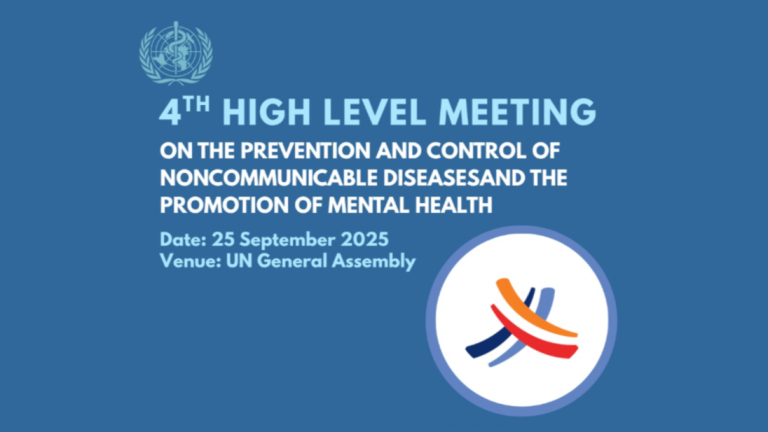
The Fourth United Nations General Assembly High-Level Meeting (HLM4) on the 25th of September 2025 represents a pivotal moment for global leaders to renew commitments toward enhancing and expanding financing for noncommunicable diseases (NCDs) and mental health. Sustainable financing strategies must integrate targeted interventions with broader health system reforms, emphasising equitable access and multisectoral cooperation. Achieving progress toward universal health coverage means ensuring affordable, high-quality care for these conditions—an essential step toward a healthier and more equitable future for all.

Building on this, the World Health Organization (WHO) has released insightful guidance on financing NCDs and mental health ahead of HLM4. These insights spotlight the economic and health benefits of investing in cost-effective interventions, the urgent need for increased domestic funding, innovative revenue mechanisms, and the importance of bridging treatment gaps.

Investment Case for Noncommunicable Diseases and Mental Health

WHO underscores that investing in NCD and mental health interventions is not only vital for health but makes strong economic sense. An additional investment of just $3 per person annually in NCD prevention and management could generate up to $1 trillion in economic returns by 2030 globally. Furthermore, every $1 invested in evidence-based NCD policies can yield as much as $7 in returns through productivity gains, reduced health care costs, and other economic benefits.

Increased Domestic and Strategic Spending

Despite the growing burden of NCDs and mental health disorders, funding for these conditions constitutes a small fraction of health budgets, particularly in low- and middle-income countries. WHO calls for substantial increases in public domestic financing directed at equitable access and prioritisation of primary health care-based services. This requires strategic allocation of resources toward interventions proven to be cost-effective and targeted to reach underserved populations equitably.

Innovative Financing Mechanisms

WHO advocates for innovative financing approaches beyond traditional government budgets to close persistent financial gaps. Health taxes on products such as tobacco, alcohol, and sugar-sweetened beverages have triple benefits: discouraging harmful consumption, generating revenue for health services, and supporting poorer households by reducing spending on these products. Additionally, international development assistance remains crucial to catalyse national actions and help overcome barriers to implementation.

Multisectoral Governance and Action

Addressing NCDs and mental health effectively requires multisectoral collaboration across health, finance, education, agriculture, transport, and other sectors. WHO recommends institutionalising governance frameworks with clear roles and accountability mechanisms to develop, implement, and monitor coherent NCD and mental health policies that reduce risks and promote healthy environments.

Strengthening Health Systems

WHO highlights a pressing need to strengthen health systems by adopting more flexible public financial management, moving away from rigid budget structures, and prioritising integrated care models. Improved data governance and digital tools can facilitate cross-sector coordination, while financial protection mechanisms can shield individuals from catastrophic health expenses related to chronic conditions.

Addressing Mental Health Treatment Gaps

Mental, neurological, and substance use conditions are a major and growing source of global disease burden, but a large majority of affected individuals receive no treatment. WHO emphasises the need for equitable financing of mental health services supported by legal and policy reforms, sustained workforce investment, and expanded community-based care. The WHO Special Initiative for Mental Health represents a major effort to scale up services universally in community settings, particularly within primary and secondary health care frameworks.

Input from IS4NCDs Consortium Member

Adding to the global dialogue, Dr Grace Marie V. Ku, a Public Health Expert, Family and Community Medicine Physician-Specialist, Health Researcher and Academic, currently with the Institute of Tropical Medicine Antwerp and a consortium member of the IS4NCDs project, shared her perspectives as a discussant in the fifth and final webinar hosted by the World Bank and WHO on financing NCDs and mental health, which was held on the 18th of September 2025. She emphasised that the concept of integrated care should extend far beyond the common interpretation of collaboration among healthcare professionals. Dr Ku advocates for integration that includes care delivered at home by the individual or their primary carer, addressing the biomedical, psychological, and social dimensions of the person for true person-centred care. She outlined a comprehensive vision wherein integration encompasses promotion and prevention throughout the life course, timely risk identification, immediate connection to care, sustained patient retention and self-management support, early complication management, rehabilitation, end-of-life care, and support for informal carers. Furthermore, Dr Ku stressed that integration must also cover services beyond direct patient care, including access to quality medicines, seamless health information systems, and community-based promotive and preventive services. Importantly, she called for multisectoral engagement beyond the health sector to tackle the underlying determinants of NCDs. Her insights underscore a broad and ambitious approach to integration as central to advancing NCD care and prevention at the global level.

Looking Ahead to HLM4

The 2025 Fourth UN High-Level Meeting offers a critical opportunity for governments to review progress, strengthen financial commitments, and adopt ambitious policies for the prevention and control of NCDs and promotion of mental health and well-being. Strong, sustained financing mechanisms paired with equitable, multisectoral governance and robust health systems will be key to advancing towards the Sustainable Development Goals related to health and well-being by 2030.

The IS4NCDs project has received funding from the European Union's Erasmus+ programme under Grant Agreement no. 101179511

The IS4NCDs project has received funding from the European Union's Erasmus+ programme under Grant Agreement no. 101179511

Giulia Loffreda

IS4NCDs Expert Adviser

Giulia Loffreda

Faculty member, health policy and systems researcher at the Institute for Global Health and Development, Queen Margaret University, Edinburgh (UK)

Expertise: Health Policy, Health Systems Strengthening, and Climate-resilient Health Systems

The IS4NCDs project has received funding from the European Union's Erasmus+ programme under Grant Agreement no. 101179511

The IS4NCDs project has received funding from the European Union's Erasmus+ programme under Grant Agreement no. 101179511