
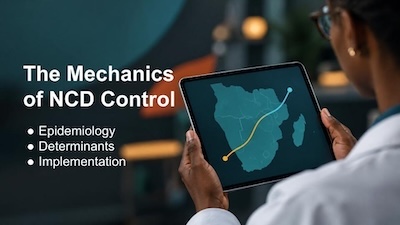
Quantifying Burden, Addressing Inequity: The Mechanics of NCD Control

Quantifying Burden, Addressing Inequity: The Mechanics of NCD Control

Quantifying Burden, Addressing Inequity: The Mechanics of NCD Control

16 September 2026

Non-communicable diseases present the largest clinical and economic threat to Southern African healthcare systems, requiring a rapid shift from individual clinical interventions to structural public health solutions. While NCD epidemiology effectively quantifies regional disease burdens and lifestyle habits, these metrics are ultimately driven upstream by the social determinants of health. For frontline clinicians and policymakers across Southern Africa, mitigating this crisis requires implementation science to close the "know-do gap"—translating clinical guidelines into resilient, real-world healthcare delivery despite localised resource constraints.

1. NCD Epidemiology: Tracking the Regional Shift

Epidemiology provides the data-driven foundation for understanding how NCD distribution, frequency, and causal pathways are changing across the region. Unlike acute infectious outbreaks, NCDs are characterised by long latency periods, protracted clinical courses, and complex, multifactorial etiologies.

In Southern African populations, this burden is compounded by a stark epidemiological transition:

  • The Dual Burden of Disease: Health professionals increasingly manage a complex convergence of chronic infectious diseases and metabolic conditions. Clinicians routinely treat patients presenting with concurrent HIV or tuberculosis alongside accelerating rates of type 2 diabetes and hypertension.
  • The Genetic-Environmental Interplay: While genetic susceptibility heavily influences disease onset, rapid urbanisation and shifting dietary patterns across Southern African cities have dramatically elevated absolute cardiovascular and metabolic risks.

Regional epidemiological surveillance allows health systems to transition from reactive treatment models to predictive, targeted preventative care.

2. Determinants of Health: Looking Upstream

While clinical epidemiology identifies individual risk factors like body mass index (BMI), smoking, and poor diet, the determinants of health explain why these risks occur. Health outcomes are heavily shaped by the social, economic, physical, and political environments in which patients live and work.

  • Socioeconomic Status: Deprivation directly correlates with limited access to nutrient-dense foods, safe recreational spaces, and timely medical intervention, worsening metabolic risks.
  • Commercial Determinants: The aggressive expansion of ultra-processed foods, sugar-sweetened beverages, and tobacco into both urban centers and rural settlements drives the structural availability of harmful commodities.
  • Systemic & Structural Drivers: Macro-level political configurations, environmental factors, and systemic economic inequities create entrenched health disparities that cannot be fixed by individual patient willpower alone.

When public health strategies treat NCDs purely as a consequence of personal lifestyle choices, they fail to address these root causes. Prescribing a rigid diet or complex medical regimen is futile if a patient lacks financial access to fresh food or lives hours away from the nearest operational clinic.

3. Implementation Science: Moving Evidence into Practice

The ultimate bottleneck in regional health is rarely a lack of clinical evidence; it is the know-do gap—the chasm between proven medical interventions and their real-world application. This is where implementation science becomes vital for Southern African health professionals.

Implementation science investigates the methods, frameworks, and contextual factors that influence how evidence-based interventions are successfully integrated into routine health systems.

The Evolution from Social Needs to Structural Change

Historically, healthcare systems addressed social determinants through basic individual screening and referral pipelines—such as referring a diabetic patient to local food relief programmes. While helpful for short-term relief, these actions merely scratch the surface of systemic inequity.

Modern implementation frameworks demand a shift toward multi-sector, context-aware strategies:

  • Adapting to Resource Constraints: Translating high-level medical guidelines into practice requires subnational actors and frontline professionals to adapt interventions to local supply chains, staffing limitations, and cultural realities.
  • Structural Partnerships: Health systems must act as anchor institutions, partnering with community coalitions, non-governmental organisations, and local leadership to integrate food security, clean water, and health education directly into clinical pathways.
  • Optimising Care Delivery: Well-implemented clinical pathways—such as task-shifting NCD screenings to community health workers or integrating hypertension clinics into existing HIV infrastructure—drastically reduce systemic strain while maximising patient retention.

Future Directions for Regional Health Systems

Resolving the NCD crisis across Southern Africa requires looking beyond the walls of the clinic. Epidemiology maps out the scale and features of the threat. Understanding the determinants of health exposes the socio-political landscapes driving these risks. Finally, implementation science provides the practical tools needed to embed these insights into equitable, sustainable, real-world policy. Only by uniting these three disciplines can health professionals shift from temporarily managing chronic sickness to structurally generating long-term wellness.

Master the Mechanics of NCD Control

To equip health leaders with the tools needed to drive this systemic transition, expressions of interest are being accepted for the pilot of the IS4NCDs Core Module: NCD Epidemiology, Determinants of Health & Implementation. This specialised training is designed to translate academic theory into immediate workplace application, drawing directly on participants' own professional contexts for its practical assessments.

  • Tentative Schedule: 26–30 October 2026
  • Instructional Modality: Face-to-face simultaneously at Copperbelt University, the University of Zambia, Stellenbosch University, and the University of the Witwatersrand. One set of live lectures will stream into all four classrooms at once. Participants at each site will work through practical, challenge-based learning activities in person, facilitated locally by faculty at each institution.
  • Cost: No course fees during the pilot phase (Value: ZAR 6,000 / ~EUR 300). PLEASE NOTE: Funding for travel, accommodation, and other costs associated with participation is NOT provided.

Eligibility & Admission Criteria:

  • Direct Entry: A Bachelor’s degree (NQF Level 7) in medicine, nursing, pharmacy, public health, environmental health, biomedical sciences, or a related discipline from a recognised institution.
  • Prior Learning Pathway: A Level 6 Diploma with at least three years’ relevant professional experience in a health service, programme management, or policy role (considered case-by-case under Recognition of Prior Learning).
  • Professional Requirement: Current or recent engagement in health service delivery, programme implementation, management, policy, or research is strongly recommended to facilitate the context-driven curriculum.

The IS4NCDs project has received funding from the European Union's Erasmus+ programme under Grant Agreement no. 101179511


The IS4NCDs project has received funding from the European Union's Erasmus+ programme under Grant Agreement no. 101179511

Harnessing Quality Improvement to Implement Evidence-Based NCD Care: From Theory to Frontline Practice

Harnessing Quality Improvement to Implement Evidence-Based NCD Care: From Theory to Frontline Practice

Harnessing Quality Improvement to Implement Evidence-Based NCD Care: From Theory to Frontline Practice

14 September 2026

Deploying evidence-based interventions for non-communicable diseases remains one of the greatest challenges in modern global health. While clinical guidelines and technical toolkits—such as the World Health Organization’s HEARTS and PEN packages—are widely available, their real-world delivery is frequently compromised. Robust protocols regularly falter when exposed to local clinic realities, resource constraints, and complex patient pathways.

To overcome these operational barriers, the healthcare sector is increasingly turning to a powerful, interdisciplinary methodology: Quality Improvement Practice integrated within Implementation Science.

While Implementation Science provides the systemic frameworks to diagnose barriers to care, Quality Improvement delivers the practical engine required for local adaptation and execution. For healthcare professionals, mastering the intersection of these two fields has transformed from an optional asset into a critical institutional requirement.

The Strategic Alignment: IS Frameworks and QI Execution

Implementing sustainable NCD care pathways requires a sophisticated understanding of both macro-level systems and micro-level clinical environments. Rather than viewing them as competing disciplines, effective healthcare systems integrate them sequentially:

  • Implementation Science: Focuses on the macro and meso levels of healthcare. It provides the frameworks to diagnose systemic roadblocks and helps leaders select the most appropriate overarching strategy.
  • Quality Improvement: Operates at the micro level of daily care. It provides the agile engine needed for frontline adaptation, rapid iterative testing, and the design of sustainable, local workflows.

Without Implementation Science, quality improvement efforts risk becoming isolated, small-scale projects that fail to achieve institutional scale-up. Conversely, without pragmatic QI tools, implementation blueprints remain purely theoretical, failing to gain traction among frontline clinical staff. True integration ensures that evidence-based interventions are not just introduced, but permanently embedded into daily workflows.

Why NCD Pathways Demand a Specialized Skillset

Unlike acute medical conditions, managing chronic illnesses like type 2 diabetes, cardiovascular disease, and cancers introduces unique operational complexities that traditional top-down rollouts cannot solve:

  • Multifaceted, Longitudinal Care: Effective NCD management relies on a complex web of clinical decision support, provider feedback, and patient self-management infrastructure over several decades.
  • High Contextual Vulnerability: A care protocol designed for a well-resourced urban facility rarely functions seamlessly in an overstretched community clinic without deliberate, localized calibration.
  • The Behavioural Component: Successful implementation requires shifting the ingrained habits of both busy clinical teams and patients navigating lifelong therapies.

Navigating these challenges requires specialized training. Healthcare leaders must know how to deploy diagnostic tools like process mapping, design reliable data feedback loops, and utilize iterative testing cycles safely within live clinical environments.

Resolving the Capability Shortfall

The demand for professionals who can seamlessly merge the structural rigor of implementation research with the agile, human-centric focus of frontline quality improvement is surging. Health ministries, international NGOs, and clinical networks are actively seeking leaders capable of designing resilient, scalable NCD care pathways.

Our upcoming intermediate training module, Quality Improvement Practice in Implementation Science for NCDs, is explicitly engineered to build these competencies. Moving beyond abstract theory, the curriculum provides a deep, practical dive into the exact methodologies required to translate global clinical guidelines into sustainable local operations.

In this specialized training, you will master the practical toolkits necessary to lead high-impact health interventions, optimize care delivery metrics, and drive lasting systemic change in NCD management.

The IS4NCDs project has received funding from the European Union's Erasmus+ programme under Grant Agreement no. 101179511
The IS4NCDs project has received funding from the European Union's Erasmus+ programme under Grant Agreement no. 101179511

Mastering Implementation Science: The Power of Mixed Methods Research

Mastering Implementation Science: The Power of Mixed Methods Research

Mastering Implementation Science: The Power of Mixed Methods Research

9 September 2026

Mastering implementation science requires integrating quantitative metrics with qualitative narratives to bridge the gap between clinical research and real-world health impact. By utilising frameworks such as convergent parallel, explanatory sequential, and exploratory sequential designs, researchers gain a comprehensive toolset that eliminates dangerous analytical blind spots in public health.

The Defining Strategy: Integration

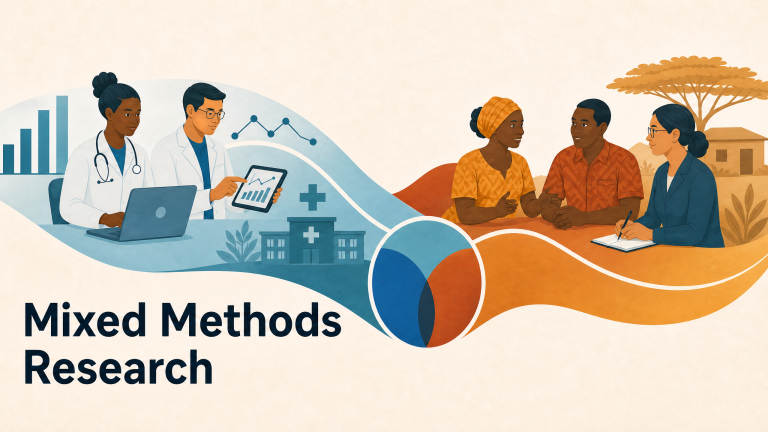
Mixed methods is more than just running two separate health studies. Its value relies entirely on integration—intentionally connecting medical metrics and community narratives. While quantitative data tells you what is happening to patient outcomes on a large scale, qualitative data explains why and how healthcare workers and clinics are adopting the intervention.

Three Ways to Structure the Research

Depending on your project's goals, this course will teach you how to deploy three primary implementation frameworks:

  • Convergent Parallel: Track clinical health data and conduct staff interviews simultaneously to evaluate if the real-time implementation process matches your expectations.
  • Explanatory Sequential: Gather quantitative clinic metrics first to identify broad trends—such as a drop in programme adoption—then use qualitative focus groups to uncover the underlying reasons.
  • Exploratory Sequential: Interview a community first to understand local cultural health needs, then use those insights to design and test a scalable, quantitative public health survey.

Key Advantages of This Approach

Deploying these mixed frameworks offers significant benefits for public health initiatives:

  • Higher Validity: Cross-validates clinic outcomes through multiple community data sources.
  • Holistic Insights: Prevents the critical human element from being lost in big health data.
  • Persuasive Results: Combines hard health statistics with compelling patient stories to win funding.

Fundamental Challenges to Consider

While powerful, executing a mixed methods design requires navigating specific operational demands:

  • Resource Heavy: Managing both clinical data and fieldwork requires careful, rigorous planning.
  • Dual Expertise: Requires learning both statistical tracking and qualitative thematic analysis.
  • Conflicting Data: Teaches you how to resolve discrepancies when numbers and stories do not align.

The Takeaway

Relying on a single data type creates dangerous analytical blind spots in public health. By pairing statistical precision with descriptive depth, this course provides the comprehensive, actionable toolset you need to bridge the gap between research and real-world health impact.

Ready to elevate your NCD research impact?

The pilot of our intermediate training module Introduction to Mixed Methods Research in Public Health is scheduled for 12-16 October 2026. We are now accepting expressions of interest. This training, led and delivered live online by the Stellenbosch University, introduces mixed methods research and its application to key public health questions. Learners will explore the theoretical foundations, methodological designs, and practical considerations of this approach.

Upon successful completion of this NQF Level 9 module, participants will have gained the knowledge required to design, conduct, and evaluate their own mixed methods public health research, earning a Certificate of Competence and 30 General Continuing Education (CEU) credits.

There are no course fees to participate in the pilot phase. This training is valued at ZAR 6,000 and is fully funded. Slots are limited. Participants from across the sub-Saharan African Region with following qualifications are encouraged to apply:

  • NQF Level 7 with relevant work experience (supported by a portfolio), or
  • NQF Level 8 (Honours/Postgraduate Diploma level).

The IS4NCDs project has received funding from the European Union's Erasmus+ programme under Grant Agreement no. 101179511
The IS4NCDs project has received funding from the European Union's Erasmus+ programme under Grant Agreement no. 101179511
The Fundamentals of Implementation Science in NCD Management Across Southern Africa

The Fundamentals of Implementation Science in NCD Management Across Southern Africa

The Fundamentals of Implementation Science in NCD Management Across Southern Africa

7 September 2026

Implementation science offers the vital framework needed to combat the rising burden of non-communicable diseases (NCDs) in Southern Africa by systematically closing the gap between clinical guidelines and real-world practice. For health professionals and recent graduates in the region, mastering this discipline is critical. While traditional medical research focuses on what clinical treatments work, implementation science investigates how to deliver those treatments sustainably and equitably within resource-constrained African health systems.

Historically overshadowed by infectious diseases, NCDs—such as cardiovascular conditions, diabetes, chronic respiratory illnesses, and cancers—are rising sharply across Southern Africa. Managing these long-term conditions requires sustained, coordinated care, functional referral pathways, and an uninterrupted medication supply chain. Translating international guidelines into local clinics remains notoriously difficult because health systems routinely face systemic constraints. An implementation science approach addresses this by shifting focus from individual-level clinical treatments to system-level solutions, ensuring that proven interventions are successfully embedded into routine care.

The Five Core Factors of Implementation Success

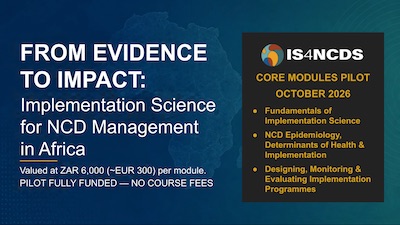
To effectively design, manage, or evaluate chronic care programmes, healthcare professionals must navigate five core operational pillars:

  • Context: Local conditions decide a programme's success. An identical protocol can succeed in one facility but stall in another due to the surrounding environment. Implementation science rigorously maps inner factors (like clinic culture, staffing, and clinical workflows) and outer factors (such as national health funding and regional drug supply lines).
  • Frameworks: Frameworks act as the structured tools used to assess that context and predict how it will affect an implementation. Rather than guessing why a rollout is struggling, teams use these descriptive systems to identify hidden barriers, choose the right steps, and map the relationships between different clinic constraints.
  • Implementation Strategies: These are the active, deliberate choices made to train staff, adapt interventions, and change clinical behaviour to improve a specific outcome. In Southern Africa, pragmatic strategies include task-sharing (shifting NCD screening from doctors to community health workers) or integrating chronic care tracking into existing HIV/TB clinic infrastructure.
  • Fidelity: This measures whether a programme stays true to its original design as it is delivered. In chronic NCD care, programmes frequently suffer from 'fidelity drift'—a gradual, unnoticed gap where staff quietly slip back into old habits (like skipping the required rest period before a blood pressure reading) under daily work pressure.
  • De-Implementation: Modernising NCD care does not just require adding new guidelines; it demands the distinct operational skill of actively withdrawing outdated, obsolete, or low-value clinical practices from circulation. Turning off an old routine takes as much deliberate effort and strategy as starting a new one.

Implications for African Health Systems

For the next generation of healthcare leaders in Southern Africa, addressing the growing chronic disease burden requires looking beyond the pharmacy shelf. Implementation science acts as a diagnostic lens, showing exactly where a delivery chain breaks down and testing localised strategies to reinforce the weakest links. By embedding these five pillars into everyday healthcare delivery, Southern African health systems can move beyond theoretical guidelines to achieve real, equitable, and lasting health gains for NCD patients.

Build Your Expertise: Fundamentals of Implementation Science

Expressions of interest are now being accepted for the upcoming fully funded pilot training programme. If you are a health professional or recent graduate looking to diagnose implementation challenges in real NCD programmes drawn from your own working context, you can apply directly for the foundational core module:

To learn more about the curriculum and submit your expression of interest, visit the Training Portal today.

The IS4NCDs project has received funding from the European Union's Erasmus+ programme under Grant Agreement no. 101179511
The IS4NCDs project has received funding from the European Union's Erasmus+ programme under Grant Agreement no. 101179511

We are Now Accepting Expressions of Interest!

We are Now Accepting Expressions of Interest!

We are Now Accepting Expressions of Interest!

1 September 2026

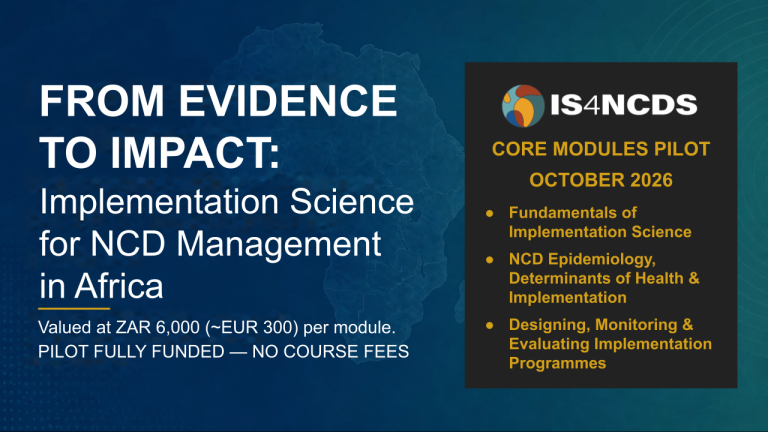
We are now accepting expressions of interest for the IS4NCDs training programme in implementation science applied to non-communicable disease care. The Core Modules pilot is scheduled to begin in the first week of October 2026.

The Training is Fully Funded, No Course Fees

Valued at ZAR 6,000 each, the modules are fully funded; there are no course fees for the pilot phase. Please note that the funding does not cover travel, accommodation, or other costs associated with participation. These costs are not included, so you’ll need to budget for them separately

Who This Is For

The training is intended primarily for professionals in public health, internal medicine, and primary care, though other relevant applicants are considered. Applicants across sub-Saharan Africa are welcome to submit an Expression of Interest.

How the Core Modules Pilot Works

As outlined in our earlier announcement, the pilot runs across three modules (dates are tentative and subject to change):

Training will be delivered via a hybrid model streamed simultaneously into classrooms at Copperbelt University, the University of Zambia, Stellenbosch University, and the University of the Witwatersrand, with in-person, team-based practical work facilitated locally at each site.

Slots are Limited, Submit Your Expression of Interest Early!

For more information and to register your interest, please visit this link: IS4NCDs eHub, or scan the QR code.

The IS4NCDs project has received funding from the European Union's Erasmus+ programme under Grant Agreement no. 101179511

The IS4NCDs project has received funding from the European Union's Erasmus+ programme under Grant Agreement no. 101179511